
Hot Tub Electrical Installation in Portland, OR
Portland Homes Have Old Panels — Here's What That Means for Your Hot Tub

Hear from Our Customers
Hot Tub Wiring in Portland, Oregon
Portland gets rain on roughly 155 days a year. That’s not a reason to avoid outdoor living — it’s exactly why so many Portland homeowners invest in a hot tub in the first place. But a tub sitting in your backyard, unwired, while October rolls in is a frustrating situation nobody wants to be in. Getting the electrical work done right, and done on time, means you’re actually using the thing when the weather gives you every reason to.
Here’s what trips people up in Portland specifically: many homes in Laurelhurst, Irvington, Sellwood, and inner Southeast were built before 1950. Many still have 60-amp or 100-amp service panels. Some have Federal Pacific Stab-Lok breaker boxes that home inspectors flag regularly. A 240V hot tub circuit needs a dedicated 50-60 amp breaker on a panel that has room for it. That’s not always a given here, and knowing that upfront — before the tub is delivered — saves real headaches.
When we complete the work correctly, you get a hot tub that’s safe, inspected, code-compliant, and on record with Portland Permitting and Development. That matters when you sell the home, when you file an insurance claim, and every single time you get in the water.

Ready to get started?

Hot Tub Electrician in Portland, OR
Young Electric LLC is a second-generation, family-owned electrical company headquartered in Portland, Oregon. We’ve been doing electrical work in Portland Metro homes for over 40 years — this isn’t a franchise that expanded into the area. Portland is where we were built.
Jeremy Young, the owner, is a military veteran and grew up in the trade. That combination of discipline and hands-on knowledge shows up in how we handle jobs from the first call to the final inspection.
We hold both a CCB license and a BCD electrical license — the two credentials Oregon requires. With a BuildZoom score of 125, we rank in the top 1% of all Oregon contractors, based on more than 3,200 permits pulled. That’s not a self-reported claim — it’s a documented record of consistent, inspected work across Multnomah County and the broader Portland area.
When you call, a real person answers. When someone shows up, they explain what they found and what needs to happen next — in plain language, not electrical jargon.
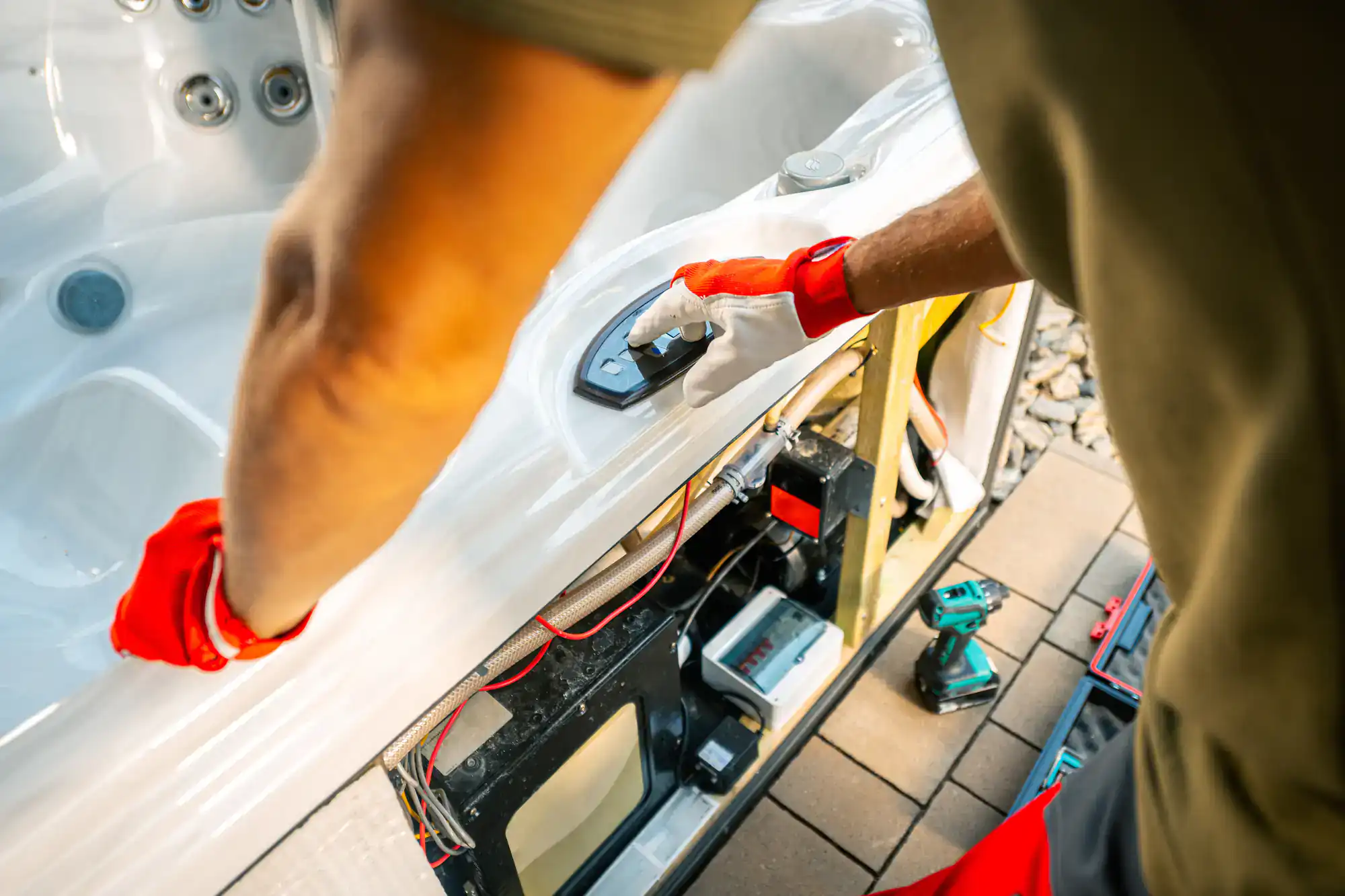
Hot Tub Electrical Wiring Process in Portland
It starts with a free estimate. Before any work is quoted or scheduled, we assess your existing electrical panel — checking capacity, breaker availability, and whether your current service can support a dedicated 240V hot tub circuit. In Portland, this step matters more than people expect.
Homes in neighborhoods like Alameda, St. Johns, and inner Southeast frequently have panels that need attention before a hot tub circuit can be safely added. Knowing that upfront is a lot better than finding out mid-job.
Once the panel situation is clear, we scope and price the work honestly. If a subpanel or service upgrade is needed, that gets explained in plain terms before anything is agreed to. We pull the permit through Portland Permitting and Development — that’s handled for you.
The installation itself covers the dedicated circuit, the GFCI breaker, weatherproof conduit, and the disconnect box placed at the correct distance from the tub per Oregon’s 2023 Electrical Specialty Code. Everything is run through outdoor-rated materials because Portland’s rain isn’t seasonal — it’s consistent, and the installation has to hold up to it year-round.
After the work is done, we schedule a city inspection. Once that passes, the installation is on record with the city. That’s the finish line — not just a tub that’s plugged in, but one that’s been done right and documented.

240V Hot Tub Wiring and GFCI Breaker Installation Portland
Hot tub electrical installation in Portland isn’t a single task — it’s a sequence of work that has to be done in the right order, with the right materials, and to the right code. We handle the full scope: panel assessment, dedicated circuit installation, GFCI breaker, weatherproof conduit, outdoor-rated disconnect box, equipotential bonding of all metal components, permit application through Portland Permitting and Development, and final inspection coordination. Nothing gets skipped because skipping steps — especially bonding and grounding — creates hidden safety risks that don’t show up until something goes wrong.
For Portland homes with older electrical infrastructure, the panel assessment at the start of the job is what determines the full scope. If your home in Sellwood or Laurelhurst is running a 100-amp service with a loaded panel, that gets identified and addressed before the circuit is run — not after. If your panel has capacity and the run is straightforward, the job is simpler and the estimate reflects that.
Every hot tub electrical installation we complete comes with a 5-year warranty on labor. No other electrician in the Portland market offers that. It’s a direct signal that the work is done right the first time — and that if something tied to the installation ever comes up within five years, it’s covered.
Do I need a permit for hot tub electrical installation in Portland, Oregon?
Yes — a permit is required for hot tub electrical work within Portland city limits, and it’s not optional. Portland City Code Section 26.04.010 requires that an electrical permit be obtained before work begins. Oregon Law ORS 479.540, the Electrical Safety Law, also governs who can perform this work and under what conditions.
For residential homeowners, there are very limited circumstances where you can pull your own electrical permit — and if the property is intended for sale, lease, or rent within six months of the final approval, a licensed contractor must do the work regardless.
The permit process in Portland runs through Portland Permitting and Development, formerly known as the Bureau of Development Services. We handle the permit application as part of the installation — you don’t have to navigate that process yourself. Once the work is complete, a city inspection is scheduled and the installation goes on record. That documentation matters at resale, during refinancing, and if you ever need to file a homeowner’s insurance claim tied to the electrical system. Skipping the permit saves nothing and creates real liability on a home worth what Portland homes are worth.
What size breaker does a 240V hot tub need, and what if my panel is full?
Most full-size hot tubs require a dedicated 50-amp, 240V circuit with a GFCI breaker. Some larger units call for 60 amps — the exact requirement is listed in the hot tub manufacturer’s specifications, and that’s what the installation is built to. The breaker has to be a GFCI type, not a standard breaker.
A standard breaker protects equipment from overloads. A GFCI breaker protects people by detecting ground faults and cutting power within milliseconds — in a wet environment, that distinction is the difference between a shock and something much worse.
If your panel is full or doesn’t have enough capacity, there are a few paths forward: adding a subpanel, upgrading the main service, or in some cases consolidating existing circuits to free up space. In Portland, this situation comes up often — particularly in homes in Irvington, Alameda, and inner Southeast that were built with 60-amp or 100-amp service.
The panel assessment at the start of every free estimate is specifically designed to answer this question before any work is committed to. You’ll know exactly what your panel can support and what, if anything, needs to change before the hot tub circuit goes in.
How far does the disconnect box need to be from my hot tub in Oregon?
Oregon follows NEC Article 680 for outdoor spa and hot tub installations. The disconnect box — sometimes called the spa panel or emergency shutoff — must be placed no closer than five feet from the water’s edge and no farther than the distance that keeps it within line of sight and easily accessible. In practice, that typically means somewhere between five and fifteen feet from the tub, though the exact placement depends on your specific yard layout and the inspector’s interpretation of line-of-sight requirements.
The disconnect box also has to be weatherproof and outdoor-rated. In Portland, where rain is consistent from October through April and the outdoor components of a hot tub installation are exposed to wet conditions year-round, using anything less than a properly rated outdoor enclosure is a problem waiting to happen.
The disconnect placement is one of the things a city inspector will check during the final inspection, so it has to be right — not close enough. We position the disconnect correctly the first time, which means no callbacks and no failed inspections.
Will improper hot tub wiring void my hot tub's warranty or my homeowner's insurance?
Both are real risks. Most hot tub manufacturers include language in their warranty documentation requiring that the electrical installation be performed by a licensed professional and that a permit was pulled and an inspection passed. If the installation was done by an unlicensed contractor, a handyman, or a homeowner without the proper permit, the manufacturer can deny a warranty claim — even if the electrical work had nothing to do with the failure. That’s a significant exposure on a $6,000 to $12,000 purchase.
On the insurance side, an unpermitted electrical installation can give your homeowner’s insurer grounds to deny a claim if the incident is tied to the electrical system — or in some cases, if the unpermitted work is discovered during the claims process at all. In Portland, where median home values sit around $581,500, that’s not a risk worth taking.
A permitted, inspected installation through Portland Permitting and Development is the documented proof that the work was done correctly and is legally part of the home. We pull permits on every job — that’s not an add-on, it’s just how the work gets done.
Can I use the same outlet or circuit my outdoor lights are on for my hot tub?
No — a hot tub requires its own dedicated circuit. Nothing else can share that breaker. This applies whether you have a 120V plug-and-play model or a full 240V hardwired spa. A dedicated circuit means that circuit serves only the hot tub, with nothing else drawing from it.
Sharing a circuit with outdoor lighting, a GFCI outlet, or any other load creates a situation where the circuit is undersized for what it’s being asked to do — and where a tripped breaker becomes a regular occurrence at best and a fire hazard at worst.
It’s also worth knowing that even 120V plug-and-play hot tubs have specific electrical requirements. If the outlet they’re plugging into isn’t a dedicated circuit, isn’t GFCI protected, or is more than 10 feet away, there are still real code and safety concerns. Most full-feature hot tubs — the kind with jets, heaters, lighting, and audio — are not plug-and-play. They’re 240V hardwired installations that require a licensed electrician under Oregon law. We can tell you exactly what your specific tub requires during the free estimate, before any work is scheduled.
How long does hot tub electrical installation take in Portland, and when should I schedule it?
Most hot tub electrical installations take between four and eight hours for the electrical work itself, depending on how far the panel is from the tub location, whether a subpanel or service upgrade is needed, and how complex the conduit run is. Homes in Portland’s inner neighborhoods — where the panel might be in a basement on the opposite side of the house from a backyard hot tub, and where the conduit has to navigate older framing — tend to be on the longer end of that range. Newer construction or homes where the panel is closer to the installation site are usually faster.
On timing, the best advice for Portland homeowners is to schedule sooner than you think you need to. The window between late summer and early fall — August through October — is when demand is highest, because homeowners want the tub operational before the rainy season sets in. We start work at 7am, which helps get jobs done without disrupting a full workday.
Free estimates are available to get the process started, and the sooner the panel is assessed, the sooner you’ll know if anything needs to be addressed before the tub arrives. Getting ahead of the schedule means getting in the water on your timeline, not someone else’s.
Useful Links