
EV Charger Installation in Portland, OR
Portland's Older Homes Deserve a Smarter Charger Install

Hear from Our Customers
Level 2 EV Charger Installation Portland
If you bought an EV and you’re still plugging into a standard wall outlet in your garage, you already know the problem. You’re waking up to 60%, maybe 70% charge, and doing the math on whether that gets you to Hillsboro and back on the Sunset Highway without a stop at a public station. That’s not what you signed up for when you bought the car.
A Level 2 charger adds 25 to 40 miles of range per hour. For most Portland, OR commuters — whether you’re running I-5 south toward Tualatin, I-84 east toward Gresham, or US 26 out to Intel’s campuses — that means a full battery every single morning without thinking about it. You plug in when you get home. You unplug when you leave. Done.
What makes Portland installs different from a generic job is the housing stock. Laurelhurst, Hawthorne, Irvington, Eastmoreland, the Northwest District — these neighborhoods are full of 1910s through 1940s homes that people love, but their electrical systems weren’t built with a 48-amp EV circuit in mind. Getting a proper panel assessment before any wire gets run isn’t optional here — it’s the foundation of a safe installation. For most Portland homeowners, even in the older neighborhoods, that assessment comes back with good news: you’ve got enough capacity, and no full panel upgrade is needed.

Ready to get started?
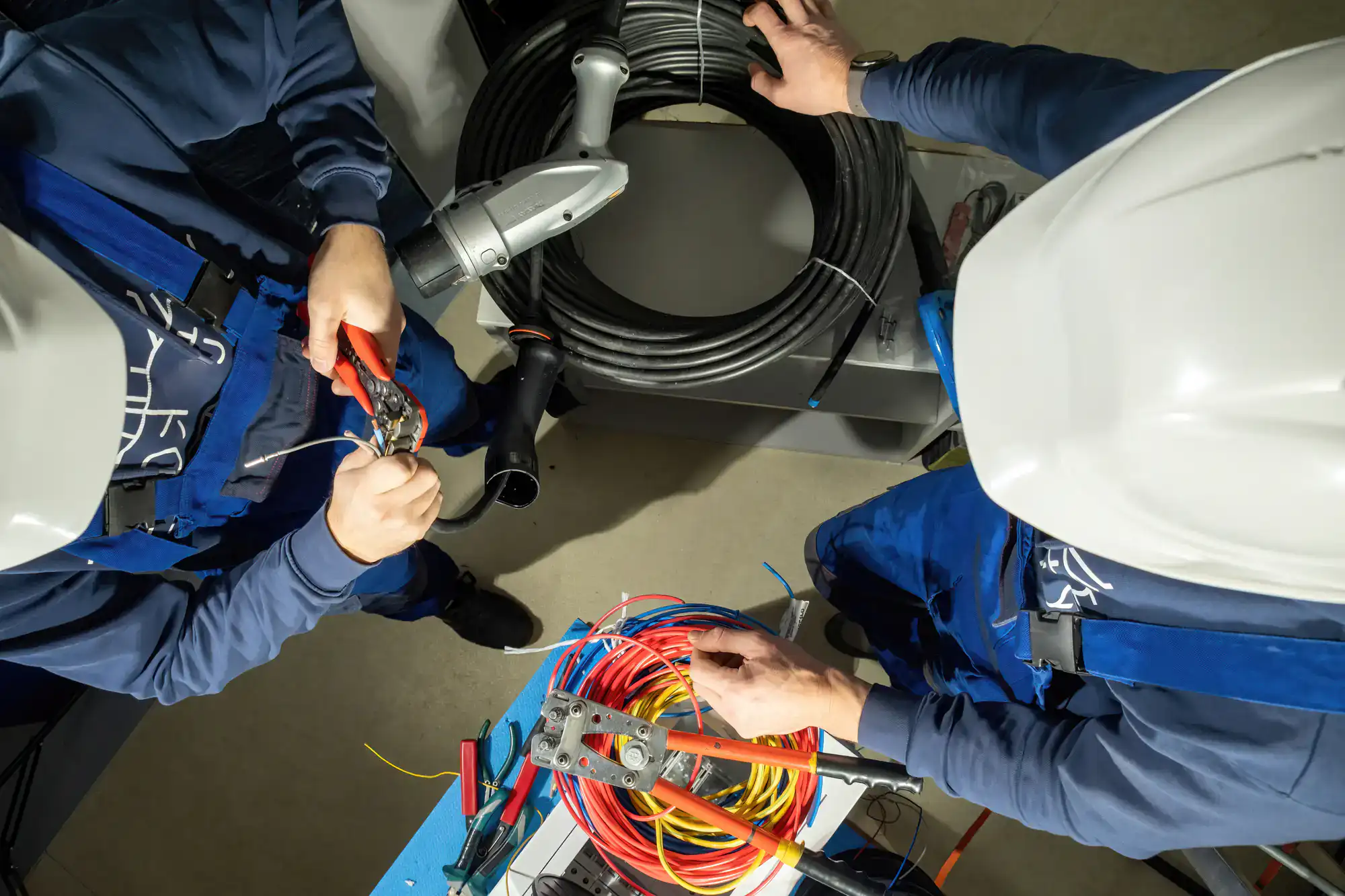
EV Charger Electrician in Portland, OR
Young Electric LLC is a second-generation, family-owned electrical contractor headquartered in the Portland Metro area. Our owner is a military veteran who grew up in the trade, and we’ve been serving Portland-area homeowners for decades. This isn’t a national franchise routing calls through a dispatch center — it’s a local company where the people who answer the phone are the same people accountable for the work.
With a 4.8 rating across more than 1,400 Google reviews, we’ve built a reputation across Portland’s neighborhoods that no amount of advertising buys. Reviewers name individual electricians by name. That kind of trust gets earned job by job, home by home — from Sellwood-Moreland to St. Johns, from the Pearl District to Multnomah County’s outer edges.
We hold Oregon CCB License No. 178887 and carry both Residential and Commercial Specialty Contractor credentials. We’re a Tesla Certified Electrical Contractor and a Portland General Electric Approved Contractor for the PGE Smart Charging Program. Both of those credentials matter in this market, and not every electrician in Portland can claim them.
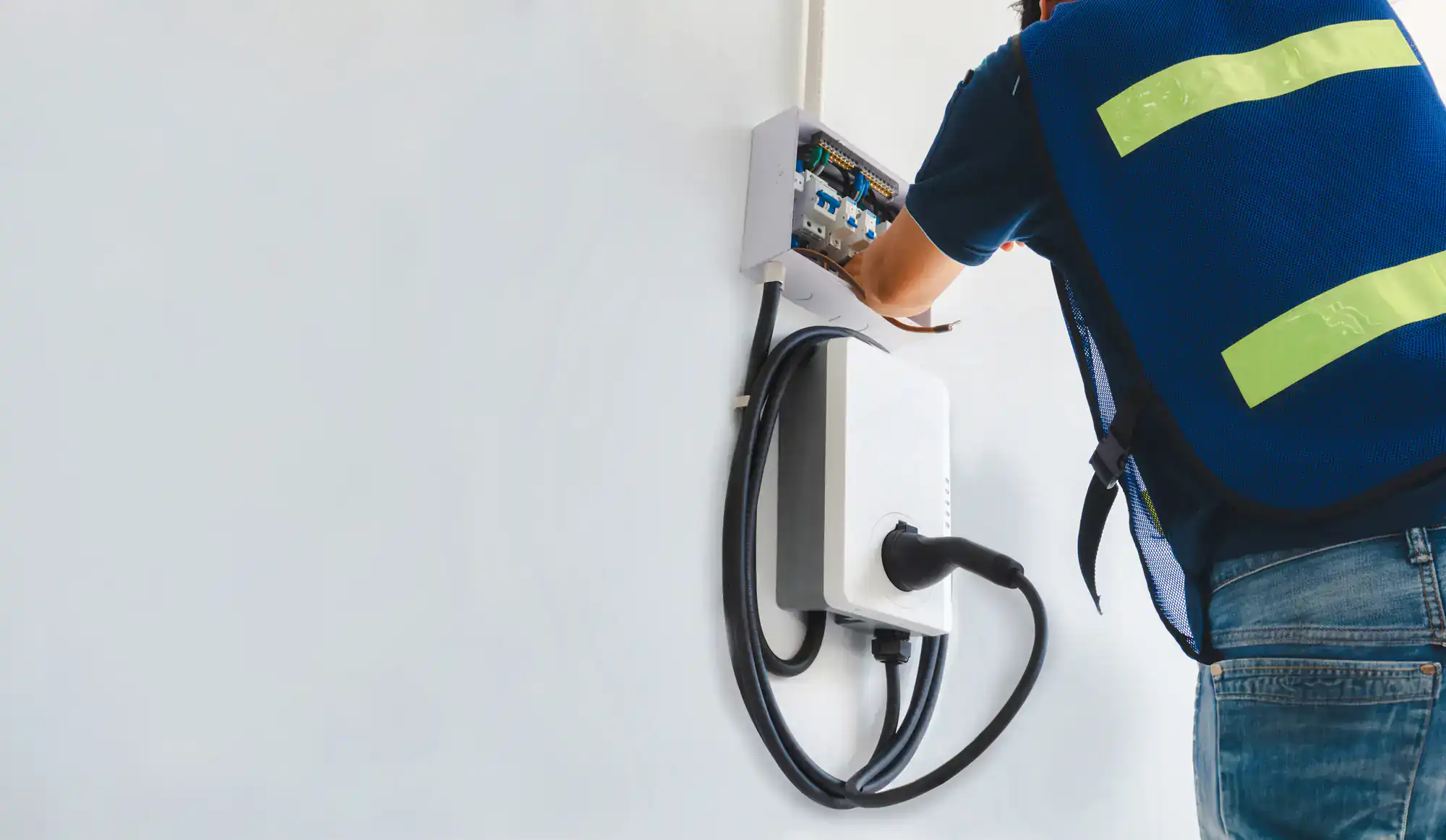
Home EV Charger Installation Portland, OR
It starts with a free estimate. When we come out to your Portland home, the first thing we look at isn’t where to run the wire — it’s your electrical panel. In a city where a significant portion of the housing stock predates World War II, that step isn’t a formality. It’s how you find out whether your panel has available capacity or whether anything needs to be addressed before a Level 2 circuit gets added. Most homes have room. But you need someone who actually checks.
Once the panel assessment is done, we build the installation plan around your specific setup — where the charger is going, how far the run is from your panel, whether the installation is inside an attached garage or in a detached structure accessed from the alley (which is common in SE Portland’s Craftsman neighborhoods and adds conduit run length). For outdoor installs, Portland’s wet season — October through May, with 36 to 44 inches of rain annually — means weatherproof NEMA 4-rated enclosures aren’t optional. They’re the standard.
We handle the electrical permit through Portland Permitting and Development from start to finish. You don’t file anything, you don’t call any bureaus, and you don’t schedule the inspection yourself. Residential EV charger permits in Portland typically move through in one to four weeks. Once the inspection passes, your charger is live and you’re done.

Tesla Charger Installation Portland, OR
We install all major EV charging brands — Tesla Wall Connectors, Ford Charge Station Pro, ChargePoint, and others. Whatever you drive, the installation is handled by the same licensed, certified team. For Tesla owners in Portland specifically, our Tesla Certified Contractor credential means the Wall Connector installation meets Tesla’s own standards, not just a general electrician’s interpretation of them.
Beyond the charger itself, we’re one of the PGE Approved Contractors for the PGE Smart Charging Program. If you’re a Portland General Electric residential customer — which covers the majority of Portland homeowners — you may qualify for a rebate of up to $500 toward your Level 2 charger purchase and installation, or up to $1,000 if your household qualifies under income guidelines. If a panel upgrade is part of your project, there’s a separate rebate of up to $1,000 for that as well, or up to $5,000 for income-qualified households. There are also $25 bill credits issued twice a year for participating in smart charging events. Most Portland homeowners who hire a non-approved contractor never hear about any of this. We bring it up before the estimate is even written.
For Portland homeowners in condos, multi-unit buildings, or homes without attached garages, we can walk through what your specific situation allows and what the realistic options are. No invented solutions, no overselling — just a straight answer about what’s possible.
Do I need a permit for EV charger installation in Portland, Oregon?
Yes — the City of Portland requires an electrical permit from Portland Permitting and Development for every Level 2 EV charger installation. This applies whether the charger is hardwired directly or installed via a new 240-volt outlet like a NEMA 14-50. The permit must be obtained before any work begins, and the installation has to pass a city inspection before the charger is considered complete and code-compliant.
This isn’t a bureaucratic technicality — it’s what protects you. A permitted installation means the work has been reviewed against Oregon’s electrical code and NEC Article 625, which governs EV charging circuits specifically. If something ever goes wrong with an unpermitted installation, your homeowner’s insurance can deny the claim. We manage the entire permit process for Portland homeowners, including scheduling the inspection. You don’t have to figure out which bureau to contact or what forms to file. That’s handled.
How much does Level 2 EV charger installation cost in Portland, OR?
For a standard Level 2 installation in Portland, you’re typically looking at a range of $1,200 to $2,700, depending on where the charger is going relative to your electrical panel, how long the conduit run is, and whether any additional circuit work is involved. Portland’s electrical permit fees for this type of work generally run $75 to $400 depending on the scope.
If your panel needs to be upgraded to support the new circuit, that’s an additional $1,800 to $4,500 on top of the base installation. The good news is that most Portland homes — even older ones in Hawthorne, Irvington, or the Northwest District — don’t require a full panel upgrade. We assess your panel before quoting anything, so you’re not getting a low-ball estimate that balloons after the fact.
If you’re a Portland General Electric customer, the PGE Smart Charging Program can offset a meaningful portion of the cost — up to $500 on the charger installation itself, or up to $1,000 for income-qualified households. Panel upgrade rebates go even higher. We’re a PGE Approved Contractor and can help you access those rebates as part of the project.
Does my Portland home need a panel upgrade before I can install an EV charger?
Probably not — but you need someone to actually check before assuming either way. The reality is that 70 to 80 percent of homes have enough panel capacity to add a Level 2 EV charging circuit without a full upgrade. That statistic holds even in Portland’s older neighborhoods, where a lot of the housing stock dates to the 1910s through 1940s.
That said, Portland’s inner neighborhoods do have a higher-than-average proportion of homes that are running closer to panel capacity, simply because the homes are older and have had decades of electrical additions layered on top of original systems. A 100-amp panel in a Laurelhurst or Eastmoreland home that’s already running a modern kitchen, HVAC, and home office doesn’t have the same headroom as a 200-amp panel in newer construction. We do a panel load assessment at every job before recommending anything. If your panel has room, you’ll know. If it doesn’t, you’ll get an honest explanation of what the options are — including whether a panel upgrade qualifies for a PGE rebate.
What is the PGE Smart Charging Program and how does it work for Portland homeowners?
The PGE Smart Charging Program is a rebate and enrollment program run by Portland General Electric — Portland’s primary electric utility — specifically for residential customers who own or lease an electric vehicle or plug-in hybrid. It’s designed to offset the cost of buying and installing a qualifying Level 2 charger at home.
Through the program, eligible Portland homeowners can receive up to $500 toward the purchase and installation of a qualifying charger, or up to $1,000 if the household meets income eligibility guidelines. If a panel upgrade is required to support the EV circuit, there’s a separate rebate of up to $1,000 for the upgrade itself — or up to $5,000 for income-qualified households. Participants also receive $25 bill credits twice a year for allowing PGE to manage charging during high-demand grid events, which happens automatically through the charger’s smart features.
To access these rebates efficiently, you need to work with a PGE Approved Contractor — which is a specific designation, not just any licensed electrician. We’re one of those approved contractors. We’ll confirm your eligibility, make sure the charger you’re installing qualifies under the program’s requirements, and walk you through the rebate process alongside the installation itself.
How long does EV charger installation take from start to finish?
The physical installation itself — running the circuit, mounting the charger, connecting everything, and confirming it works — typically takes two to four hours for a straightforward residential job. More complex setups, like a long conduit run from a panel on one side of the house to a detached garage accessed from an alley (which is common in SE Portland’s Craftsman-era neighborhoods), can run longer.
The piece that adds time to the overall timeline is the permit. Portland Permitting and Development requires an electrical permit before work begins, and residential EV charger permits in Portland typically move through within one to four weeks. We submit the permit application and handle the scheduling on your end, so you’re not waiting on paperwork you filed yourself. Once the permit is approved, the installation gets scheduled, the work gets done, and the inspection gets booked. From first contact to a working charger, most Portland homeowners are looking at two to five weeks total, with the permit timeline being the main variable.
Can Young Electric LLC install EV chargers in Portland's older Craftsman-era homes?
Yes — and it’s actually the type of work we do regularly across Portland’s inner neighborhoods. Homes in Laurelhurst, Hawthorne, Sunnyside, Irvington, and the Northwest District are some of Portland’s most sought-after properties, and they’re also some of the most common EV charger installation jobs in the city. The age of the home doesn’t disqualify it from getting a Level 2 charger — it just means the electrical assessment at the start of the job matters more.
Older Portland homes often have panels that were installed or last updated decades ago. The first step is always a load assessment to see what capacity is available and whether the existing panel can support a dedicated 40 to 60-amp EV circuit. In most cases, it can. When it can’t, the options get explained clearly — including whether a panel upgrade qualifies for a PGE rebate, which can significantly reduce that cost.
There’s also the physical routing to consider. Many SE and NE Portland Craftsman homes have detached garages accessed from rear alleys, which means the conduit run from the main panel is longer than in a home with an attached garage. That affects the installation plan and the final cost, but it’s a straightforward factor that gets accounted for in the estimate — not a surprise that shows up on the invoice.
Useful Links