
Generator Installation in Florence, OR
When the Coast Loses Power, Florence Can't Wait

Hear from Our Customers
Whole House Generator Florence, OR
Florence gets hit by windstorms more than most Oregon communities. The West Lane Emergency Operations Group classifies windstorms as the most frequent hazard on this stretch of coast, and power outages follow them like clockwork. In February 2025, overnight winds produced more than 45 separate outages across the Florence and Siuslaw area, knocking out power to over 645 Central Lincoln PUD customers in a single event. That’s not a fluke. That’s a pattern.
A whole house generator in Florence means that when Central Lincoln crews are working through dozens of simultaneous outage calls, your lights are already on. Your refrigerator is running. Your CPAP machine didn’t miss a cycle. For the roughly 43% of Florence residents who are 65 or older — many managing health conditions that depend on powered equipment — that continuity isn’t just comfortable. It’s necessary.
And the isolation factor matters here in a way it doesn’t in suburban Portland. When OR-126 over the mountains gets compromised and US-101 is the only road moving, there’s no quick drive to a relative’s house in Eugene. A standby generator doesn’t ask you to make decisions in the dark during a coastal storm. It detects the outage and starts automatically — within seconds, on its own, while you stay inside.
Ready to get started?
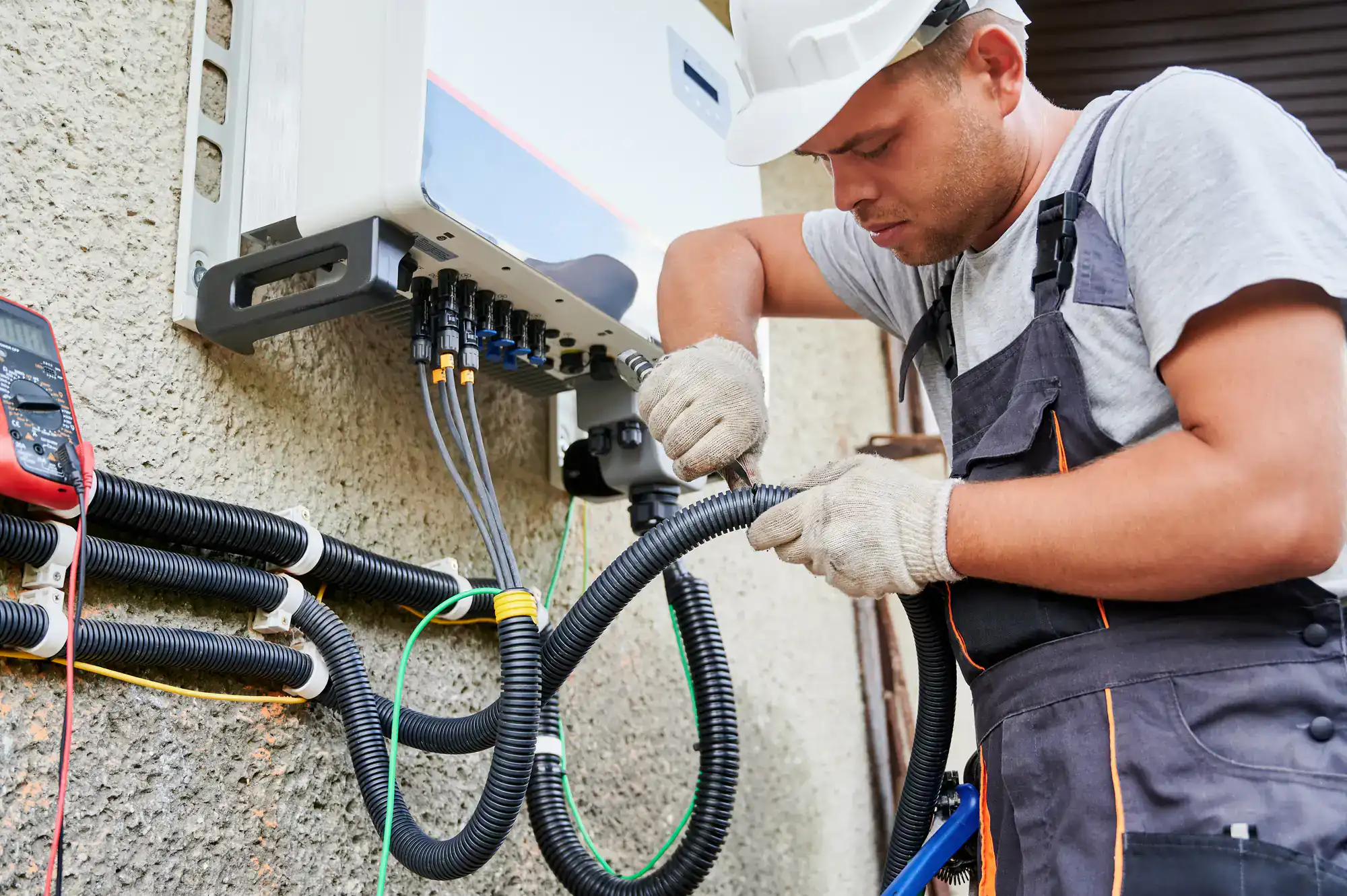
Generator Installer Florence, OR
Young Electric LLC is a second-generation, veteran-owned electrical contracting company. We’ve been doing this work since 2007 — over four decades of combined experience across residential, commercial, and industrial electrical work. We don’t just plug in units; we understand how generators interact with different panel configurations, older wiring, and the specific demands of homes that have been standing for decades.
Florence’s housing stock — especially in and around Old Town near the Siuslaw River waterfront — includes homes with older electrical systems that need a knowledgeable eye before a generator ever gets connected. We handle that assessment as part of our process. Every installation is done by licensed, bonded, and insured electricians who pull permits, attend inspections, and stand behind the work.
That last part matters more than most contractors admit. We back every installation with a five-year warranty — well above the standard one-year labor warranty you’ll see from most local operators. If something’s wrong six months or two years down the road, there’s a real company with a real track record answering the phone.

Home Generator Installation Florence, OR
The first step is a site assessment — figuring out what your home actually needs to run during an outage, not just what sounds reasonable. We do a real load calculation based on your panel, your square footage, and the specific equipment you need to keep running. For many Florence homeowners, that list includes medical equipment, and that changes the sizing conversation. Getting the size right matters — too small and you’re running partial power during a storm; too large and you’ve overspent on capacity you’ll never use.
From there, we handle the permitting. Oregon law requires a permit for any generator connection, and the work must be performed by a licensed electrical contractor. The permit process runs through the Oregon Building Codes Division, and Central Lincoln PUD has its own interconnection requirements on top of that. We manage all of it, so you’re not tracking down paperwork or coordinating between agencies on your own.
Once permits are approved, the physical installation — site prep, concrete pad or gravel bed, fuel line connection, transfer switch installation, and final wiring — typically takes one day. But the full timeline from first call to a running system is several weeks, accounting for permits, inspections, and equipment delivery. Florence’s storm season runs October through March, with the worst wind events hitting November through February. If you want to be ready before the next system rolls in off the Pacific, the time to start is before you’re watching the forecast.

Backup Generator Installation Florence, OR
We install residential standby generators, whole house generator systems, and backup generators for small commercial properties across Florence and Lane County. That includes everything from system selection — helping you choose the right unit size and fuel type for your property — through transfer switch installation, site preparation, permitting, and final inspection. Nothing is handed off or left for you to figure out.
Fuel type is a real conversation in the Florence area. Many properties in and around Florence run on propane rather than natural gas, particularly in more rural stretches outside the city core. We work through that with each client during the assessment so the system you end up with actually fits the infrastructure you have — not a generic recommendation that assumes you’re in a Portland suburb.
The coastal environment also plays a role in equipment placement and installation approach. Salt air accelerates weathering on outdoor equipment, and a generator that’s sited and installed without accounting for that will show it over time. Our installations account for local conditions — not just code minimums. Every system is sized to your home, installed to Oregon Electrical Specialty Code standards, permitted through the appropriate channels, and backed by a five-year labor warranty that holds regardless of where you live on the coast.
How often does Florence, Oregon actually lose power during winter storms?
More often than most people outside the coast realize. The West Lane Emergency Operations Group — the emergency preparedness body covering western Lane County, including Florence — explicitly classifies windstorms as the most frequent natural hazard on the Oregon coast and treats power outages as a baseline planning assumption, not an exceptional event. In February 2025 alone, a single overnight wind event produced more than 45 separate outages across the Florence and Siuslaw area, affecting over 645 Central Lincoln PUD customers.
The January 2024 winter storm was more severe — it caused a full grid failure that left Florence and Reedsport without power, while Highway 38 closed from a landslide and OR-126 was also compromised. Florence’s geographic position means that major storms often hit the power grid and the road network at the same time. For residents who’ve lived through even one of those events, the case for a standby generator tends to be settled.
What size whole house generator do I need for my Florence home?
There’s no one-size answer, and any installer who gives you one without first doing a load calculation is cutting a corner that will matter later. The right size depends on your home’s square footage, the equipment you need to run during an outage, how your panel is configured, and your fuel source — propane versus natural gas, which varies more in the Florence area than it does in urban markets.
For a typical Florence home where the priority is keeping the essentials running — heating system, refrigerator, lights, and medical equipment like a CPAP or oxygen concentrator — a unit in the 14kW to 22kW range is often the starting point. But if you’re running a larger home or want whole-house coverage without any load shedding, you may need more. We do a proper load calculation during the site assessment so the recommendation is based on your actual home, not a ballpark.
Do I need a permit to install a generator in Florence, Oregon?
Yes — and this is not optional or a gray area. Oregon law requires a permit for any generator connection, and the work must be performed by a licensed electrical contractor. The Oregon Building Codes Division governs this statewide, which means it applies in Florence just as it does anywhere else in the state. Any installer who tells you a permit isn’t necessary, or offers to skip it to save time, is creating a problem that will land on you — not them.
An unpermitted installation can void your generator’s manufacturer warranty, create liability issues if there’s a fire or electrical incident, and cause complications when you sell the home. Central Lincoln PUD also has its own interconnection requirements for generator installations in their service territory. We handle all permitting and coordinate with the relevant agencies as a standard part of every installation — you don’t have to manage that process yourself.
What's the difference between a standby generator and a portable generator for a Florence home?
A portable generator requires you to go outside, set it up manually, connect extension cords or a transfer switch, and have fuel stored and ready — all of which becomes a real problem during a coastal windstorm at 2 a.m. when Central Lincoln PUD is working through 45 simultaneous outage calls. Portable units also run on gasoline, which means you need to have enough stored ahead of the storm and plan for refueling during an extended outage.
A standby generator is permanently installed outside your home, connected to your existing natural gas or propane supply, and wired through an automatic transfer switch. When it detects an outage — usually within seconds — it starts on its own. You don’t have to do anything. For Florence’s large retirement population, many of whom are managing health conditions that can’t wait for a manual startup, that automatic response is the whole point. A standby system also self-tests weekly to confirm it’s ready, so you’re not finding out it has a problem when you actually need it.
How long does the full generator installation process take in Florence, OR?
The physical installation — site prep, pad, fuel line connection, transfer switch, and all the wiring — typically takes one day once everything is in place. But the full process from your first call to a running system is several weeks, and that timeline matters a lot if you’re trying to get ahead of storm season.
The steps that take time are permitting and coordination. Oregon BCD permit applications take time to process, and Central Lincoln PUD has its own requirements for generator interconnection in their service territory. Equipment delivery adds additional lead time depending on the unit you select. Florence homeowners who call in October hoping to be ready before the first major November storm are often disappointed. The installers who are available on short notice during peak storm season are usually the ones who weren’t booked in advance for good reason. Starting in late summer or early fall gives you the runway to do this right without rushing any part of the process.
Is a whole house generator actually worth the cost for a Florence, Oregon home?
For most Florence homeowners, yes — and the math is more straightforward than it looks at first. A standby generator adds roughly 3% to 5% to your home’s resale value. With a median owner-occupied home value in Florence around $358,300, that’s somewhere between $10,700 and $17,900 in added value — which can approach or exceed the cost of installation itself before you factor in a single hour of protection.
Then there’s the cost of not having one. A single extended outage can mean hundreds of dollars in lost food, hotel costs if the house gets too cold, and potential damage from frozen pipes during a hard coastal freeze. For Florence residents managing medical equipment — refrigerated medications, oxygen concentrators, CPAP machines — an outage isn’t measured in inconvenience. It’s measured in hours without something that needs to keep running. PeaceHealth Peace Harbor is a 21-bed facility; it’s not a fallback for dozens of displaced residents at once. A standby generator that lasts 20 to 40 years with annual maintenance running $200 to $600 per year is a long-term investment in staying in your home, on your terms, through whatever the coast brings.
Useful Links