
Hot Tub Electrical Installation in Florence, OR
Florence's Coastal Climate Demands Wiring That Actually Holds Up

Hear from Our Customers
Hot Tub Wiring Florence, OR
When the wiring is done correctly, you stop thinking about it. You get in the tub on a foggy October evening, the breaker holds, the GFCI does its job, and none of it requires a second thought. That’s the outcome—not a technical milestone, just a hot tub that works safely every time you use it.
For Florence homeowners, that reliability matters more than it does in most places. The marine air along this stretch of the Oregon coast accelerates corrosion on outdoor electrical equipment faster than inland environments. Weatherproof conduit, outdoor-rated disconnect boxes, and properly sealed connections aren’t just code requirements here—they’re what ensure your installation performs reliably through years of coastal weather.
There’s also the year-round use factor. Florence’s summers top out in the upper 50s to low 60s, which means you’re not putting the tub away in September. You’re using it in November fog and February drizzle, the same as July. An installation built for that kind of consistent, year-round demand needs to be done with that in mind from the start—and that’s exactly the standard we hold every job to.

Ready to get started?

Hot Tub Electrician in Florence, OR
Young Electric LLC is a second-generation, family-owned electrical contractor with over 40 years of combined experience and more than 3,200 permitted installations across Oregon. Jeremy Young, the owner, grew up in this trade—it’s not a business he stepped into from somewhere else; it’s the work he was raised in. That kind of institutional knowledge shows up in the details of every job.
We hold both a CCB license and a BCD (Building Codes Division) electrical license—Oregon’s two-part licensing requirement—and carry a 4.8-star rating across more than 1,400 Google reviews. Those aren’t numbers from a single market. They’re from Oregon homeowners, across a range of projects, who hired us and rated what they actually experienced.
For Florence residents—whether you’re in a retirement home near Old Town, a vacation rental property out at Heceta Beach, or a newer build in one of the subdivisions going up on the south end of town—you’re dealing with a company that takes the permit, the inspection, and the five-year labor warranty seriously on every single job.
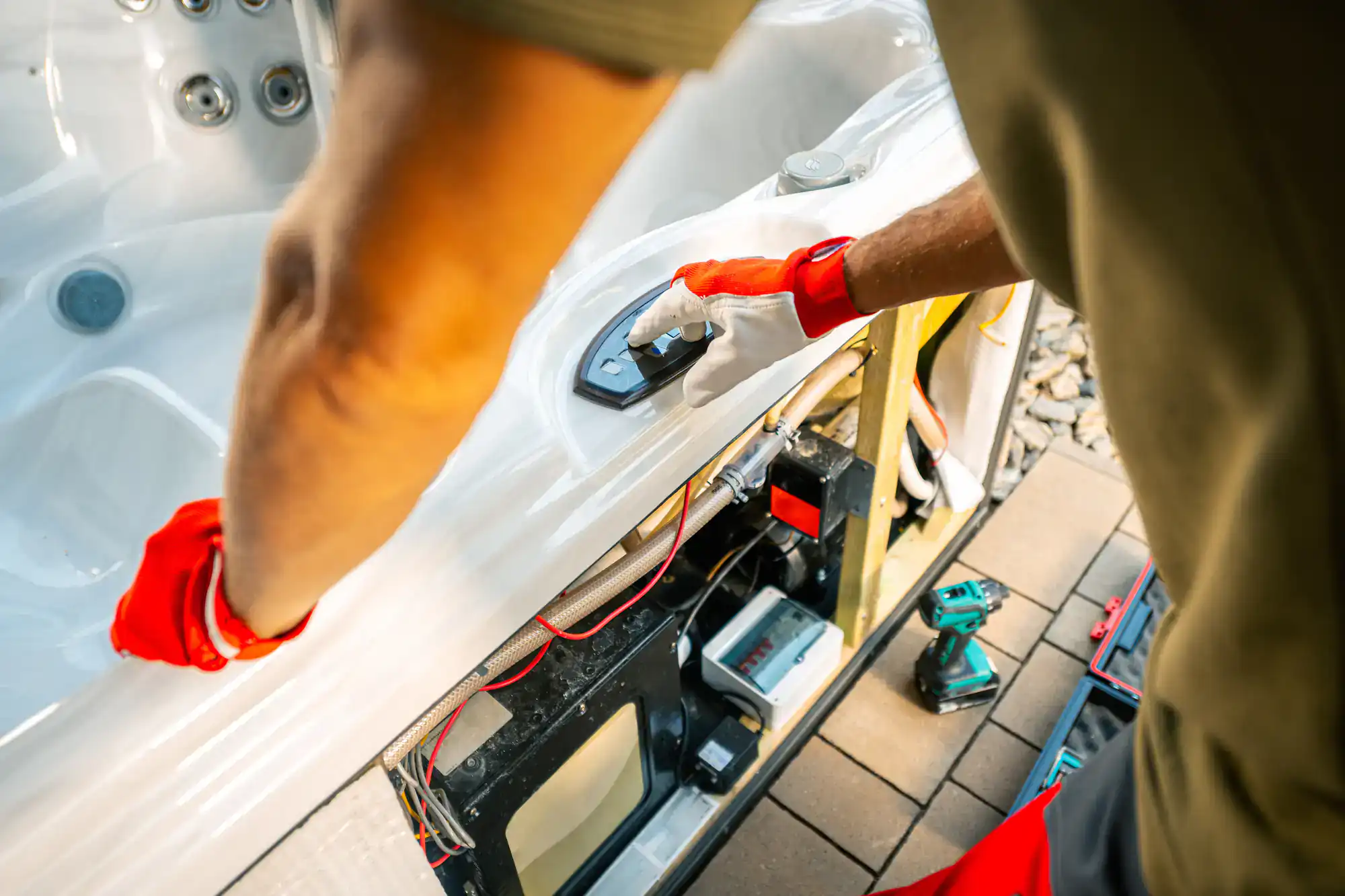
Hot Tub Electrical Wiring Process in Florence
It starts with a free estimate. Before any work is discussed, we look at your existing electrical panel to see whether it has the capacity to support a dedicated 240V hot tub circuit. This is one of the questions Florence homeowners ask most—”will my panel handle it?”—and the answer comes at the estimate, not after the job starts. If a panel upgrade or subpanel is needed, you’ll know upfront.
Once the scope is confirmed, a permit gets pulled. In Florence, electrical permits for hot tub wiring go through the City of Florence directly. For properties in unincorporated Lane County—including parts of Heceta Beach and areas around Dunes City—they go through Lane County’s Land Management Division. We handle that process and schedule the inspection. You don’t have to navigate that on your own.
The installation itself covers everything required under the 2023 Oregon Electrical Specialty Code and NEC Article 680: a dedicated circuit, a properly sized Class A GFCI breaker, weatherproof conduit run to the tub location, a code-compliant disconnect box placed at the right distance, and full equipotential bonding of all metal components. After the inspection passes, you have the documentation in hand. That matters for your homeowner’s insurance, and it matters if you ever sell the property.
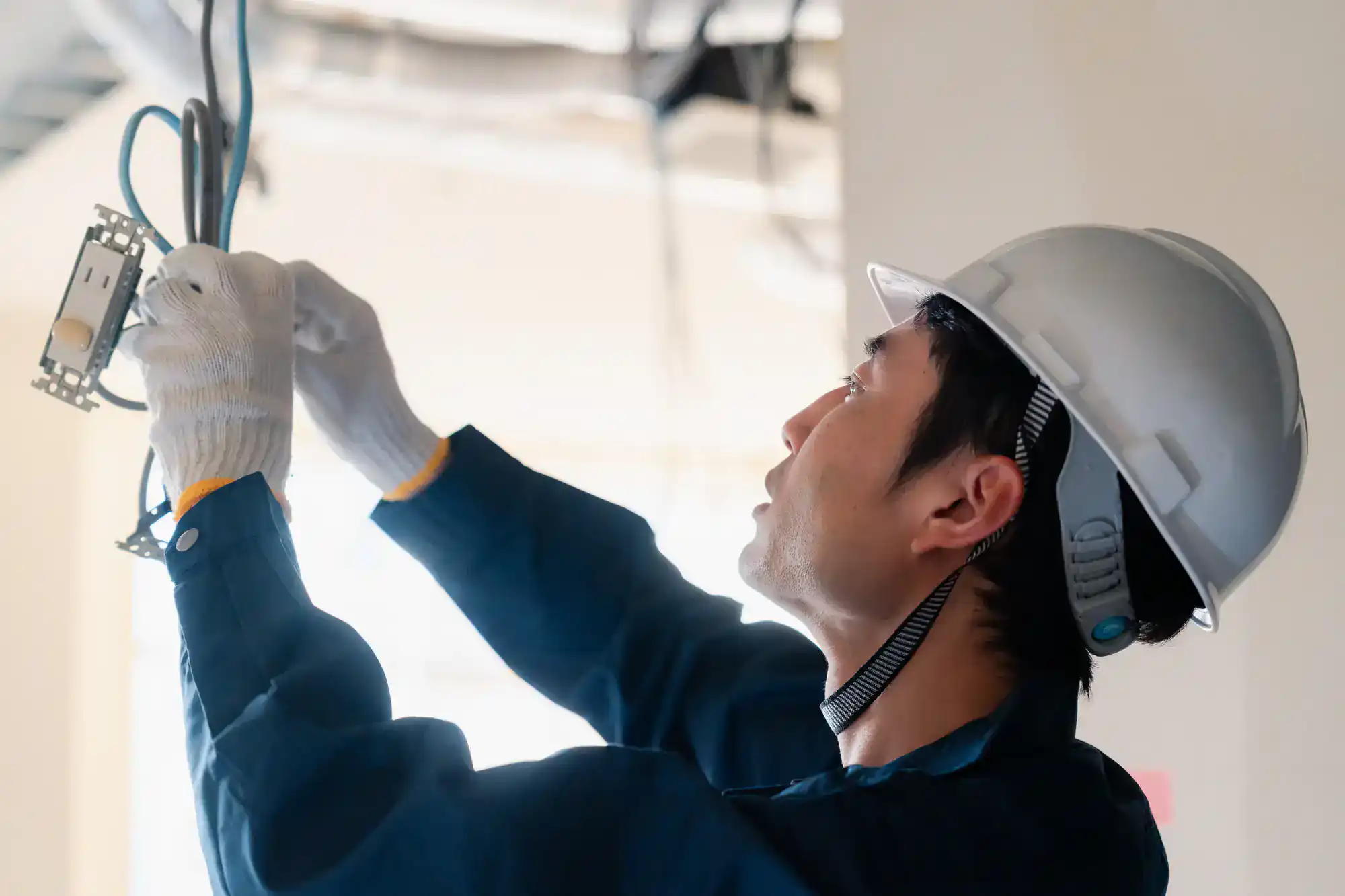
240V Hot Tub Wiring in Florence, Oregon
Every hot tub electrical installation starts with a panel assessment—because the most common issue in older Florence homes, particularly in the coastal neighborhoods that have been around for decades, is a panel that wasn’t sized for a 240V, 50-amp dedicated circuit. If there’s capacity, the installation moves forward. If there isn’t, you’ll get a clear explanation of what’s needed and what that looks like before anything is agreed to.
The installation includes the dedicated circuit, the properly sized GFCI breaker, weatherproof conduit run from the panel to the tub location, and an outdoor-rated disconnect box positioned within line of sight of the tub at the correct code-required distance. Equipotential bonding of all metal components—the water, the pump housing, the fittings—is included as a standard step, not an add-on. This is one of the steps that unlicensed contractors and handymen most commonly skip, and it’s one of the most important safety requirements in NEC Article 680.
For vacation rental operators in Florence—particularly those with properties in Heceta Beach or along the coast where hot tubs are listed as a featured amenity on Airbnb or VRBO—the permit and inspection documentation we provide is part of what protects you from liability exposure. Every installation is backed by a five-year labor warranty. We’re also a Tesla Certified Electrical Contractor, which reflects a standard of technical credibility that goes beyond the minimum required to hold a license.
Do I need a permit for hot tub electrical installation in Florence, Oregon?
Yes—a permit is required for hot tub electrical work in Florence, and it’s not something you want to skip. Within Florence city limits, permits are issued through the City of Florence directly. For properties in unincorporated Lane County—which includes parts of Heceta Beach and areas around Dunes City—permits go through Lane County’s Land Management Division. Either way, the permit process is not optional, and it’s not just a formality.
The permit triggers an inspection, and the inspection is what verifies the work was done to code. Without that sign-off, you have no documentation that the installation is safe and compliant. That matters for your homeowner’s insurance—many policies won’t cover claims tied to unpermitted electrical work—and it matters at resale, where an unpermitted installation can surface as a problem during the buyer’s inspection. We pull the permit and schedule the inspection as a standard part of every job, so you’re not left managing that process on your own.
What electrical does a hot tub need, and what size breaker is required?
Most full-feature hot tubs run on a 240V, 50-amp dedicated circuit—meaning that circuit serves the hot tub and nothing else. The breaker needs to be a Class A GFCI breaker, not a standard breaker. A standard breaker protects equipment from overloads. A GFCI breaker protects people by detecting ground faults and cutting power within milliseconds—in a wet environment, that’s the difference that matters.
The circuit runs on a 4-wire system: two hot conductors, one neutral, and one equipment ground, typically using 6 AWG copper wire run through weatherproof conduit. There’s also a disconnect box—a weatherproof outdoor shutoff—that has to be placed within line of sight of the tub, no closer than five feet and no further than the distance specified under the 2023 Oregon Electrical Specialty Code. The exact placement depends on your specific setup and site conditions, which is part of what we assess during the estimate visit. For Florence properties with longer runs from the panel to an outdoor tub location, the conduit route and wire length are factored into the scope before any work begins.
Can my existing electrical panel handle a hot tub, or will I need an upgrade?
That depends on your panel—and it’s one of the first things we check before anything else is discussed. A hot tub on a 240V, 50-amp circuit is a significant load, and if your panel is already running close to capacity or is an older 100-amp service, there may not be room for a dedicated circuit without adding a subpanel or upgrading the main service.
In Florence, this comes up more often in the older coastal neighborhoods—homes that have been around for several decades and were built before modern electrical loads were a consideration. It also comes up in some of the smaller vacation rental properties where the original panel wasn’t sized for the amenities that have been added over time. The estimate visit is specifically designed to answer this question before you commit to anything. If an upgrade is needed, you’ll know what it involves and what it costs—upfront, before the job starts, not after. We don’t start a job and then surface unexpected costs mid-project.
How does Florence's coastal climate affect outdoor hot tub electrical installations?
It affects it more than most homeowners expect. Florence sits at the mouth of the Siuslaw River on the Pacific Ocean, and the combination of salt air, persistent marine fog, and humidity that regularly sits between 87% and 94% is genuinely hard on outdoor electrical equipment. Standard materials that hold up fine in an inland Oregon city can corrode, degrade, or fail faster in this coastal environment.
That’s why we specify conduit, disconnect boxes, and every outdoor-rated component for wet, coastal conditions—not just minimum code compliance. Properly sealed connections, weatherproof enclosures, and the right conduit material for outdoor coastal exposure are part of how the installation holds up over time. Florence residents use their hot tubs year-round—the mild, cool climate makes a hot tub appealing in October fog just as much as in August sunshine—so the installation needs to perform reliably through years of that coastal weather, not just the first season.
Will improper hot tub wiring void my manufacturer warranty or homeowner's insurance?
Yes, on both counts—and this is something Florence homeowners, especially those with vacation rental properties, need to understand clearly. Most hot tub manufacturers include a warranty condition that requires installation by a licensed professional. If the wiring was done by a handyman, an unlicensed contractor, or as a DIY project, and something fails, the manufacturer has grounds to deny the warranty claim entirely. That’s a real financial exposure on a product that can cost several thousand dollars.
On the insurance side, homeowner’s policies typically require that electrical work be permitted and inspected. An unpermitted hot tub installation—even if it looks fine—can void coverage for any claim that’s connected to that work. For vacation rental operators in Heceta Beach or Dunes City who have guests using a hot tub as a listed amenity, the liability picture is even more serious. A guest incident tied to unpermitted or improperly installed wiring is not a situation where insurance steps in cleanly. A fully permitted, inspected, code-compliant installation with documentation is the only version that protects you on all fronts.
Why should Florence vacation rental owners care who installs their hot tub wiring?
Because the stakes are different when guests are involved. A hot tub at a personal residence is a comfort decision. A hot tub at a vacation rental property in Heceta Beach or along the Florence coast is a revenue-generating amenity with guest safety, insurance liability, and platform reputation attached to it. The wiring behind that tub needs to be permitted, inspected, and documented—not because it’s a nice-to-have, but because it’s what stands between you and a serious problem if something ever goes wrong.
Airbnb and VRBO guests expect the amenities they book to be safe and functional. A hot tub that trips breakers, loses power, or creates a safety incident for a guest is not a small issue for a rental operator. Our installations include the permit, the inspection sign-off, and a five-year labor warranty—the kind of documentation that holds up when an insurance company or a platform asks questions. For Florence property owners who have invested in a hot tub to drive nightly rates, having that paper trail is part of protecting the investment, not just a technicality.
Useful Links