
Generator Installation in Fairview, OR
When the Gorge Winds Hit, Fairview Loses Power First
Hear from Our Customers
Home Generator Installation, Fairview OR
When a Gorge wind event knocks out power along the I-84 corridor, the outage doesn’t wait for a convenient time. It happens at 2 a.m. in January when it’s 28 degrees outside, or on a Tuesday morning when you’re in the middle of a client call. A standby generator changes that equation entirely. Within seconds of detecting an outage, it starts automatically — no extension cords, no running to the garage, no waiting on PGE’s restoration timeline.
For Fairview homeowners who work from home, this matters in a way that goes beyond comfort. More than one in six workers in this community telecommutes. When the power goes out, the internet goes down, the laptop drains, and the workday is gone. A whole house generator keeps your home office running the same way it keeps your heat, your refrigerator, and your lights running — without you having to think about it.
The longer-term picture is worth considering too. A standby generator adds 3 to 5 percent to your home’s resale value. On a Fairview home valued around $437,000, that’s roughly $13,000 to $22,000 in added value — before you count a single hour of protection it provides while you’re living there.
Ready to get started?
Backup Generator Installation, Fairview, Oregon
Young Electric LLC is a second-generation, veteran-owned electrical contractor based in the Portland Metro area. We’ve been serving Fairview and the surrounding east Multnomah County communities since 2007. We were built on a straightforward idea — do the work right, stand behind it, and treat the customer like their time and money actually matter.
That veteran background isn’t just a label. It shapes how we operate: show up when we say we will, don’t cut corners on the permit, don’t leave a job half-done. We bring over four decades of combined electrical experience to every installation, and that depth shows up in the details — knowing how an older panel near Fairview’s city core interacts with a new transfer switch, or how to site a generator on a compact Fairview Village lot.
Our five-year installation warranty is something you won’t find at most local electrical contractors. It’s there because the work is done right the first time, and because a $10,000 to $15,000 investment deserves real protection — not a one-year handshake.

Whole House Generator Installer, Fairview, OR
The first step is a site assessment and load calculation. This is where the work actually starts — figuring out what your home needs to run through an outage, not just guessing at a number. Fairview’s housing stock varies quite a bit, from compact townhomes in Fairview Village to older single-family homes near the city core, and each one has different electrical loads and panel configurations. Getting the sizing right matters, because a generator that’s too small won’t carry your home, and one that’s oversized costs more than it needs to.
From there, we handle the permit application through Fairview’s city building department. This is a detail that trips up homeowners who assume the process runs through Multnomah County — it doesn’t. Fairview issues its own electrical permits, and the department is small, so knowing the local workflow matters. We manage all of it, including scheduling the inspection and getting the job closed out correctly.
Once permits are in place, the physical installation typically takes a day — concrete pad or pea gravel bed, fuel line connection, transfer switch installation, and system startup. The full process from first call to a working, inspected system takes several weeks when you account for permits and gas line coordination. That’s why starting before storm season is the right move, not after one has already come through.

Emergency Generator Installation, Fairview, Oregon
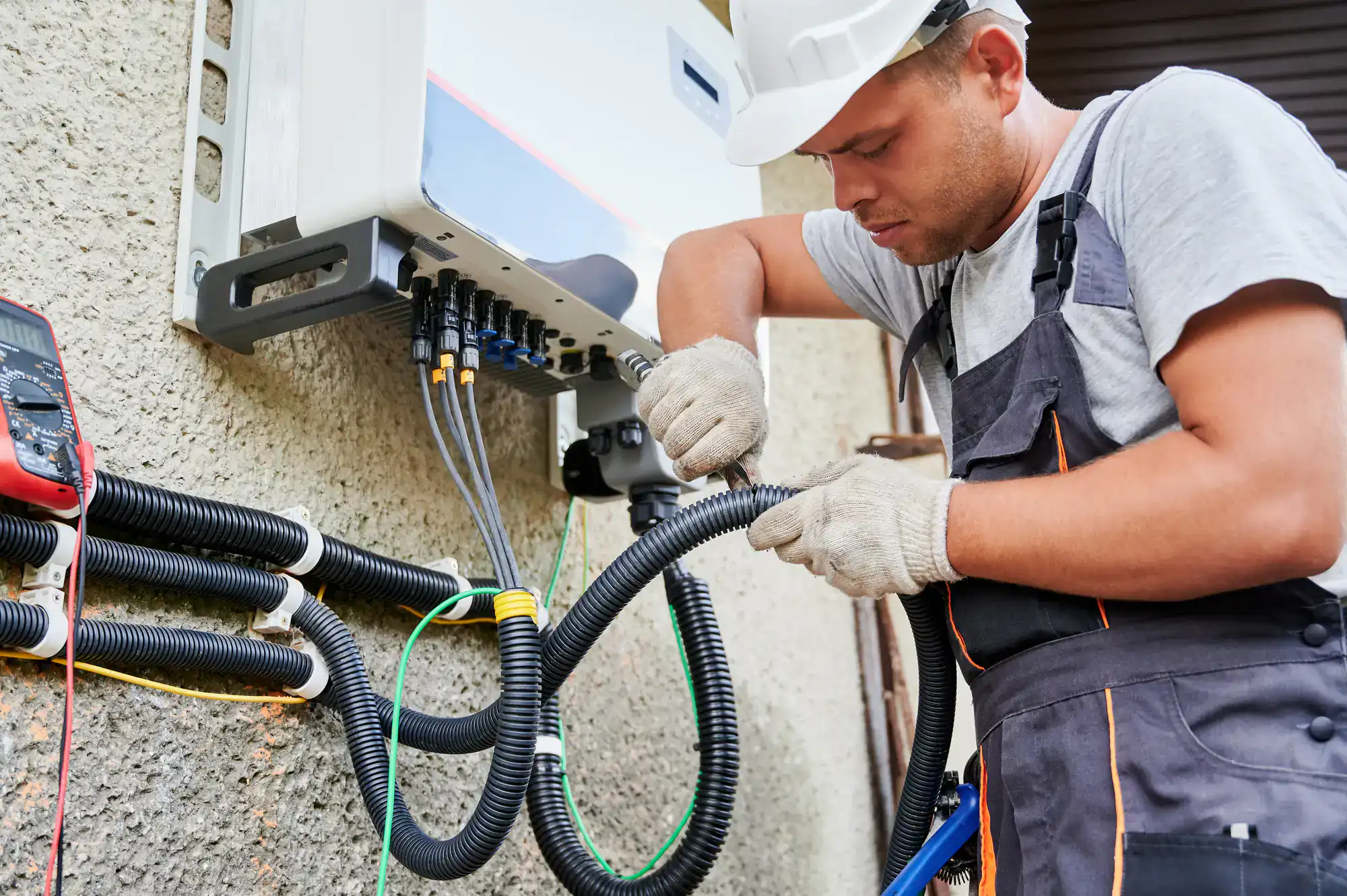
Generator installation with Young Electric LLC covers the full scope — not just the equipment sitting on a pad. That means the load calculation, system selection guidance, site preparation, transfer switch installation, fuel line connection, and all permitting through Fairview’s city building department. The transfer switch is what makes a standby generator legal and safe in Oregon — it prevents back-feeding onto the PGE grid, and it’s required by state code. We install it as a standard part of every job, not an add-on.
We work with residential, commercial, and industrial installations, and handle everything from portable generator setups to whole-house standby systems. If your Fairview Village townhome has limited yard space or specific siting constraints, that gets worked out during the site assessment — not discovered on installation day. If your home near Sandy Boulevard or Halsey Street has an older panel that needs evaluation before a generator can be connected, that conversation happens upfront.
Every installation is backed by a five-year warranty on the work itself. Young Electric LLC is licensed, bonded, and insured, and we pull every permit required by the City of Fairview. If you’ve had contractors skip that step before, you already know what that can cost you — in warranty coverage, in liability, and in the hassle of an unpermitted installation showing up on a home sale.
Does generator installation in Fairview, OR require a city permit?
Yes, and this is a detail that catches a lot of Fairview homeowners off guard. Unlike most communities in the Portland metro, Fairview runs its own Building Department and issues its own electrical permits — the process does not go through Multnomah County. Any generator installation that includes a transfer switch connection to your home’s electrical system requires a city-issued permit and a licensed electrician to pull it. Oregon state code is clear on this: the connection must be permitted, inspected, and done by a properly licensed contractor.
Working with someone who doesn’t know Fairview’s city-specific permit process can mean delays, incorrect filings, or inspections that don’t get scheduled on time. We handle the entire permit process as part of every installation — application, coordination with the city’s building department, and final inspection closeout. You don’t have to track down paperwork or figure out which department to call.
How long does the full generator installation process take in Fairview?
The physical installation itself — setting the pad, connecting the fuel line, installing the transfer switch, and starting the system up — typically takes about a day. But the full process from your first call to a working, inspected generator takes several weeks, and that’s not something most homeowners expect when they first start looking into this.
The timeline is driven by a few things: the permit application through Fairview’s city building department, scheduling the inspection, and coordinating with a gas line contractor if a new propane or natural gas line is needed. These steps can’t be rushed, and they have to happen in order. The practical takeaway is that if you’re thinking about this because storm season is coming, you want to start the conversation now — not after the first Gorge wind event of the year. Homeowners who call after a major outage are waiting in line behind everyone else who waited.
What size whole house generator do I need for my Fairview home?
There’s no single right answer here, and anyone who gives you a size recommendation without first looking at your home’s electrical panel and understanding your load requirements is guessing. The sizing process starts with a load calculation — adding up the wattage demands of the circuits and appliances you need to run during an outage, and matching that to a generator with enough capacity to handle it.
For a typical Fairview single-family home, a whole-house standby generator in the 16kW to 22kW range covers most needs comfortably. But if you have a compact Fairview Village townhome with a smaller footprint and fewer large appliances, you may need less. If you have a larger home with electric heat, a well pump, or other high-draw equipment, you may need more. We start every installation with this calculation — not because it’s required, but because getting it wrong means either a generator that can’t carry your home or one that cost more than it needed to.
What's the difference between a standby generator and a portable generator?
A portable generator runs on stored gasoline, requires manual setup every time the power goes out, and can only power a limited number of appliances through extension cords. A standby generator is permanently installed outside your home, connected to your natural gas or propane supply, and wired directly to your electrical panel through a transfer switch. When PGE loses power, the standby unit detects the outage and starts automatically within seconds — you don’t have to do anything.
For Fairview homeowners, the practical difference is significant. When a Gorge wind event knocks out power at midnight in January, the last thing you want to do is go outside in the dark, drag out a portable unit, and start fueling it up. A standby generator is already running before you’ve had time to notice the lights went out. There’s also a safety consideration — portable generators produce carbon monoxide and can’t be run indoors or in an attached garage. Standby units are installed outdoors with proper clearances and don’t carry that risk.
Is a whole house generator actually worth the cost for a Fairview homeowner?
That depends on how you look at the math. The upfront cost of a whole-house standby generator — equipment and installation combined — typically runs in the range of $10,000 to $20,000 for most residential systems. That’s a real number, and it makes sense to think carefully about it.
Here’s what tends to shift the calculation: Fairview’s location at the western entrance to the Columbia River Gorge puts it in the direct path of the Pacific Northwest’s most consistent outage driver. East wind events along the I-84 corridor are not rare — they happen every winter, and the outages they cause can stretch across multiple days when ice is involved. One extended outage can mean hundreds of dollars in lost food, hotel costs if the house gets too cold, and — for Fairview’s substantial work-from-home population — lost income. Beyond the protection itself, a standby generator adds 3 to 5 percent to your home’s resale value. On a home worth $437,000, that’s a meaningful return. Most homeowners who go through with the installation describe it as one of the better decisions they made for the house.
Can Young Electric install a generator in a Fairview Village townhome?
Yes, though townhome installations do require more upfront planning than a standard single-family lot. Fairview Village was designed with compact lots, shared walls, and walkable street layouts — which means generator placement has to account for setback requirements, proximity to neighboring units, and in some cases HOA rules about exterior equipment. None of these are dealbreakers, but they’re details that need to be worked out during the site assessment, not discovered on installation day.
We approach every installation with a site visit first — looking at where the generator can be placed to meet code clearances, how the fuel line will be routed, and whether the existing panel configuration supports the connection without additional work. For Fairview Village specifically, the smaller lot footprint sometimes means a more compact unit is the right fit, or that the placement requires a bit more creativity than a typical suburban yard. The permit process runs through Fairview’s city building department regardless of the housing type, and we handle that from start to finish.
Useful Links