
Hot Tub Electrical Installation in Fairview, OR
Fairview's Wet Winters Demand Wiring That Holds Up
Hear from Our Customers
Hot Tub Wiring Fairview, OR
Once your hot tub is wired correctly, you stop thinking about it. The breaker doesn’t trip. The GFCI holds. You get in the water on a rainy October evening and the only thing on your mind is how good it feels to be out there while the rest of the world is stuck inside. That’s the outcome—not a technical checklist, just a hot tub that works every time, without worry.
For Fairview homeowners, that reliability matters more than it might in other parts of the Portland Metro. Fairview winters run from October through April with steady rainfall, and those are exactly the months when the tub gets used most. Outdoor electrical components installed to a minimum standard start showing their limits in that kind of climate. Weatherproof conduit, outdoor-rated disconnect boxes, and properly seated GFCI breakers aren’t extras here—they’re what makes the difference between a setup that lasts five years and one that needs work after the first wet season.
If your home is in one of Fairview’s older neighborhoods—along Sandy Boulevard, in Old Town, or in the pre-Village parts of the city—there’s a real chance your electrical panel was built for a different era. Getting a hot tub wired in an older Fairview home starts with an honest look at what the panel can actually support. When that’s handled upfront, before any work begins, you don’t get surprised mid-job. You get a clear picture, a fair quote, and a timeline you can count on.

Ready to get started?

Hot Tub Electrician Fairview, Oregon
Young Electric LLC is a Portland-based, family-owned electrical company with over 40 years of combined experience serving the Portland Metro area—including Fairview and the broader East Multnomah County corridor. Jeremy Young, the owner, is a second-generation electrician and military veteran who built this company on a straightforward idea: do the job right, explain what you’re doing, and stand behind it.
Fairview is about 16 miles east of Portland, well within the area we work every week. Whether the job is in Fairview Village, near Fairview Lake, or in one of the older neighborhoods along NE Sandy Boulevard, we’re familiar with the range of homes and electrical situations that come with this part of the Metro—including the older panel questions that come up more often here than in newer developments.
We hold both an Oregon CCB license and a BCD electrical license—the two credentials Oregon requires for legal electrical work. We carry a 4.8-star rating across more than 1,400 Google reviews. And we back every installation with a 5-year labor warranty—something no other electrician serving Fairview currently offers.

240V Hot Tub Wiring Fairview, Oregon
It starts with a free estimate. When we come out to your Fairview property, the first thing we assess is your existing electrical panel—how much capacity it has, whether a dedicated 240V circuit can be added without an upgrade, and how far the run is from the panel to where the hot tub is sitting. This isn’t a formality. For a lot of Fairview homes, especially those built before the Fairview Village development era, the panel check is the most important part of the conversation. You need to know what you’re working with before anyone pulls a single wire.
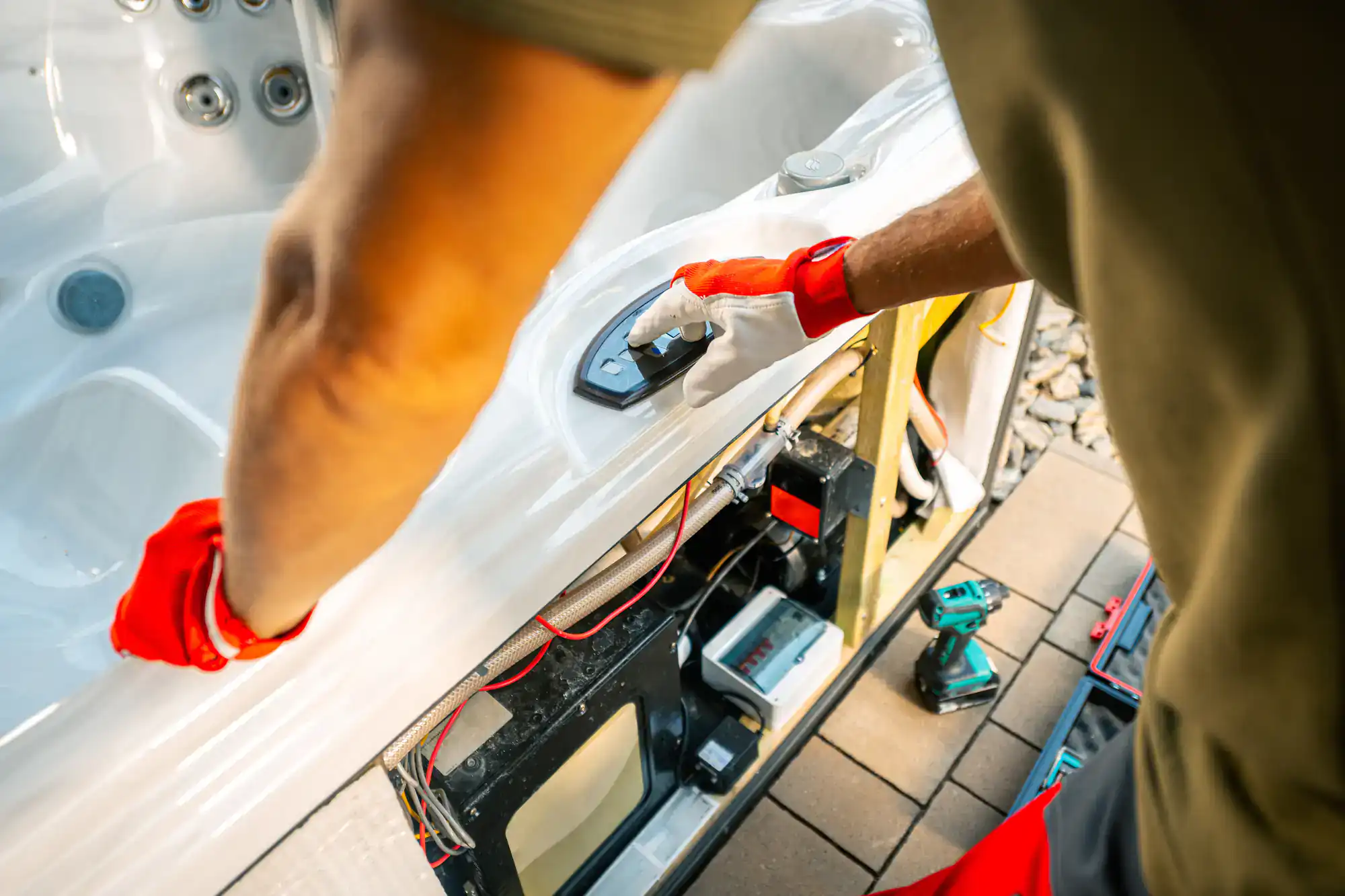
Once the estimate is agreed on, we schedule the work. We start at 7am, which matters if you’re one of the many Fairview residents who commutes into Portland via I-84 and wants the work done before your day gets going. The installation itself involves running a dedicated 240V circuit—typically a 50-amp line using 6 AWG copper wire through weatherproof conduit—from your panel to the hot tub location. A GFCI breaker gets installed at the panel, and a weatherproof disconnect box goes in at the right distance from the tub, per Oregon code requirements.
Before the job is considered finished, we pull a permit through the Fairview Building Department and a licensed inspector signs off on the work. That inspection is what protects you—at resale, with your insurance company, and in terms of knowing the installation was done to the current Oregon Electrical Specialty Code. We handle the permit process as a standard part of every job. You don’t have to chase it down yourself.

GFCI Breaker Hot Tub Installation Fairview
Every hot tub electrical installation we complete in Fairview includes a dedicated circuit—typically a 50-amp, 240V line on its own breaker, completely separate from the rest of your home’s electrical load. Nothing else shares that circuit. The GFCI breaker installed at the panel is a Class A breaker, which is what Oregon code and NEC Article 680 require for outdoor spas. This is not the same as a standard breaker—a GFCI detects ground faults and cuts power within milliseconds, which is the only real protection against electrocution in a wet environment.
The outdoor disconnect box—the emergency shutoff near the tub—gets placed within line of sight and at the code-required distance from the water. In Fairview’s climate, that box needs to be properly weatherproofed. The wiring runs through sealed conduit, underground where the site calls for it, so there’s nothing exposed to the elements or cutting across your yard. For properties near Fairview Lake or in Fairview Village where outdoor aesthetics matter, a clean underground run makes a real difference in how the finished installation looks.
Equipotential bonding is included in every job—this is the step where all metal components near the tub get connected to a common ground. It’s required by NEC Article 680 and it’s one of the steps that unlicensed contractors and handymen routinely skip. Skipping it creates a hidden shock hazard that won’t show up until something goes wrong. We don’t skip it. The job also includes a permit pulled through the Fairview Building Department and a final inspection—and the whole installation is covered by a 5-year labor warranty.
Do I need a permit for hot tub electrical installation in Fairview, Oregon?
Yes—a permit is required for hot tub electrical work in Fairview. The Fairview Building Department handles permits and inspections for electrical work within city limits, and any 240V hot tub installation needs to go through that process before the work is considered complete. This isn’t optional, and it’s not just a formality.
The permit requirement exists because a licensed inspector needs to verify that the work meets the Oregon Electrical Specialty Code—the updated version of which went into effect October 1, 2023. Skipping the permit means skipping that inspection, which creates real problems: your homeowner’s insurance may not cover a claim tied to unpermitted electrical work, and unpermitted installations are one of the most common issues flagged during home sales in Multnomah County. We pull the permit and schedule the inspection as a standard part of every installation in Fairview. You don’t have to navigate that process yourself.
What size breaker does a 240V hot tub need, and why does it matter?
Most full-feature hot tubs require a dedicated 50-amp, 240V circuit with a Class A GFCI breaker. The exact amperage depends on your specific tub’s electrical requirements—you’ll find that in the owner’s manual or on the equipment label—but 50 amps is the standard for the majority of residential hot tubs on the market today.
The GFCI part matters more than most people realize. A standard circuit breaker protects your equipment from overloads. A GFCI breaker protects people—it detects ground faults and cuts power in milliseconds, which is the critical safety layer when electricity is operating near water. Oregon code and NEC Article 680 both require a Class A GFCI breaker for outdoor spas. This is not a component where substituting a cheaper or different breaker type is acceptable. We install the correct breaker for your specific tub and verify it during the final inspection.
My Fairview home is older—will my electrical panel support a hot tub?
It depends on the panel, and that’s exactly why we assess it during the free estimate—before any work is quoted or scheduled. Homes in Fairview’s older neighborhoods, particularly in Old Town and along the Sandy Boulevard corridor, were often built with 100-amp service panels that made sense at the time but weren’t designed with today’s electrical loads in mind. A hot tub needs a dedicated 50-amp circuit, which requires available capacity in the panel.
If your panel has room, the installation is straightforward. If it doesn’t, you’re looking at either a subpanel installation or a full panel upgrade before the hot tub circuit can be added safely. We’ll tell you exactly what your panel shows during the estimate visit—no surprises mid-job, no costs that appear after the work has already started. If an upgrade is needed, you’ll know upfront and can decide how you want to proceed.
How far does the disconnect box need to be from the hot tub?
The disconnect box—sometimes called the spa panel or emergency shutoff—must be placed no closer than 5 feet from the hot tub and within line of sight of it, so you can reach it quickly if something goes wrong. Oregon follows NEC Article 680 on this requirement, and the Fairview Building Department inspector will check this placement during the final inspection.
The disconnect also needs to be weatherproof and outdoor-rated. In Fairview’s climate, where the tub is likely to be used through the wet season from October through April, a properly sealed and rated disconnect box isn’t optional—it’s what keeps the installation functioning reliably year after year. We position the disconnect correctly on every job, and the placement gets confirmed during the permit inspection before the job is signed off.
What is equipotential bonding and does my hot tub installation need it?
Equipotential bonding is a step required by NEC Article 680 that connects all metal components near the hot tub—pump housings, metal fittings, water—to a common ground. The purpose is to eliminate voltage differences between metal surfaces that a person could bridge with their body. Without proper bonding, there can be a small but real voltage gradient in and around the water that creates a shock risk even when nothing else is visibly wrong with the installation.
This is one of the steps that handymen and unlicensed contractors most commonly skip, because it adds time and requires knowledge of the code requirements. Skipping it won’t show up in a visual inspection of the finished job—but it creates a hidden hazard that can surface later. We include equipotential bonding as a standard part of every hot tub electrical installation. It’s not an add-on. It’s part of doing the job correctly, and it’s verified during the final inspection through the Fairview Building Department.
Why should I hire Young Electric LLC over other electricians serving Fairview?
A few things stand out. First, we’re a Portland-based company—Fairview is a regular part of our service territory, not an out-of-area stretch. Some of the companies that show up in search results for hot tub wiring in Fairview are based in Washington state and are reaching into the Oregon market through their websites. Oregon requires two separate licenses for legal electrical work—a CCB license and a BCD electrical license through the Building Codes Division. We hold both. It’s worth asking any electrician you’re considering whether their Oregon credentials are current before you sign anything.
Second, the 5-year labor warranty. No other electrician currently serving Fairview advertises this. It means that if something goes wrong with the work within five years of installation, it’s covered—no debate, no extra charge. For a homeowner who just invested in a hot tub and wants to know the electrical work is going to hold up through Fairview’s wet winters, that warranty is a meaningful commitment. Add 1,400+ Google reviews at 4.8 stars, and the track record is there to back it up.
Useful Links