
Hot Tub Electrical Installation in Troutdale, OR
Gorge Winds Don't Forgive a Sloppy Installation

Hear from Our Customers
Hot Tub Wiring in Troutdale, OR
When the wiring is done correctly, you stop thinking about it. The tub heats up, the GFCI breaker does its job quietly in the background, and the only thing on your mind is whether you want to get in before or after dinner. That’s the outcome—not a stack of technical specs, just a hot tub that works reliably every time you want it to.
For Troutdale residents, that reliability matters more than it does in most Portland suburbs. You’re at the western mouth of the Columbia River Gorge, where documented gap wind events have pushed gusts past 100 mph in the corridor from Troutdale to Multnomah Falls. Outdoor electrical components—your disconnect box, conduit runs, weatherproof covers—take a beating here that a backyard in a calmer part of the metro never sees. An installation done right from the start holds up to that. One that cuts corners shows its problems at the worst possible moment.
There’s also the panel question, which comes up constantly in Troutdale’s older neighborhoods. A significant share of homes in Cherry Park and the historic town center were built in the 1970s and 1980s, when a 100-amp panel was considered plenty. Adding a dedicated 50-amp, 240V hot tub circuit to one of those panels requires an honest conversation before any work begins. We have that conversation upfront, not after the job has already started.

Ready to get started?

Hot Tub Electrician Serving Troutdale, OR
Young Electric LLC is a second-generation, family-owned electrical company based in Portland, serving the entire Portland Metro area—including Troutdale and the east Multnomah County corridor along I-84. Jeremy Young grew up in this trade. We have over 40 years of combined experience, hold both a CCB license and an Oregon Building Codes Division electrical license, and have pulled more than 3,224 permitted jobs across Oregon. That’s not a marketing number—it’s a verifiable record of inspected, code-compliant work.
We’re also a Tesla Certified Electrical Contractor and carry a 4.8-star rating from more than 1,400 Google reviews. The consistent themes across those reviews—on-time arrival, clear communication, no surprise charges—reflect how we actually operate. When you call, a real person answers. When the estimate comes, it includes a straight answer about your panel capacity, not a vague quote that grows after the job starts.
For Troutdale homeowners near McMenamins Edgefield or out in the Sunrise neighborhood, that kind of accountability is exactly what the job calls for.
240V Hot Tub Wiring Process in Troutdale
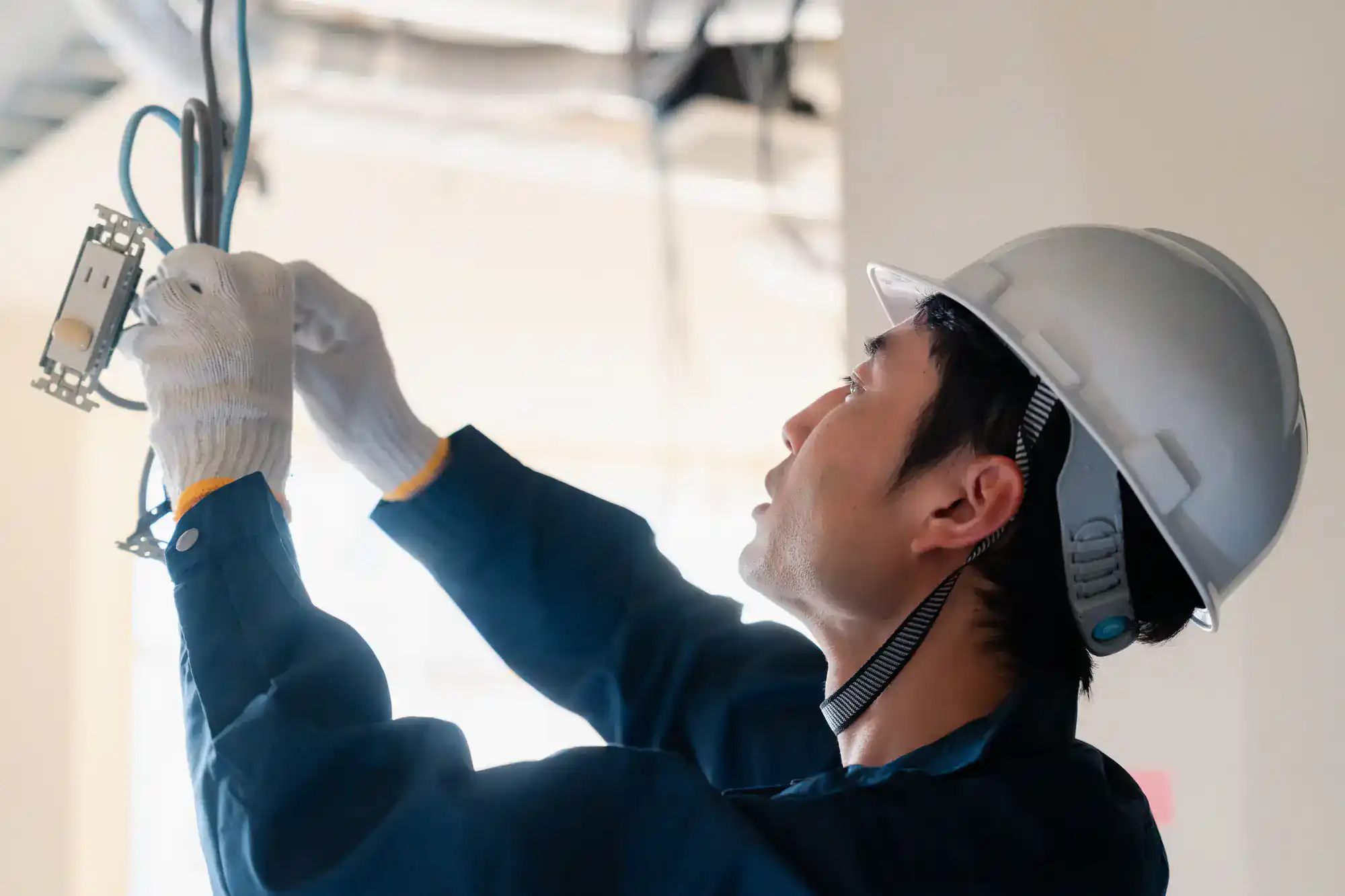
It starts with a free estimate. Before any work is scheduled, we assess your existing electrical panel to determine whether it can support a dedicated 50-amp, 240V circuit. In Troutdale, this step matters more than in newer parts of the metro—a lot of homes here were built before modern electrical loads were a consideration, and the panel situation needs to be clear before anything else moves forward. If a subpanel or service upgrade is needed, you’ll know that before a single wire is pulled, not after.
Once the scope is confirmed, the permit comes next. In Troutdale, an electrical permit is required for hot tub wiring. Oregon law places that responsibility on the licensed electrician, not the homeowner. We handle the permit application through the city’s Community Development Department, schedule the inspection, and manage the paperwork. You don’t have to figure out the CSS portal or track down the right contact number.
The installation itself covers everything the job requires: a dedicated circuit run from your panel or subpanel, weatherproof conduit, a properly sized GFCI breaker, a code-compliant disconnect box placed at the correct distance from the tub, and full equipotential bonding of all metal components as required by NEC Article 680. When the city inspector signs off, the job is done—and backed by a 5-year labor warranty that we stand behind.
Hot Tub Electrical Wiring Services in Troutdale
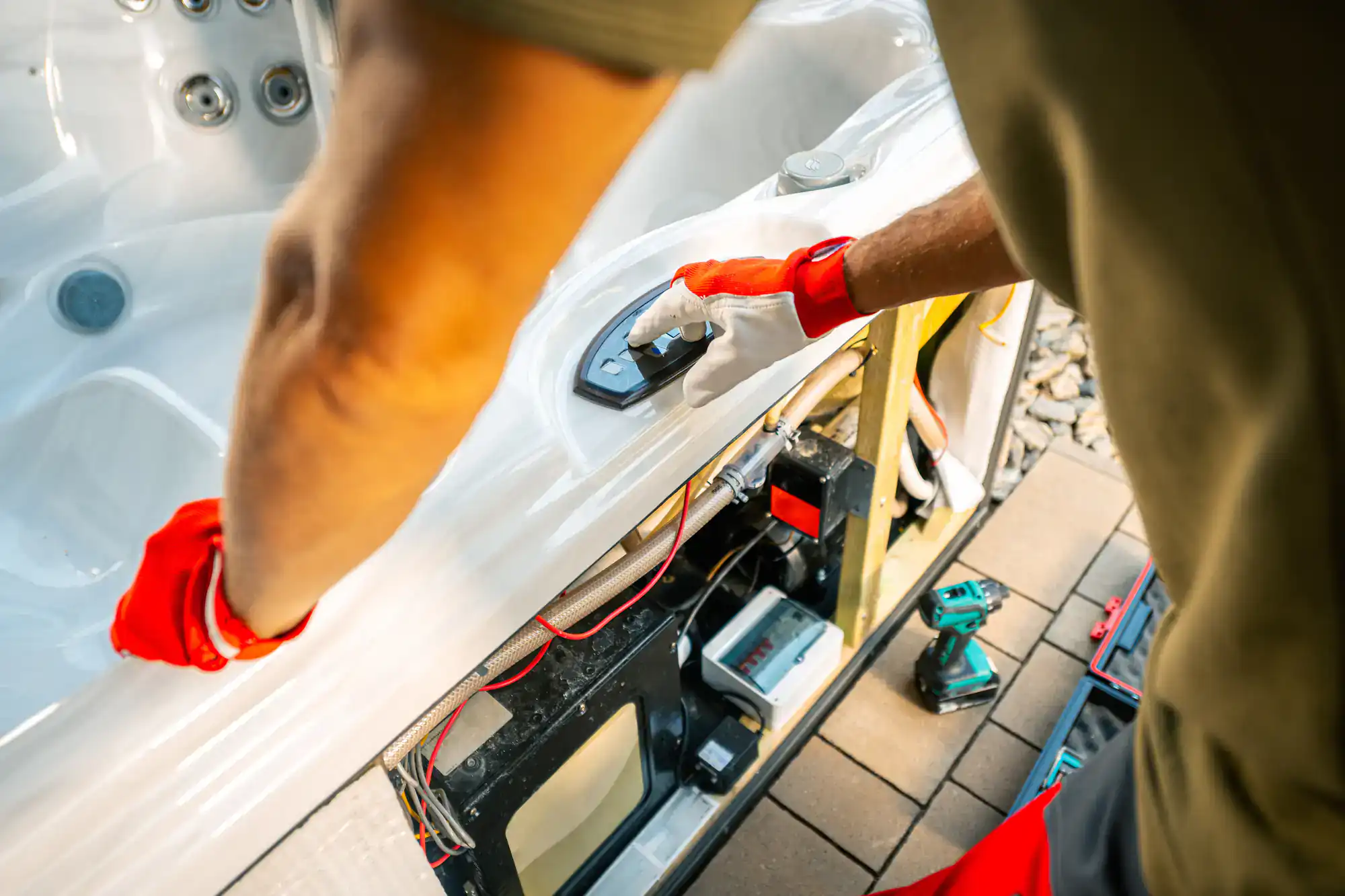
Hot tub electrical installation in Troutdale covers more than running a wire from your panel to the backyard. The full scope includes a panel capacity assessment, a dedicated 240V circuit installation, a properly rated GFCI breaker, weatherproof conduit routed to code, a disconnect box positioned within the required distance and line of sight from the tub, and equipotential bonding of all metal components. That bonding step—required under NEC Article 680—is something unlicensed installers and handymen routinely skip, and it’s one of the more serious safety gaps in a wet electrical environment.
For Troutdale homes built in the 1970s and 1980s, the panel assessment is often where the most important conversation happens. If your home is running a fully loaded 100-amp service, adding a 50-amp hot tub circuit may require a subpanel addition or a service upgrade. We identify this during the estimate—not mid-job—so the total scope and cost are clear from the start.
Every installation also includes permit coordination with the City of Troutdale’s Building Division and scheduling of the final electrical inspection. The work is done under Oregon’s updated 2023 Electrical Specialty Code, which means it’s current, inspectable, and won’t create problems when your homeowner’s insurance or a future buyer’s inspector takes a look. We don’t offer named service packages—the scope is built around what your specific home and installation actually require.
Do I need a permit for hot tub electrical installation in Troutdale, OR?
Yes—a permit is required. The City of Troutdale’s permit requirements state clearly that any work involving GFCI-protected circuits requires a permit, and hot tub installations require GFCI protection by code. There’s no gray area here.
The good news is that Oregon law places the permit responsibility on the licensed electrician, not the homeowner. We handle the permit application through Troutdale’s Community Development Department, schedule the required inspection, and take care of the process from start to finish. You don’t have to contact the city, navigate the online CSS portal, or figure out what documentation is needed. The permit protects you—it means the work has been reviewed by a city inspector and meets Oregon’s current electrical code. That matters for your homeowner’s insurance coverage and for any future home sale in Troutdale’s competitive real estate market.
What size breaker does a 240V hot tub require, and does my panel support it?
Most full-feature hot tubs require a dedicated 50-amp, 240V circuit with a GFCI breaker—that covers roughly 85% of residential installations. The GFCI breaker is not interchangeable with a standard breaker. A standard breaker protects equipment from overloads. A GFCI breaker protects people by detecting ground faults in milliseconds—which is what makes it a code requirement in a wet environment, not just a recommendation.
Whether your panel can support that circuit is a separate question, and it’s one that comes up often in Troutdale. Homes in Cherry Park, the historic town center, and older sections of the Sunrise neighborhood were frequently built with 100-amp service panels that may already be near capacity. Before any work begins, we assess your panel as part of the free estimate. If a subpanel or service upgrade is needed, you’ll know upfront—with a clear explanation of what’s involved and why—not as a surprise after the job has started.
How does Troutdale's weather affect outdoor hot tub electrical installations?
Troutdale sits at the western entrance to the Columbia River Gorge, which makes it one of the windiest locations in the entire Portland Metro area. Gap wind events in the Gorge corridor—from Troutdale east toward Multnomah Falls—have been documented at gusts exceeding 100 mph. That’s a specific, named meteorological condition that Troutdale residents experience in a way that most other Portland suburbs simply don’t.
For outdoor electrical installations, that wind exposure matters. The disconnect box, conduit, and weatherproof covers need to be installed correctly and secured properly—not just adequate for a calm suburban backyard. Beyond wind, Troutdale’s wet winters and year-round rain mean that outdoor electrical components are exposed to moisture consistently. All of this is factored into how we approach the installation—weatherproof materials, code-compliant conduit routing, and a 5-year labor warranty that stands behind the work through whatever the Gorge corridor sends your way.
Does improper hot tub wiring affect my homeowner's insurance or the hot tub warranty?
Both, and neither outcome is minor. Most hot tub manufacturers include a warranty condition requiring that the electrical installation be performed by a licensed professional. If the wiring was done by a handyman, a hot tub dealer’s unlicensed contact, or anyone without the proper Oregon credentials—a CCB license and a BCD electrical license—the manufacturer’s warranty is typically voided from the start. That’s a significant exposure on an appliance that costs several thousand dollars.
On the insurance side, unpermitted electrical work creates real problems. If a claim is ever filed that connects back to the hot tub circuit—whether it’s a fire, a shock incident, or equipment damage—and the work was done without a permit, your insurer has grounds to deny coverage. In Troutdale’s housing market, where home values have risen sharply in recent years, that’s a risk that isn’t worth taking to save a few hundred dollars on the front end. Permitted, inspected work by a licensed electrician is what keeps both warranties and coverage intact.
How long does hot tub electrical installation typically take in Troutdale?
For a straightforward installation—where the panel has capacity, the run distance is reasonable, and no subpanel work is needed—the job typically takes between four and eight hours. That’s the national range for a licensed electrician doing the work correctly, and it holds true for most Troutdale installations in newer homes or properties with updated electrical service.
Where Troutdale jobs can run longer is when the home has an older 100-amp panel that needs a subpanel addition before the hot tub circuit can be added. That’s a meaningful share of the housing stock in Troutdale’s established neighborhoods, and it’s exactly why the panel assessment during the free estimate matters so much. You want to know the full scope before the crew shows up, not on the day of the job. We start as early as 7am, which works well for Troutdale homeowners who commute into Portland or the east metro and need the work completed before or around their workday schedule.
Why do some Troutdale homeowners end up needing a subpanel for their hot tub?
It comes down to when the house was built and what the original electrical service was designed to handle. A significant portion of Troutdale’s residential neighborhoods—Cherry Park, the historic town center area, and older sections near the Sandy River corridor—were developed in the 1970s and 1980s. Homes from that era were commonly built with 100-amp service panels, which made sense for the electrical loads of that time. Today, those same panels are often carrying modern appliances, HVAC systems, and lighting loads that didn’t exist when the home was wired.
Adding a dedicated 50-amp, 240V hot tub circuit to a panel that’s already near capacity isn’t just a tight fit—it’s a code and safety issue. The solution is usually a subpanel, which creates additional circuit capacity without replacing the main service entirely. In some cases, a full service upgrade to 200-amp is the right call. We identify which situation you’re dealing with during the free estimate, explain the options clearly, and give you a complete picture of the project scope before any work begins. No surprises, no scope changes mid-job.
Useful Links