
Hot Tub Electrical Installation in Springfield, OR
Springfield's Wet Winters Demand Wiring That Actually Holds Up

Hear from Our Customers
Hot Tub Wiring in Springfield, OR
Springfield’s climate is genuinely ideal for hot tub ownership. Long, wet winters from October through April, mild summers that never get brutal — you can use a hot tub here year-round in a way that just doesn’t make sense in drier parts of Oregon. But that same wet, humid environment puts real stress on outdoor electrical components.
A disconnect box installed with the wrong hardware, a GFCI breaker sitting in a non-weatherproof enclosure, conduit that wasn’t properly sealed — these things fail faster in Springfield than they would in a drier climate. When they fail near water, the consequences aren’t just inconvenient.
A properly done hot tub electrical installation means a dedicated 240V circuit sized for your tub, a weatherproof disconnect placed at the correct distance, a GFCI breaker that actually trips when it needs to, and every metal component bonded and grounded the way Oregon’s electrical code requires. When those pieces are in place, your tub runs reliably through every rainy season without you thinking twice about it.
There’s also the older housing stock to consider. Most Springfield homes — whether you’re in Thurston, Mid-Springfield, or near Hayden Bridge — were built before 240V hot tub circuits were something anyone planned for. We assess your panel as part of the free estimate, so you know exactly what your home needs before a single wire gets run.
Ready to get started?

Hot Tub Electrician in Springfield, OR
Young Electric LLC is a second-generation, family-owned electrical contractor serving Oregon homeowners. Jeremy Young, the owner, is also a military veteran — and that combination of generational trade knowledge and the discipline that comes with military service shows up in how we do the work and how we communicate with customers.
With a 4.8-star rating from over 1,400 verified Google reviews and a BuildZoom score in the top 1% of all Oregon contractors, our track record is easy to check. We hold both the CCB license and the BCD electrical license that Oregon law requires — the two credentials that separate a qualified electrician from someone who shouldn’t be touching a 240V circuit.
For Springfield homeowners — from the newer builds going up in the Thurston area to the older homes in the Washburne District — we bring the same standard to every job: pull the permit, do the work right, pass the inspection, and back it with a 5-year labor warranty.

240V Hot Tub Wiring Springfield, OR
It starts with a free estimate visit. Before any work is quoted or scheduled, a licensed electrician from our team comes out to assess your home’s electrical panel, measure the run distance from the panel to where your tub is going, and look at any trenching or conduit routing that the layout requires.
For a lot of Springfield homes — especially those built in the 1970s and 1980s with 100-amp panels — this step is where you find out whether your existing service can handle the load or whether a panel upgrade is part of the picture. Either way, you know before you commit.
Once the scope is clear and you’ve approved the quote, we pull the electrical permit through the City of Springfield’s Development and Public Works department. That permit is required for hot tub electrical work within Springfield city limits, and skipping it creates real problems for your homeowner’s insurance, for a future home sale, and for the inspection that verifies the work is actually safe. We handle the permit process so you don’t have to navigate it yourself.
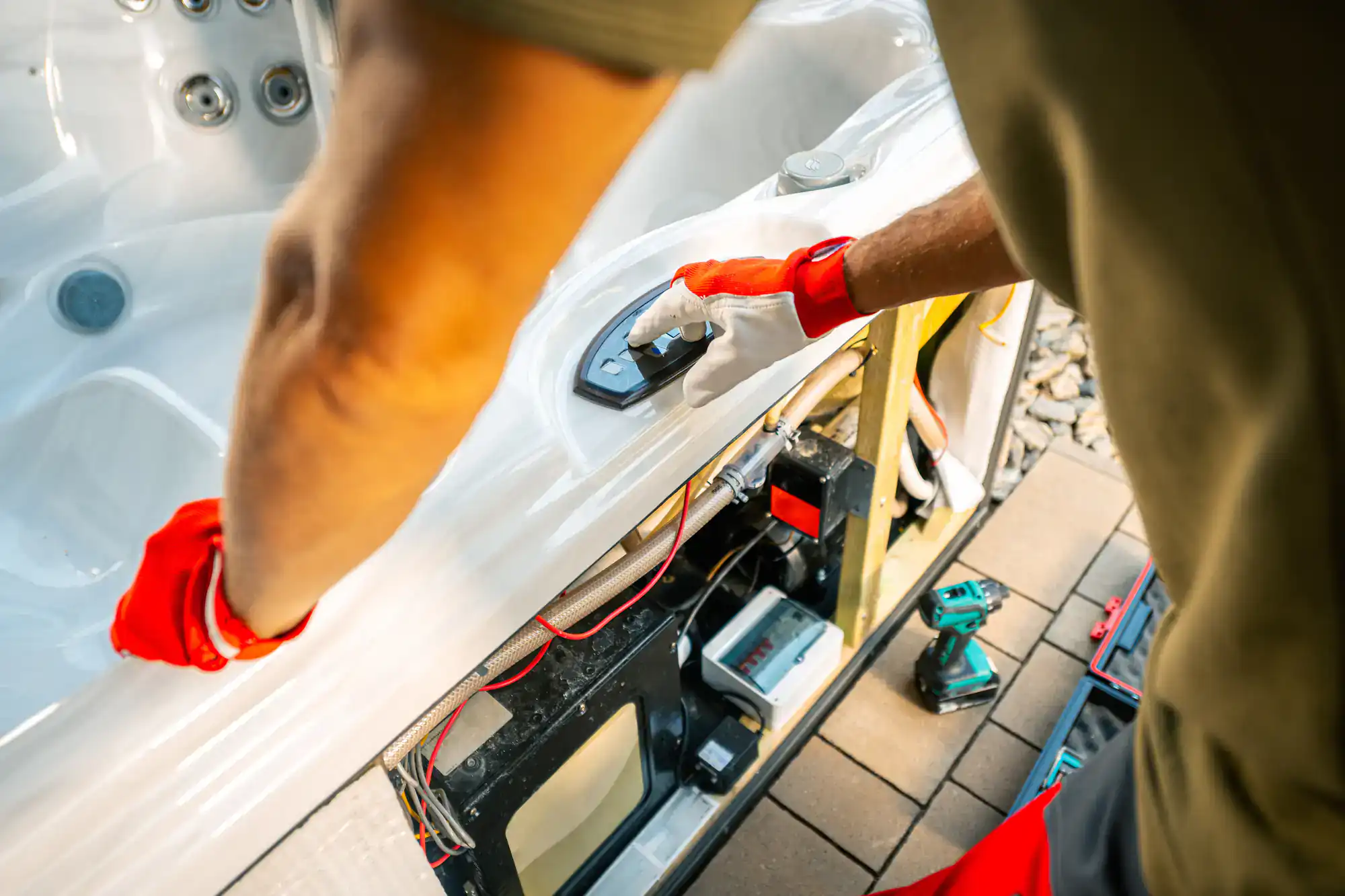
The installation itself covers the dedicated circuit, the properly sized GFCI breaker, weatherproof conduit run to the tub location, the outdoor disconnect box placed within the required distance from the tub, and equipotential bonding of all metal components. After the work is done, the city’s electrical inspector signs off. Springfield’s rainy climate means weatherproof materials and proper sealing aren’t optional extras — they’re built into how every installation gets done.

Jacuzzi Wiring and Spa Electrical Springfield, OR
Hot tub electrical installation through Young Electric LLC covers the full scope of what a code-compliant installation in Springfield actually requires. That means a dedicated 240V circuit — nothing else sharing that breaker — run through weatherproof conduit from your panel to the tub location.
It means a GFCI breaker sized correctly for your tub’s amperage draw, installed in a weatherproof enclosure that can hold up to Springfield’s wet winters. It means an outdoor disconnect box positioned at the right distance from the tub, within line of sight, and accessible. And it means equipotential bonding of all metal components — the pump housings, the water fittings, the shell hardware — which is one of the steps that unlicensed contractors and handymen most commonly skip, and one of the most consequential ones to miss near water.
If your home needs a subpanel or a full service upgrade to support the new circuit, that gets identified during the estimate visit — not mid-job. We don’t offer tiered service packages on this work because the code requirements don’t bend based on budget. What you get is a complete, permit-pulled, inspection-ready installation backed by a 5-year labor warranty.
For Springfield homeowners who bought their tub from Aqua Living on Highbanks Road or from one of the Eugene dealers serving this area, the next step after delivery is getting the wiring done by someone who knows Oregon’s electrical code and the City of Springfield’s permitting process. That’s the gap we fill.
Do I need a permit for hot tub electrical installation in Springfield, Oregon?
Yes — and it’s not optional. Hot tub electrical work within Springfield city limits requires an electrical permit through the City of Springfield’s Development and Public Works department at 225 Fifth Street. Oregon’s Electrical Specialty Code, updated in October 2023, governs all hot tub wiring in the state, and a permit is how that code gets enforced through a final inspection by a city electrical inspector.
The reason this matters beyond just following the rules: an unpermitted installation can void your homeowner’s insurance coverage if something goes wrong, and it creates a documentation problem when you sell the house. A buyer’s inspector will flag unpermitted electrical work, and you’ll either have to disclose it or deal with it at closing. We pull the permit as part of every installation and handle the inspection process, so you’re not left trying to figure out Springfield’s permitting system on your own.
What size breaker does a 240V hot tub need, and does my panel have to be upgraded?
Most full-size 240V hot tubs require a 50-amp dedicated GFCI breaker, though some larger models run up to 60 amps — your tub’s electrical specifications will tell you the exact requirement. The GFCI breaker is not interchangeable with a standard breaker. A standard breaker protects equipment from overloads. A GFCI breaker protects people by detecting ground faults and cutting power in milliseconds. In a wet environment, that distinction is the difference between a nuisance and a fatality.
Whether your panel needs an upgrade depends on the age and current load of your service. Springfield has a lot of housing built before modern 240V loads were common — homes in the 1960s through 1980s with 100-amp panels that are already carrying heat pumps, dryers, and other high-draw appliances may not have the capacity to add a hot tub circuit without an upgrade. We check your panel during the free estimate visit and give you a straight answer. If an upgrade is needed, you’ll know before the job starts — not after.
How far does the disconnect box need to be from the hot tub?
Oregon’s electrical code requires the disconnect box — sometimes called the spa panel or emergency shutoff — to be placed no closer than 5 feet from the hot tub and within line of sight of the tub. It also needs to be readily accessible, which means no locked enclosures or locations that require tools to reach. The maximum distance and exact placement requirements are governed by NEC Article 680, which Oregon has adopted as part of its Electrical Specialty Code.
In practice, where the disconnect ends up depends on your specific yard layout — the distance from the house, where the tub is positioned, and how the conduit will be routed. For Springfield homes with larger lots in areas like East Springfield or the Thurston area, the run from the panel to the tub can be longer, which affects both the conduit routing and the wire sizing required. We map this out during the estimate visit so the disconnect placement is both code-compliant and practical for your specific property.
Will my hot tub warranty be voided if a licensed electrician doesn't do the wiring?
In most cases, yes. Hot tub manufacturers write their warranty terms to require installation by a licensed electrical contractor — and if the wiring wasn’t done by someone who meets that standard, a warranty claim related to electrical components can be denied. That’s true whether the damage comes from a wiring fault, a component failure tied to an undersized circuit, or a GFCI issue that traces back to improper installation.
This comes up most often when hot tub dealers suggest using “their electrician” at a lower price. Sometimes that person is fully licensed and does the job correctly. Sometimes they’re not, and they skip the permit and cut corners on bonding and grounding to keep the price down. You don’t find out until something fails — or until you file a warranty claim and the manufacturer asks for proof of licensed installation. Young Electric LLC holds both the CCB license and the BCD electrical license Oregon requires, and we pull the permit every time, which gives you the documentation you’d need if a warranty question ever comes up.
How does Springfield's climate affect the outdoor electrical components on a hot tub?
Springfield averages 46 inches of rain per year and sits at around 74% relative humidity most mornings. That’s a consistently wet environment for any outdoor electrical installation, and it accelerates wear on components that aren’t specified and installed correctly. Disconnect boxes need to be outdoor-rated and properly sealed. Conduit fittings need weatherproof connectors. The GFCI breaker enclosure needs to keep moisture out through years of wet winters, not just the first season.
In a drier climate, a marginally installed component might hold up for years before showing problems. In Springfield’s climate, the same shortcut shows up faster. The materials we use and the way conduit runs are sealed are chosen with Oregon’s wet conditions in mind, not just the minimum code standard. For a tub that’s going to be used through every rainy season — which is most of the year here — that difference matters over the life of the installation.
How long does hot tub electrical installation typically take in Springfield?
The installation itself — running the circuit, installing the GFCI breaker, setting the disconnect box, and completing the bonding — typically takes between four and eight hours for a straightforward job where the panel has capacity and the tub location isn’t far from the house. Jobs that involve longer conduit runs, underground trenching, or a panel upgrade will take longer, and that gets scoped out during the estimate visit so you’re not surprised on the day of the work.
The permit and inspection timeline adds a step that’s worth planning around. Once we pull the permit through the City of Springfield, the final inspection has to be scheduled with the city’s electrical inspector before the job is considered complete. Timing varies depending on the city’s current inspection schedule. If you’ve got a delivery date from your hot tub dealer — whether that’s Aqua Living on Highbanks Road or one of the Eugene dealers serving Springfield — it’s worth calling us early so the electrical work can be scheduled and inspected before your tub arrives. Starting the process a few weeks ahead of delivery is the cleanest way to make sure everything lines up.
Useful Links