
Electrical Inspection in Springfield, OR
Springfield's Older Homes Deserve More Than a Glance

Hear from Our Customers
Home Electrical Inspection in Springfield, OR
Springfield’s housing stock tells a story that most homeowners don’t fully know. Roughly 15% of homes in the city were built before 1950, and the median construction year sits at 1976. That means a significant portion of Springfield residents are living with electrical systems that were designed for a fraction of today’s demand—before Level 2 EV chargers, before home offices running multiple workstations, before the modern kitchen loaded with high-draw appliances.
An electrical inspection gives you a clear, documented picture of what your system can actually handle and where the real risks are hiding. For homeowners in neighborhoods like Thurston, the Washburne Historic District, or anywhere along the OR 126 corridor, the stakes are real. A 1960s ranch home or a turn-of-the-century craftsman bungalow may have wiring that’s been patched and extended over decades without a full review.
After the inspection, you walk away with a written report—findings, deficiencies, and recommendations in plain language—so you’re not left guessing. Whether you’re buying, renovating, or just want to know your home is safe, you’ll have something concrete in your hands when it’s done.

Ready to get started?

Electrical Inspection Services in Springfield, OR
We’ve been doing this work since 1974. That’s four decades of inspecting homes across Oregon—homes built in every wiring era, from knob-and-tube in pre-1940s bungalows to aluminum wiring in 1970s construction to the systems common in homes built right before the turn of the millennium. When one of our licensed electricians walks into a Springfield home, we’re not running through a generic checklist. We’re bringing real pattern recognition to what we find.
Our team holds IAEI certification—that’s the International Association of Electrical Inspectors, the organization that sets the professional standard for this kind of work. That credential matters when you’re inspecting a home in the Washburne Historic District that’s been standing since the 1890s, or a 1965 split-level in North Springfield that’s had three different owners add to the wiring over the years. We’re fully licensed, bonded, and insured under Oregon’s CCB and BCD requirements, and a certificate of insurance is available on request before any work begins.

Residential Electrical Inspection in Springfield, OR
It starts with a free estimate. You describe what you’re working with—the age of the home, any symptoms you’ve noticed, what’s prompting the inspection—and we give you a straight answer on what the inspection will cover and what to expect.
On the day of the inspection, our team covers the full scope: the electrical panel, all visible wiring, outlets, switches, breakers, GFCI and AFCI protection, smoke and carbon monoxide detectors, surge protection, and the service entrance. But it doesn’t stop at what’s visible from the living room. The attic and crawl space are included—because in Springfield’s older homes, that’s often where the most serious issues live. Deteriorated wiring insulation, improper splices, and inadequate clearances from insulation tend to hide in exactly those spaces.
Springfield’s wet winters and persistent humidity—the city averages around 46 inches of rainfall a year—can accelerate the breakdown of aging wiring in damp crawl spaces, and that’s something a thorough inspection accounts for. At the end, you receive a complete written report. It covers what was found, what needs attention, and what can wait.
If the inspection turns up issues that need repair, you don’t have to start the search over—we handle follow-up work with the same team and the same standards. Any repair work that requires a permit in Springfield is handled through the city’s Development and Public Works department, and we’re familiar with the local permitting process and what Springfield’s code requirements look like in practice.
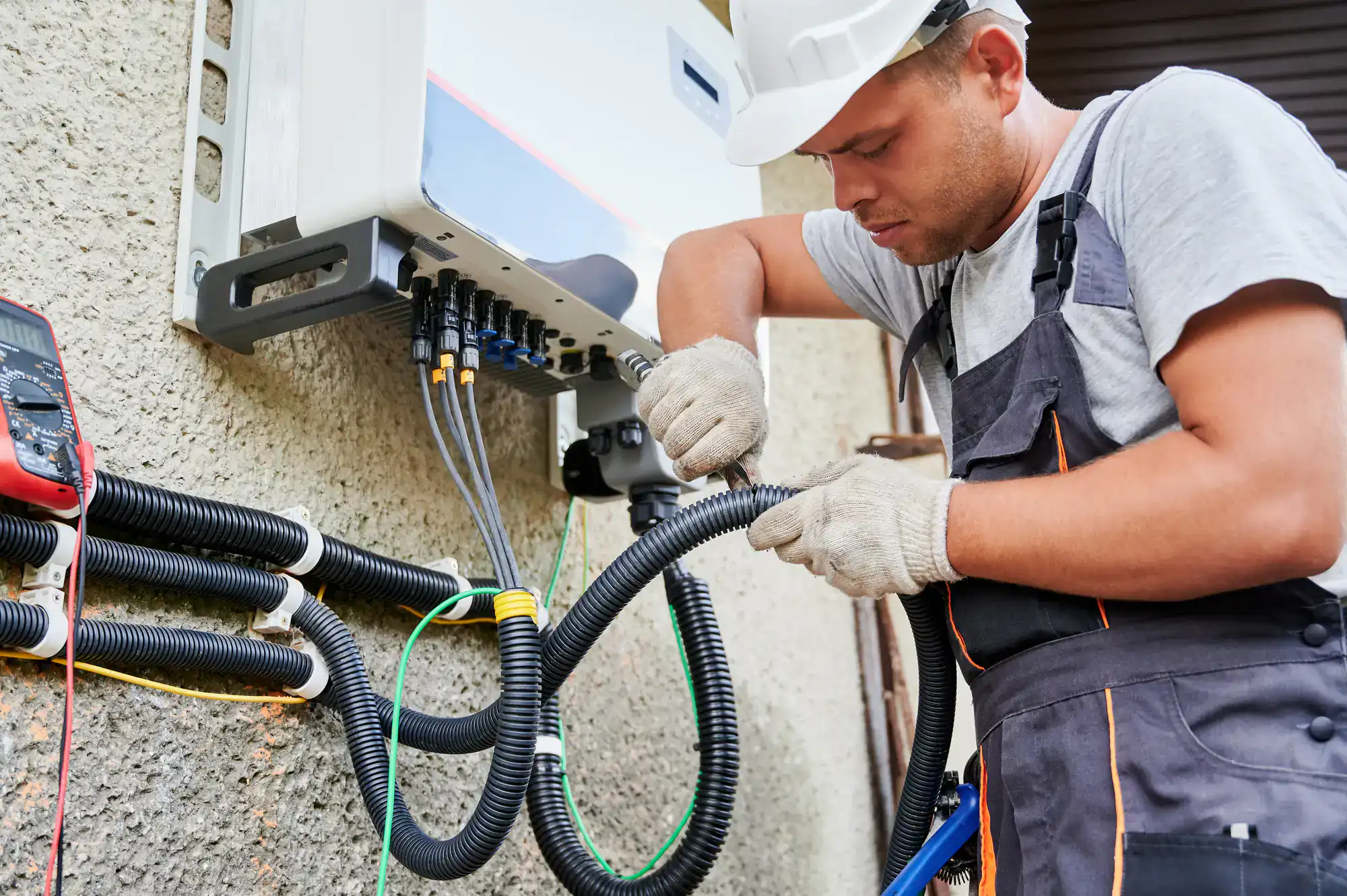
Electrical Wiring Inspection in Springfield, OR
Our home electrical inspection covers the full picture. The panel gets checked for capacity, condition, and whether it’s sized for your home’s current load. Breakers are tested. Every accessible outlet and switch is checked for proper grounding, correct wiring, and code compliance under the Oregon Electrical Specialty Code, which follows NEC 2023 standards. GFCI protection in kitchens, bathrooms, garages, and outdoor areas is tested directly—not just visually confirmed.
The inspection also looks at your service entrance, which in Springfield means accounting for the local utility environment. Springfield is served by the Springfield Utility Board, a municipally owned electric utility that has its own service connection standards. Any issues with how your home’s wiring interfaces with SUB’s infrastructure—whether it’s an undersized service, an aging weatherhead, or a meter base that doesn’t meet current standards—will be flagged in the report.
For Lane County homes with older construction, the inspection pays particular attention to wiring types that carry elevated risk: knob-and-tube wiring common in pre-1940s homes, cloth-wrapped wiring from the 1940s through 1960s, and aluminum branch circuit wiring that was widely used in the late 1960s and 1970s. If your home falls into any of those eras, the inspection is designed to tell you exactly what you’re dealing with—not give you a vague answer and send you on your way.
How do I know if my older Springfield home needs an electrical inspection?
The clearest sign is age. If your home was built before 1980 and hasn’t had a licensed electrician do a full review in the last several years, that alone is reason enough. Springfield’s median home was built in 1976, and homes from that era were designed for electrical loads that look nothing like what most households run today.
Add in the fact that many Springfield homes have had wiring extended or modified by different owners over the decades, and the picture gets complicated fast. Beyond age, there are specific symptoms worth taking seriously: breakers that trip more than occasionally, outlets that feel warm to the touch, lights that flicker when an appliance kicks on, a burning smell you can’t locate, or two-prong outlets throughout the house. Any one of these can point to something that deserves a closer look.
If you’re buying a home in Springfield—especially in neighborhoods like Thurston or the Washburne Historic District where older construction is common—a pre-purchase electrical inspection is one of the most practical things you can do before closing.
What does a residential electrical inspection actually include from start to finish?
Our inspection covers the electrical panel, all accessible wiring, outlets, switches, breakers, and the service entrance. GFCI and AFCI protection is tested directly in every required area—kitchens, bathrooms, garages, and outdoor circuits. Smoke and carbon monoxide detectors are checked. Surge protection is verified. We check for code compliance under the Oregon Electrical Specialty Code, which is based on NEC 2023.
What separates a thorough inspection from a surface-level one is where it goes beyond the living spaces. We include the attic and crawl space—areas that general home inspectors often skip or only partially assess. In Springfield’s older homes, the most serious wiring issues frequently live in exactly those spaces: deteriorated insulation, improper junction boxes, wiring run too close to insulation.
At the end of the inspection, you receive a full written report with findings and recommendations, documented in plain language you can actually use—whether that’s for a real estate negotiation, an insurance conversation, or a repair plan.
What is the difference between a general home inspection and an electrical inspection?
A general home inspector does a visual walkthrough of the electrical system—they’re looking for obvious red flags, not conducting a technical assessment. They can note that there are two-prong outlets or that the panel looks old, but they’re not testing circuits, verifying code compliance, or checking whether your GFCI protection actually functions. They’re also not going to tell you whether your 100-amp panel is undersized for what your home is running today.
A licensed electrician performing a dedicated electrical inspection goes substantially deeper. We test. We measure. We check against current Oregon code requirements. We look at wiring types and assess the actual risk profile of what we find. For Springfield homeowners—particularly those in homes built in the 1950s through 1970s, where aluminum wiring and undersized panels were common—that difference matters a great deal.
A home inspector’s note that says “recommend evaluation by a licensed electrician” is exactly the moment when scheduling a proper electrical inspection makes sense.
Does electrical work in Springfield require a permit, and how does that affect an inspection?
Yes. Oregon law requires a permit for electrical work beyond minor maintenance, and Springfield handles its own permits through the city’s Development and Public Works department—not Lane County, which covers unincorporated areas. Any repair or upgrade work that follows an inspection will need to go through the city’s permitting process, which uses Oregon’s ePermitting system.
The inspection itself doesn’t require a permit—it’s an assessment, not a modification. But if the inspection identifies work that needs to be done, pulling the appropriate permit is part of doing it correctly. We’re familiar with Springfield’s permitting process and handle that side of things when repair or upgrade work follows an inspection.
It’s also worth knowing that unpermitted electrical work is one of the most common issues flagged during real estate transactions in Lane County—so if you’re buying or selling, having documentation of properly permitted work can matter more than most people expect.
How does Springfield's rainy climate affect my home's electrical system over time?
Springfield averages around 46 inches of rainfall annually, and the city’s relative humidity sits at 74% in the morning hours for much of the year. That persistent moisture environment isn’t neutral for electrical systems—it accelerates corrosion on outdoor components like weatherhead connections and service entrance cables, and it can degrade the insulation on older wiring in crawl spaces that weren’t built with modern vapor barriers.
For homes built before the 1980s—which describes the majority of Springfield’s housing stock—crawl space wiring is often the most vulnerable part of the system. Cloth-wrapped wiring from the 1940s and 1950s, or early plastic-jacketed wiring from the 1960s, was not designed to handle decades of moisture exposure. An electrical inspection that includes the crawl space is the only way to know what condition that wiring is actually in.
It’s a slow-developing problem that rarely announces itself before it becomes a serious one.
I'm buying a home in Springfield—do I really need a separate electrical inspection?
If the home was built before 1985, yes—and that describes most of what’s available in Springfield’s housing market. The city’s housing inventory is overwhelmingly older, with very little new construction added in the last 15 years. When you’re competing for a home in a market where properties move in around 18 days on average, it can feel like there’s no time for extra steps.
But a general home inspection doesn’t give you the electrical picture you actually need on an older home. A dedicated electrical inspection before closing—or structured as a contingency—gives you documented information about the panel’s capacity, the condition of the wiring, whether there are code violations, and what it would realistically cost to address any issues. That’s information you can use in negotiations, or simply use to make a more confident decision.
For homes in Springfield’s older neighborhoods, where the wiring may have been touched by multiple owners over 50 or 60 years, the written report from a licensed electrician is one of the most useful documents you can have going into closing.
Useful Links