
Hot Tub Electrical Installation in Santa Clara, OR
Santa Clara's Older Homes Deserve a Wiring Job Done Right the First Time

Hear from Our Customers
Hot Tub Wiring in Santa Clara, OR
When you call about hot tub electrical installation in Santa Clara, the first thing most homeowners want to know isn’t about wire gauges or breaker specs—it’s whether their house can even handle it. That’s a fair question, and it deserves a real answer before anyone picks up a tool. We include a full panel assessment with every free estimate, so you’re not finding out mid-job that your 1970s ranch home needs a panel upgrade to support a dedicated 240V circuit.
A lot of Santa Clara’s housing stock was built in the 1960s and 1970s, when 100-amp electrical panels were standard. Hot tubs weren’t part of the picture back then. Adding a 50 to 60-amp dedicated circuit to a panel that’s already carrying a full load isn’t just a technical inconvenience—it’s a safety concern. Getting that assessment done upfront means the quote you receive reflects the actual scope of the job, not a best guess that changes once we open your panel.
Once the work is done, you get a 5-year labor warranty on the installation. That’s not something you’ll find from most electricians in the area. It means if something isn’t right in year three, you’re not starting over from scratch with a new contractor and a new bill. The Willamette Valley’s cool, wet winters make a hot tub genuinely useful year-round—and that kind of use deserves wiring that’s built to last.

Ready to get started?
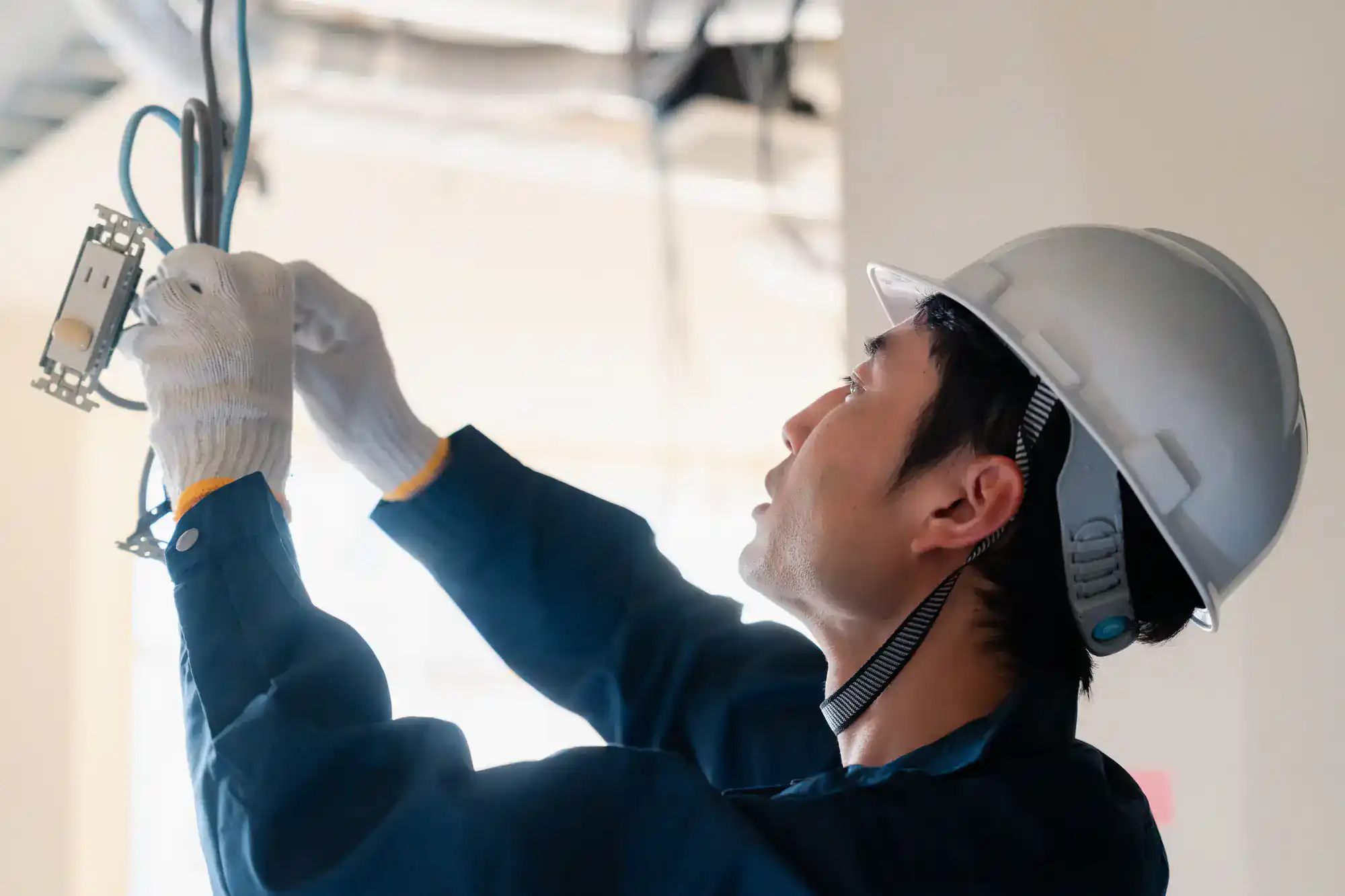
Hot Tub Electrician in Santa Clara, OR
Young Electric LLC is a second-generation, family-owned electrical contractor with over 40 years of combined experience. Owner Jeremy Young grew up in this trade, and that depth of knowledge shows up in the details—especially in older homes where decades of modifications, aging panels, and varied wiring histories require someone who knows what they’re looking at.
Santa Clara sits in a unique spot. Parts of the community fall under City of Eugene jurisdiction, while others remain unincorporated Lane County—which means the permit process for your hot tub electrical installation could route through Eugene’s Building and Permit Services or through Lane County Land Management, depending on exactly where your property sits. We hold both a CCB license and a BCD electrical license valid across Oregon, and we navigate these jurisdictional differences as a matter of routine.
With over 1,400 Google reviews at 4.8 stars, our track record speaks for itself. We answer the phone personally, explain the work in plain language, and back it up with a written warranty.

240V Hot Tub Wiring Process in Santa Clara
It starts with a free estimate visit. A licensed electrician comes to your property, looks at your existing panel, assesses the distance from the panel to where the hot tub is going, and gives you a clear picture of what the installation requires. For a lot of Santa Clara homes built in the 1960s and 1970s, this is where the panel conversation happens—and it’s better to have it here than after the work starts.
From there, the installation follows the 2023 Oregon Electrical Specialty Code and NEC Article 680, which govern everything from GFCI breaker requirements to disconnect box placement and equipotential bonding of all metal components near the tub. A dedicated 240V circuit is run from the panel to the hot tub location, typically through weatherproof conduit. The disconnect box is installed at the code-required distance from the tub—close enough to be accessible, far enough to be safe.
Because Santa Clara’s permit jurisdiction depends on whether your property has been annexed by the City of Eugene or remains under Lane County, we pull the correct permit from the right office before work begins. After the installation is complete, a city or county electrical inspector signs off on the work. That inspection is what makes the installation legal, insurable, and problem-free at resale. We handle the permit process and coordinate the inspection—you don’t have to figure out which office to call.

Hot Tub Electrical Wiring and GFCI Breaker Installation
Every hot tub electrical installation through Young Electric LLC includes a dedicated 240V circuit sized for your specific tub, a Class A GFCI breaker as required by Oregon code, a weatherproof outdoor disconnect installed at the correct distance from the hot tub, and full equipotential bonding of all metal components—a step that’s easy to skip and creates real safety risks when it is. The work is done with 6 AWG copper wire run through weatherproof conduit, not surface-mounted or exposed.
For Santa Clara homeowners, the panel assessment is part of the process from the start. Homes built in the 1960s and 1970s—which make up a large portion of the housing stock along the River Road corridor and throughout the neighborhood—often have 100-amp panels that need evaluation before a high-demand circuit is added. If a panel upgrade is needed, that’s part of the conversation during the estimate, not a surprise charge after the job is underway.
We pull the permit from the correct jurisdiction—City of Eugene or Lane County, depending on your property—and coordinate the final inspection through our office. The installation is backed by a 5-year labor warranty. No named service tiers, no upsells—just a complete, code-compliant job with a clear scope and a written guarantee behind it.
Do I need a permit for hot tub electrical installation in Santa Clara, Oregon?
Yes, a permit is required for hot tub electrical work in Santa Clara—and this is one area where the community’s unique status adds a layer most homeowners don’t expect. Santa Clara is an unincorporated community in Lane County, but portions of it have been annexed by the City of Eugene over the years. Depending on where your property sits relative to that annexation line, your electrical permit routes through either the City of Eugene’s Building and Permit Services or Lane County’s Land Management Division. Both enforce the 2023 Oregon Electrical Specialty Code, but the application portals and fee schedules are different.
Skipping the permit isn’t just a code violation—it creates real problems down the road. An unpermitted hot tub installation can void your homeowner’s insurance coverage if a claim is ever tied to that circuit, and it can surface as a liability when you sell the home. The permit also triggers a final inspection by a licensed electrical inspector, which is the only independent verification that the work meets current code. We handle the permit process and know which office to contact based on your specific Santa Clara address—you don’t have to sort that out yourself.
What size breaker does a 240V hot tub need, and what does that mean for my panel?
Most 240V hot tubs require a dedicated 50-amp circuit, though some larger or feature-heavy models call for 60 amps. The breaker needs to be a Class A GFCI type—not a standard circuit breaker. A GFCI breaker detects ground faults and cuts power in milliseconds, which is the protection that matters when electricity and water are in the same space. A standard breaker protects equipment from overloads but does nothing to protect a person from electrocution.
The reason the panel question matters so much in Santa Clara is straightforward: a lot of homes here were built when 100-amp electrical service was the norm. A 100-amp panel that’s already running a full load of modern appliances—refrigerator, washer, dryer, HVAC, water heater—may not have the available capacity to add a dedicated 50 or 60-amp circuit without an upgrade. That upgrade typically means moving to 150 or 200-amp service. It’s not a dealbreaker, but it’s a real cost that needs to be part of the conversation before the job starts. We evaluate your panel as part of the free estimate so you know what you’re working with from the beginning.
What is equipotential bonding, and why does it matter for a hot tub?
Equipotential bonding is a requirement under NEC Article 680 that connects all the metal components near a hot tub—the pump housing, metal fittings, water, and any other conductive parts—to a common ground. The purpose is to eliminate voltage differences between those components. When metal parts near water carry different electrical potentials, current can flow through the water and through anyone in it. Bonding removes that risk by bringing everything to the same electrical level.
It’s one of the most commonly skipped steps in hot tub wiring—both by homeowners attempting DIY installations and by unlicensed contractors cutting corners. The problem is that you can’t see the risk. The tub looks fine, the water is warm, everything appears to work. But the hazard is invisible until it isn’t. Oregon law requires a licensed electrician for 240V hot tub installations, and a proper licensed installation includes bonding as a non-negotiable part of the job. Every Young Electric LLC installation covers this step—it’s not an add-on, it’s part of what code-compliant hot tub electrical wiring means.
How long does hot tub electrical installation typically take from start to finish?
The physical installation—running the circuit, installing the disconnect, connecting the GFCI breaker, and completing the bonding—typically takes four to eight hours depending on the distance from your panel to the hot tub location, whether the run goes underground or through conduit, and whether any panel work is needed. Most straightforward installations in a single-story Santa Clara home with a reasonable panel-to-tub distance are completed in a day.
The permit and inspection piece adds time, but it’s not usually a long wait. Once the permit is pulled from the appropriate office—City of Eugene or Lane County, depending on your property—the inspection is scheduled after the work is complete. The inspector verifies the installation meets the 2023 Oregon Electrical Specialty Code before the tub is energized. We start at 7am, which means if you’re commuting out on River Road or the Beltline in the morning, the crew can be well into the work before you’ve left for the day. Total time from first call to a permitted, inspected, ready-to-use hot tub is typically a matter of days, not weeks.
Can I use the hot tub dealer's electrician, or does it matter who I hire?
It matters quite a bit. Hot tub dealers sometimes have a preferred electrician they refer customers to, and the pitch is usually that it’s cheaper or more convenient. What doesn’t always come with that referral is verification that the electrician holds both licenses Oregon requires—a CCB license through the Construction Contractors Board and an individual electrical license through the Oregon Building Codes Division. Working with someone who holds only one of those, or neither, means the work may not be legally permitted, may not pass inspection, and may not be covered by your homeowner’s insurance.
There’s also the warranty question. Most hot tub manufacturers require that the electrical installation be performed by a licensed professional—if it isn’t, the manufacturer’s warranty on the tub itself can be voided. That’s a significant exposure on an appliance that costs several thousand dollars. Whoever does the wiring should be able to show you both license credentials, pull the correct permit for your Santa Clara property’s jurisdiction, and stand behind the work with a written warranty. Young Electric LLC carries both required Oregon licenses, backs every installation with a 5-year labor warranty, and has a BuildZoom score of 125—placing us in the top 1% of all contractors in Oregon based on verified permit history.
Does a hot tub in Santa Clara actually get used year-round, or is it mainly a summer thing?
In Santa Clara, a hot tub gets used year-round—and honestly, it gets used most in the months when you’d least expect to be outside. The Willamette Valley runs cool and wet from October through April, with heavy rainfall and temperatures that regularly drop into the 30s overnight. That’s exactly when a hot tub earns its keep. Sitting in 104-degree water while rain comes down on a November evening isn’t a niche experience in the Pacific Northwest—it’s one of the main reasons people buy them here.
Santa Clara’s outdoor culture reinforces this. The community is built around large lots, Willamette River access at spots like Hileman Landing, cycling routes, and backyard living in a way that’s harder to find inside the Eugene city limits. Residents here already use their outdoor spaces more than average—a hot tub is a natural extension of that, not a seasonal novelty. From a practical standpoint, that year-round use is also a reason to get the electrical installation done right. A tub that runs through wet Oregon winters, month after month, needs wiring that was installed to code, inspected, and backed by a warranty—not a rushed job that gets by in dry weather but creates problems when the rain sets in.
Useful Links