
EV Charger Installation in Santa Clara
Santa Clara Homeowners Are Leaving $500 on the Table

Hear from Our Customers
Level 2 EV Charger Installation Santa Clara, OR
If you’re relying on a standard 120V outlet to charge your EV, you’re adding maybe 3 to 5 miles of range per hour. For a Santa Clara resident crossing the Beltline every day to get to PeaceHealth, the University of Oregon, or anywhere else in Eugene, that math doesn’t work. A Level 2 charger adds 25 to 40 miles of range per hour — which means a full battery waiting for you every morning, no matter how far you drove the day before.
There’s also the public charging reality to consider. Real-world data shows that nearly 1 in 3 public charging attempts fail. Hunting down a working public charger in Eugene’s wet winter weather — and then waiting in line for it — is nobody’s idea of a good time. Home charging removes that entirely. You plug in when you get home, and you’re done thinking about it.
Santa Clara’s housing stock is genuinely mixed — 1930s cottages, 1960s ranch homes, and post-2005 builds all sit within the same neighborhood. That means your panel situation isn’t predictable based on what your neighbor just did. The right installation starts with an honest assessment of your specific home, not a one-size-fits-all approach.

Ready to get started?
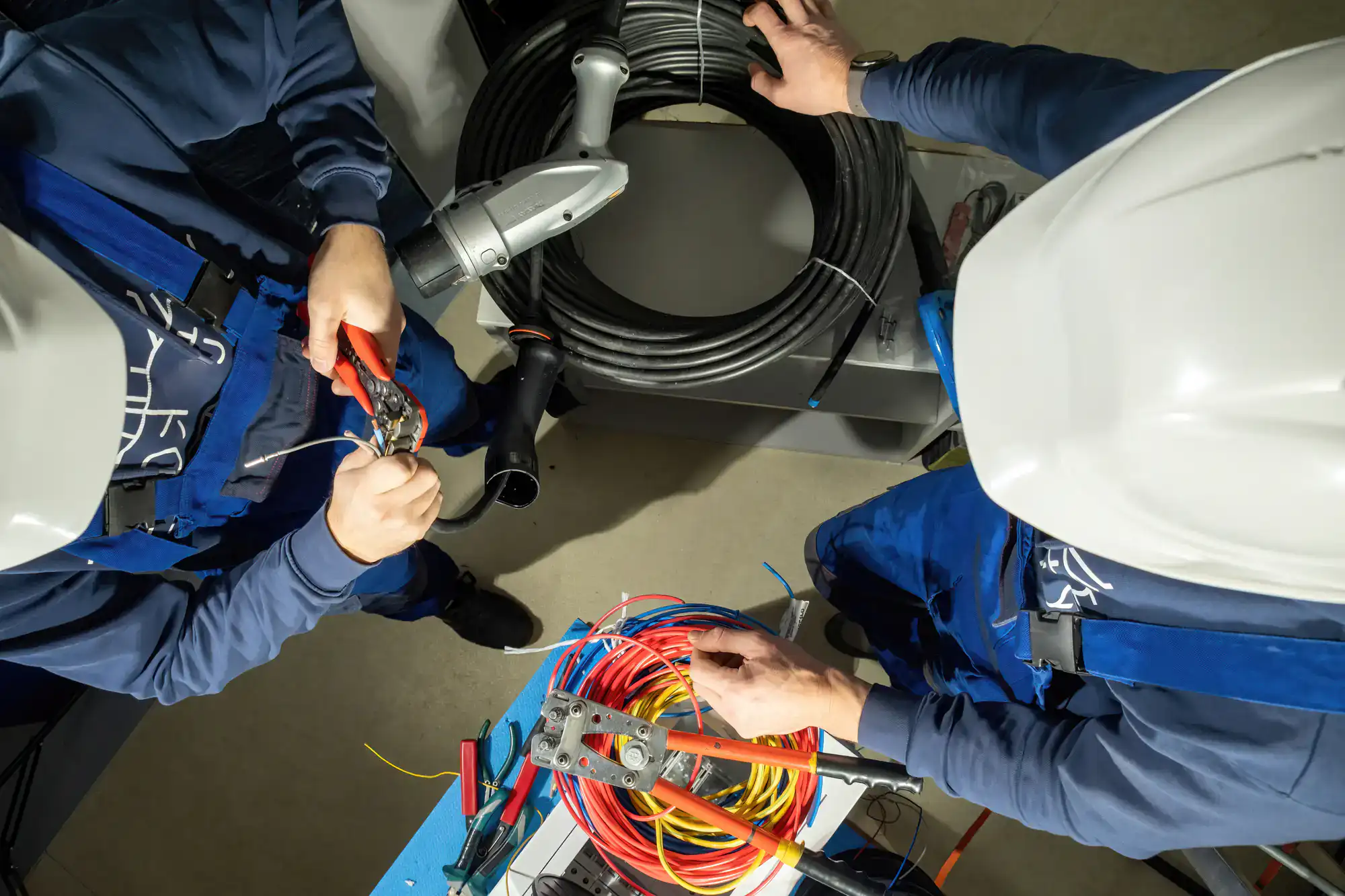
EV Charger Electrician in Santa Clara, OR
Young Electric LLC is a second-generation, family-owned electrical contractor and a military veteran-owned business. We grew up in the trade, and that background shows in how we work — assessments are honest, explanations are plain, and the job is done right the first time.
With an Oregon CCB License (#178887) and Tesla Certified Contractor status, we’re one of a select group of installers in Oregon that Tesla itself endorses for Wall Connector installation. We’re also familiar with EWEB’s specific rebate requirements — the permit process, the NRTL listing requirement, the 120-day application window — which matters a lot for Santa Clara homeowners who want that $500 back.
Over 1,400 Google reviews at a 4.8 rating isn’t luck. Our customers consistently mention the same things: showed up on time, finished quickly, explained everything clearly. Those are the details that actually matter when you’re letting someone work on your home’s electrical system.

Home EV Charger Installation Santa Clara, OR
It starts with a free estimate. We take a look at your panel, your garage or parking setup, and the distance from your electrical panel to where the charger needs to go. That assessment tells you upfront whether your home needs any additional work — and for most homes, around 70 to 80%, the existing panel can handle a Level 2 charger without a full upgrade. You’ll know exactly what you’re looking at before any work begins.
Once the scope is clear, we file the permit with the City of Eugene. You don’t have to figure out the permit office or track down the right forms. For residential circuits in Lane County, permits typically take about a week. During that window, the charger and materials are lined up so the installation can move quickly once the permit clears.
Installation day is straightforward. Our electrician runs the circuit, mounts the charger, and makes sure everything is up to code before the inspection. After the inspection passes, your EWEB $500 rebate application can go in — and we can walk you through that too. From the first call to a working charger on your wall, the whole process is managed for you.

Tesla Charger Installation Santa Clara, Oregon
Eugene’s EV market isn’t just Tesla. ZIP codes 97402 and 97404 — which cover most of Santa Clara — account for nearly a third of all EV registrations in Eugene, and those drivers are behind the wheel of everything from Chevy Bolts and Nissan Leafs to Ford Mustang Mach-Es, Rivians, and Tesla Model Ys. We install Tesla Wall Connectors, Ford Charge Station Pro, ChargePoint home chargers, and other major brands — so whatever you drive, one call covers it.
For Tesla owners specifically, our Tesla Certified Contractor credential means the installation meets Tesla’s own standards for the Wall Connector — not just Oregon code, but the manufacturer’s specs. That matters for warranty purposes and for getting the most out of the charger’s smart features.
Every installation includes a panel assessment, a permitted circuit, and a passed inspection — all of which are required by EWEB to qualify for the $500 residential rebate. Outdoor installations on Santa Clara properties get weatherproof, NEMA-rated enclosures to handle the Willamette Valley’s rainy season without issue. Because EWEB’s power supply is approximately 90% carbon-free, charging at home in Santa Clara is genuinely one of the cleanest ways to run a vehicle anywhere in the country.
Does EWEB offer a rebate for EV charger installation in Santa Clara?
Yes — EWEB, the Eugene Water and Electric Board, offers a $500 rebate for residential Level 2 EV charger installations in Santa Clara. To qualify, the installation has to be permitted, inspected, and approved in compliance with applicable codes. The charger itself also needs to be listed under a Nationally Recognized Testing Laboratory — UL or ETL listing both count. You have 120 days from the installation date to submit the rebate application.
The important detail here is that the permit isn’t optional if you want the rebate. A contractor who skips the permit to move faster or cut costs is directly costing you $500 — plus the liability that comes with unpermitted electrical work. We pull the permit, manage the inspection, and can walk you through the EWEB application so none of that money gets left behind.
Do I need a panel upgrade before installing a Level 2 EV charger at my home?
Most homeowners don’t. Around 70 to 80% of homes have enough panel capacity to support a Level 2 charger without a full upgrade. That said, Santa Clara’s housing stock is genuinely mixed — there are 1930s cottages, 1960s and 1970s ranch homes, and post-2005 builds all within the same neighborhood. A home built in 1965 with an original 100-amp panel is in a very different situation than a 2010 Craftsman with a 200-amp panel and available breaker slots.
The only way to know for sure is a proper assessment before any work begins. We evaluate your specific panel, your existing load, and the circuit requirements for the charger you want. If an upgrade is needed, you’ll hear about it upfront with a clear explanation of why — not as a surprise on the day of installation. If it’s not needed, you won’t be sold one.
How long does the EV charger installation process take in Santa Clara?
The installation itself — running the circuit, mounting the charger, making the connections — typically takes a few hours for a straightforward residential job. The part that takes longer is the permit. For residential electrical circuits in Lane County, permits generally take about a week from submission to approval. We file the permit and manage that timeline, so you’re not waiting around wondering where things stand.
After the permit clears, installation is scheduled and the inspection follows shortly after. For Santa Clara homeowners who want to qualify for the EWEB $500 rebate, the inspection is a required step — so it’s not something to skip or delay. From the initial estimate to a passed inspection and a working charger on your wall, most residential jobs are completed within two to three weeks, depending on scheduling.
What's the difference between Level 1 and Level 2 EV charging for daily drivers in Santa Clara?
Level 1 charging uses a standard 120V household outlet — the kind already in your garage. It adds about 3 to 5 miles of range per hour. For a Santa Clara resident making daily trips across the Beltline to work, run errands, or get to appointments in Eugene, that’s often not enough to recover a full day’s driving overnight. If you’re putting 25 to 40 miles on the car each day, Level 1 barely keeps pace.
Level 2 charging runs on a dedicated 240V circuit — the same voltage as a dryer or range. It adds 25 to 40 miles of range per hour, which means most EVs reach a full charge in 4 to 8 hours. For a driver who plugs in after dinner and leaves in the morning, that’s a full battery every single day without thinking about it. For most EV owners doing any kind of regular commute, Level 2 isn’t an upgrade — it’s how home charging actually works.
Can I install an EV charger myself, or does it need to be done by a licensed electrician in Oregon?
Oregon requires a permit and a licensed electrician for Level 2 EV charger installation. This isn’t a gray area — it’s state code, and it applies in Santa Clara just as it does anywhere else in Lane County or the City of Eugene. DIY installation of a 240V circuit without a permit is unpermitted electrical work, which can create serious problems with your homeowner’s insurance and potentially void your EV manufacturer’s warranty.
Beyond the legal side, a Level 2 charger draws 32 to 60 amps continuously — that’s a significant load, and it needs to be installed correctly to be safe. A licensed electrician also knows how to assess whether your panel can handle it, how to route conduit properly for outdoor runs, and how to meet the specific code requirements that EWEB looks for when processing the $500 rebate application. The permit and licensed installation aren’t just formalities — they’re what protect you and your home.
Which EV charger brands does Young Electric LLC install in Santa Clara?
We install all major residential EV charger brands — Tesla Wall Connectors, Ford Charge Station Pro, ChargePoint home chargers, and others. Eugene’s EV market covers a wide range of vehicles, and the ZIP codes covering Santa Clara — 97402 and 97404 — account for nearly a third of all EV registrations in the city. That mix includes everything from Chevy Bolts and Nissan Leafs to Ford Mustang Mach-Es, Rivians, and multiple Tesla models.
For Tesla owners, we hold Tesla Certified Contractor status — meaning Tesla itself has approved us for Wall Connector installation. That matters for warranty coverage and for making sure the charger’s smart features work the way they’re supposed to. If you’re not sure which charger is the right fit for your vehicle and your home’s electrical setup, that’s exactly the kind of question a free estimate is designed to answer — no commitment, just a clear picture of what your options are.
Useful Links