
Hot Tub Electrical Installation in North Plains, OR
Your New North Plains Backyard Needs More Than Just Space

Hear from Our Customers
Hot Tub Wiring North Plains, OR
A lot of North Plains homeowners—especially those in newer developments like Brynhill along the US 26 corridor—are surprised to find out that a brand-new home with a modern 200-amp panel still isn’t ready for a hot tub. The panel capacity is usually there. What isn’t there is the dedicated 240V circuit, the GFCI breaker, the weatherproof disconnect, or the conduit run from your panel to wherever the tub sits in your backyard. That’s exactly what we close.
Once the wiring is done correctly, you stop worrying. The tub runs the way it’s supposed to, your manufacturer warranty stays intact, and your homeowner’s insurance doesn’t have a reason to push back if something ever goes sideways. For North Plains residents who picked this community specifically for the quieter pace and more room to breathe, a properly wired hot tub is the next logical step in making that backyard actually work for you.
North Plains winters run cold and wet from November through March, with lows regularly dropping into the mid-30s and rain that doesn’t quit. Your hot tub isn’t a seasonal luxury—it’s something you’ll use year-round. That makes getting the electrical right from the start even more important. We back every installation with a five-year labor warranty, which no other electrician serving North Plains currently offers.

Ready to get started?
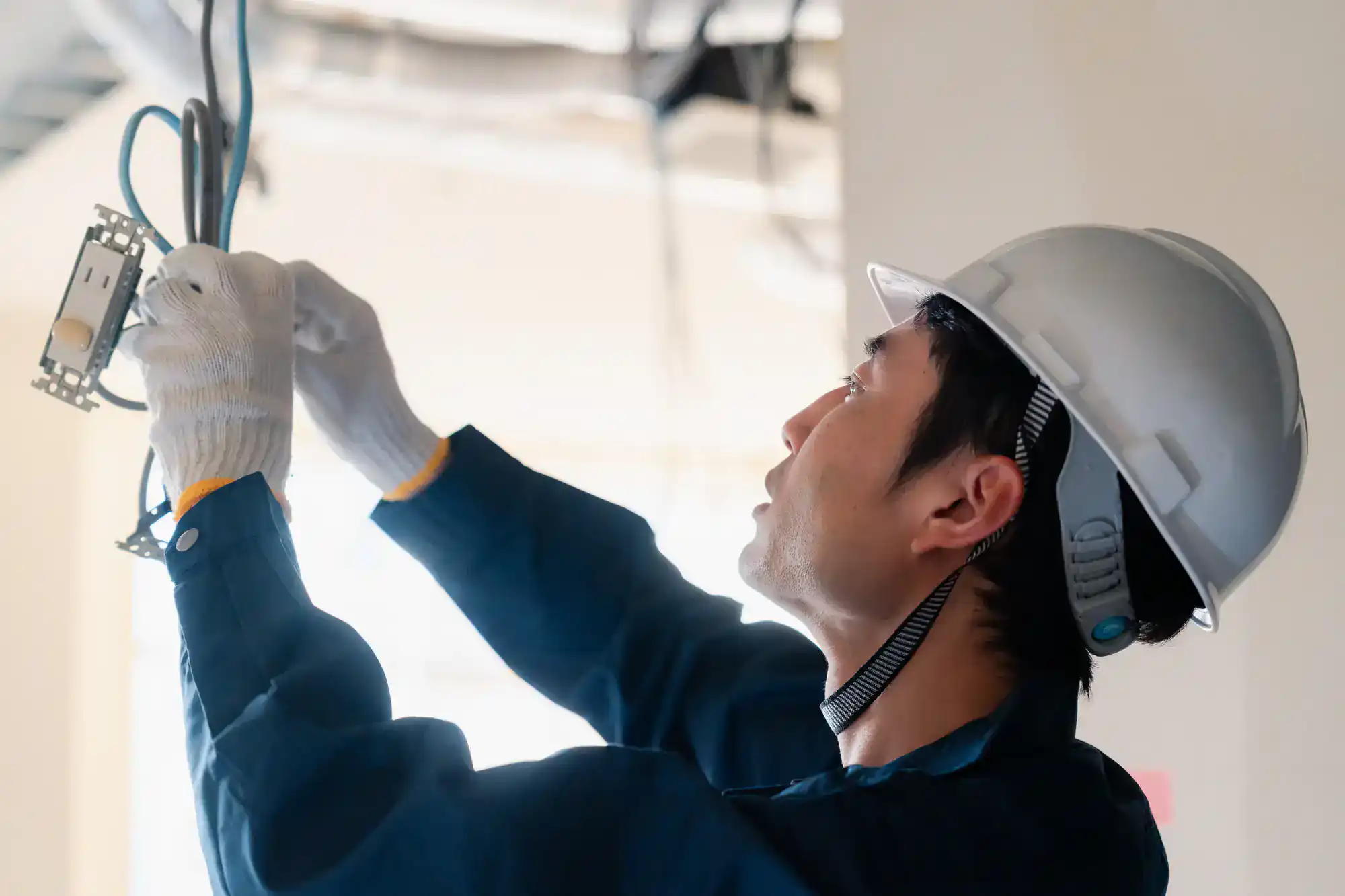
Hot Tub Electrician in North Plains, OR
Young Electric LLC is a second-generation, family-owned electrical contracting company serving the Portland Metro area, including North Plains and the broader Washington County corridor. Owner Jeremy Young grew up in this trade—that kind of institutional knowledge shows in how the work gets done. This isn’t a franchise operation running calls from a central dispatch. When you contact us, a real person answers.
We hold both a CCB license and a BCD electrical license—the two credentials Oregon requires for permitted electrical work. With over 3,200 building permits pulled across Oregon and a BuildZoom score placing us in the top 1% of all Oregon contractors, the track record is verifiable. Jeremy is also a military veteran, which tends to say something about how a person runs their business: attention to detail, accountability, and following through on commitments.
Whether you’re in one of the newer Brynhill homes, an older property near the historic core of North Plains on NW Commercial Street, or out on a larger lot near Pumpkin Ridge, we have the experience to assess your specific setup and get the job done cleanly.

240V Hot Tub Wiring Process in North Plains
It starts with a free estimate—not a vague ballpark over the phone, but an actual on-site assessment. A licensed electrician from our team comes out, looks at your existing panel, measures the distance from the panel to your hot tub location, and evaluates the best conduit routing. For homes in North Plains with larger lots—particularly out toward the Pumpkin Ridge area—that run distance matters. A longer run means more wire, more conduit, and more precision in the routing. Getting that scoped accurately upfront is what keeps the final invoice from being a surprise.
Once the estimate is approved, we pull the required electrical permit through the Oregon Building Codes Division process, which applies to all hot tub electrical work in North Plains under Washington County’s building services jurisdiction. The installation itself follows the 2023 Oregon Electrical Specialty Code and NEC Article 680—which covers the dedicated circuit, the properly sized GFCI breaker, the weatherproof disconnect placed at the correct distance from the tub, and the equipotential bonding of all metal components. That last step is one that unlicensed contractors and handymen routinely skip, and it’s a real safety issue in a wet environment.
After the work is complete, a state electrical inspector comes out to verify everything meets code. That inspection is what makes the installation legal, insurable, and clean on your property record when you eventually sell. We coordinate that process as part of the job—you don’t have to chase it down yourself.
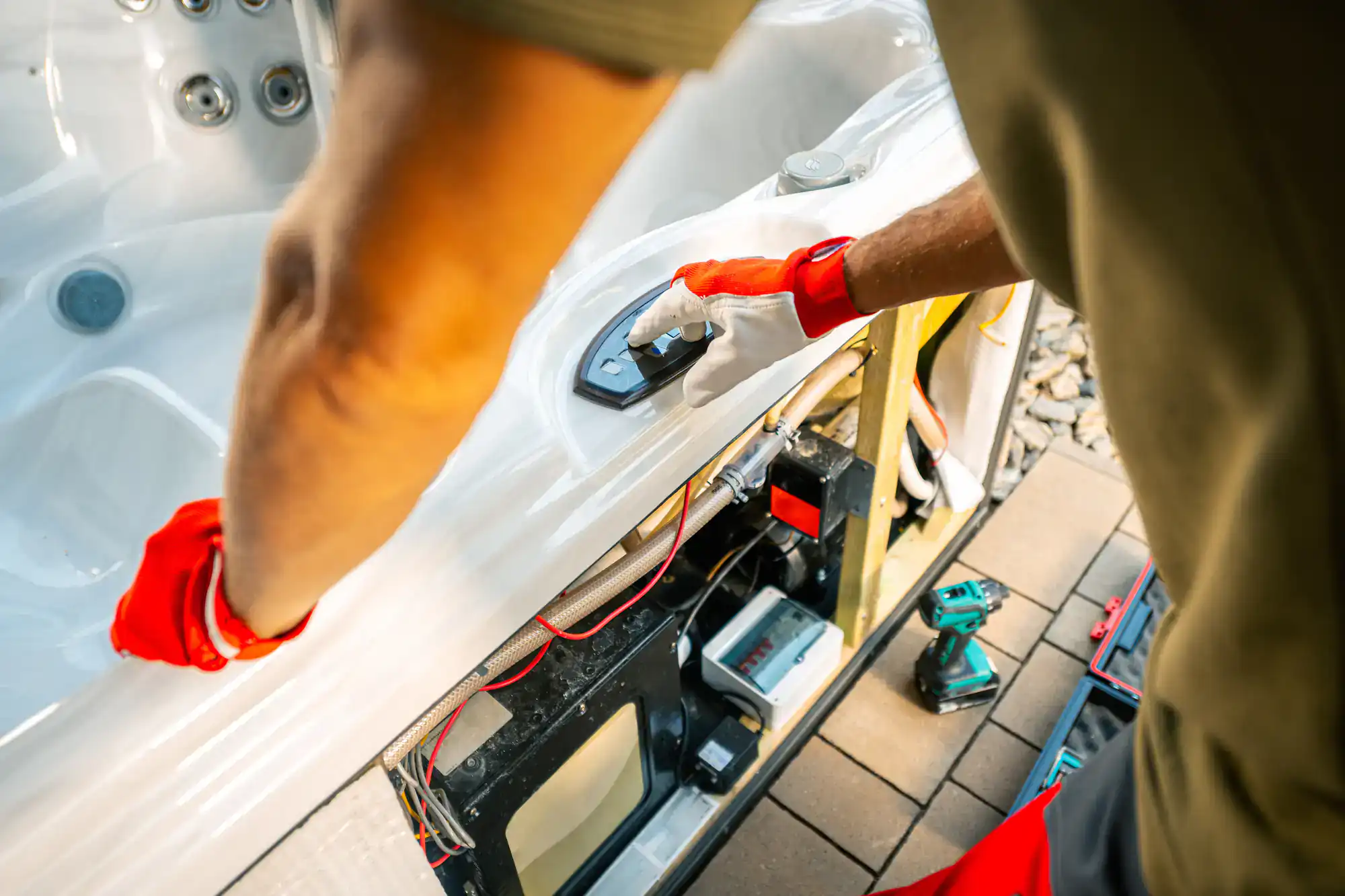
Jacuzzi Wiring and Hot Tub Electrical Wiring North Plains
Every hot tub electrical installation we complete in North Plains includes a full panel assessment before any work begins. This matters especially for homes in the older parts of town near the historic core, where 100-amp service panels are more common and may need evaluation before a dedicated 240V circuit can be added. For newer homes in Brynhill and similar developments, the panel is typically modern enough to support the addition—but it still needs to be confirmed, not assumed.
The installation covers the complete dedicated circuit run from your main panel to the hot tub location, a properly sized GFCI breaker (typically 5060 amps for a 240V hot tub), a weatherproof disconnect box installed at the code-required distance from the tub, and all necessary conduit—buried underground where appropriate for cleaner routing and long-term durability. Equipotential bonding of all metal components is included as a standard part of the job, not an add-on. This is required by NEC Article 680 and is one of the most commonly skipped steps when unlicensed contractors do this work.
We also handle the permit through the Oregon Building Codes Division and coordinate the final inspection with the state electrical inspector. If your hot tub is a 120V plug-and-play model, we’ll assess whether your existing outlet and circuit are adequate for safe, dedicated use. And if a panel upgrade turns out to be necessary for your specific North Plains property, you’ll know that before the job starts—not after. Free estimates, no guesswork.
Do I need a permit for hot tub electrical installation in North Plains, Oregon?
Yes—a permit is required for hot tub electrical work in North Plains. The permitting process runs through the Oregon Building Codes Division, with Washington County Building Services handling the intake for properties in this area. This isn’t optional, and it’s not something to skip to save time or money upfront.
Here’s why it matters: the permit triggers a final inspection by a state electrical inspector. That inspection officially confirms the work meets the 2023 Oregon Electrical Specialty Code and NEC Article 680. Without it, you have no documentation that the installation was done correctly—which can create real problems if you file a homeowner’s insurance claim tied to the electrical system, or when you eventually sell the home. Unpermitted electrical work is a flag that shows up in real estate transactions.
We pull the permit as part of the job. You don’t have to navigate that process yourself or figure out which forms go where. It’s included, and the inspection gets scheduled as part of completing the work.
Can my electrical panel handle a hot tub in my North Plains home?
It depends on the age and capacity of your panel, and the honest answer is that you need someone to look at it before you can know for sure. North Plains has a wide mix of housing stock—newer homes in Brynhill and similar developments typically come with 200-amp panels, which usually have enough capacity to support a dedicated 240V hot tub circuit. But older properties near the historic core of town, some dating back to the early-to-mid 20th century, are more likely to have 100-amp service panels or older wiring configurations that may need assessment before anything gets added.
A panel assessment is included in every free estimate we provide. The electrician looks at what you currently have, identifies whether the panel can support a new dedicated circuit, and tells you upfront if an upgrade is needed. If it is, you’ll get a clear explanation of what’s involved and what it costs—before any work begins. No mid-project surprises.
What size breaker does a 240V hot tub need, and why does it matter?
Most 240V hot tubs require a dedicated 50-amp circuit, though some larger or higher-feature models call for 60 amps. The breaker size needs to match what the hot tub manufacturer specifies—not what’s easiest to install or what happens to be available in the panel. Using an undersized breaker is a fire risk. Using an oversized one doesn’t protect the equipment the way it should.
The breaker also needs to be a Class A GFCI breaker—not a standard breaker. This is required by NEC Article 680 for all outdoor spas and hot tubs, and it’s not interchangeable. A standard breaker protects equipment from overloads. A GFCI breaker protects people by detecting ground faults and cutting power within milliseconds. In a wet outdoor environment like a North Plains backyard—where you’re dealing with rain, cold temperatures, and a body of water—that distinction is not a technicality. It’s the difference between a safe installation and a dangerous one.
We install the correct GFCI breaker for your specific hot tub model and make sure the circuit is sized accurately from the start.
How far does the disconnect box need to be from the hot tub?
The disconnect box—sometimes called the spa panel or emergency shutoff—needs to be placed no closer than 5 feet from the hot tub and no further than 15 feet, within line of sight and easily accessible. This is a specific requirement under NEC Article 680, and it’s one of the details that matters more than it might seem. The disconnect exists so that power can be cut quickly in an emergency. If it’s in the wrong location—too close, out of sight, or blocked—it doesn’t serve that purpose.
On larger North Plains properties, especially out toward the Pumpkin Ridge area, the placement of the disconnect relative to the hot tub location and the conduit run from the panel all factor into how the installation is planned. Getting this right from the start avoids having to move things later. We map out the full layout during the estimate visit—panel location, conduit routing, disconnect placement, and hot tub position—so the finished installation is code-compliant and practical for how you’ll actually use the space.
What is equipotential bonding, and is it required for my hot tub in North Plains?
Equipotential bonding is the process of connecting all metal components in and around the hot tub—the water, metal fittings, pump housings, and any other conductive parts—to a common grounding point. The purpose is to eliminate voltage differences between those components, which is what causes dangerous electrical shock in a wet environment. It’s required by NEC Article 680 for all outdoor spas and hot tubs, and it applies to every installation in North Plains regardless of the age or type of property.
This is one of the most commonly skipped steps when unlicensed contractors or handymen do hot tub wiring. It’s not visible once the installation is complete, so homeowners often don’t know it was left out—until something goes wrong. A properly bonded system is what keeps a hot tub safe to use over the long term, not just on day one.
We include equipotential bonding as a standard part of every hot tub electrical installation. It’s not an optional upgrade or an add-on. It’s part of doing the job correctly.
How long does hot tub electrical installation typically take in North Plains?
For most North Plains homes, the installation itself takes somewhere between four and eight hours, depending on a few key variables. The distance from the main electrical panel to the hot tub location is the biggest factor—properties with longer backyard runs, like some of the larger lots out near Pumpkin Ridge or along the rural edges of the 97133 ZIP code, take more time than a compact backyard in a newer Brynhill development where the panel is close and the run is straightforward. If trenching is needed to bury the conduit underground, that adds time as well.
Panel condition also plays a role. If the existing panel needs any work before the new circuit can be added, that gets factored into the overall timeline. We start work at 7 a.m., which matters if you’re one of the many North Plains residents commuting to Hillsboro or Beaverton and want the job underway before your workday starts. The permit and final inspection are separate from the installation day—the inspection gets scheduled after the work is complete, and we handle coordinating that step. From first call to final inspection, most projects wrap up within a week or two depending on scheduling.
Useful Links