
Hot Tub Electrical Installation in Eagle Crest
Resort Living Deserves a Hot Tub That's Actually Wired Right

Hear from Our Customers
Eagle Crest Hot Tub Electrician
When electrical work is done right, your hot tub runs reliably from the first cold October night through the warmest July evening—and every season in between. At 3,000 feet in Central Oregon’s high desert, Eagle Crest doesn’t have an off-season for hot tub use. The cold, clear nights from fall through early spring are exactly when you want that tub working without a second thought.
A properly installed 240V circuit, sized correctly and run through weatherproof conduit, is what makes that possible year after year. For vacation rental owners in Eagle Crest, a permitted and inspected hot tub installation does more than power the tub—it protects your rental income. A private hot tub is one of the most searched amenities on Airbnb and VRBO, and Eagle Crest properties that list one consistently command higher nightly rates. But that only works if the installation is legal, documented, and covered, because an unpermitted setup creates insurance exposure and liability that can follow you through every booking.
Whether you’re in a Phase 1 home off Cline Falls Highway, a newer West Ridge build, or a townhome in the Ridge, the outcome is the same: a hot tub that works safely, holds up in this climate, and won’t become a problem down the road.

Ready to get started?
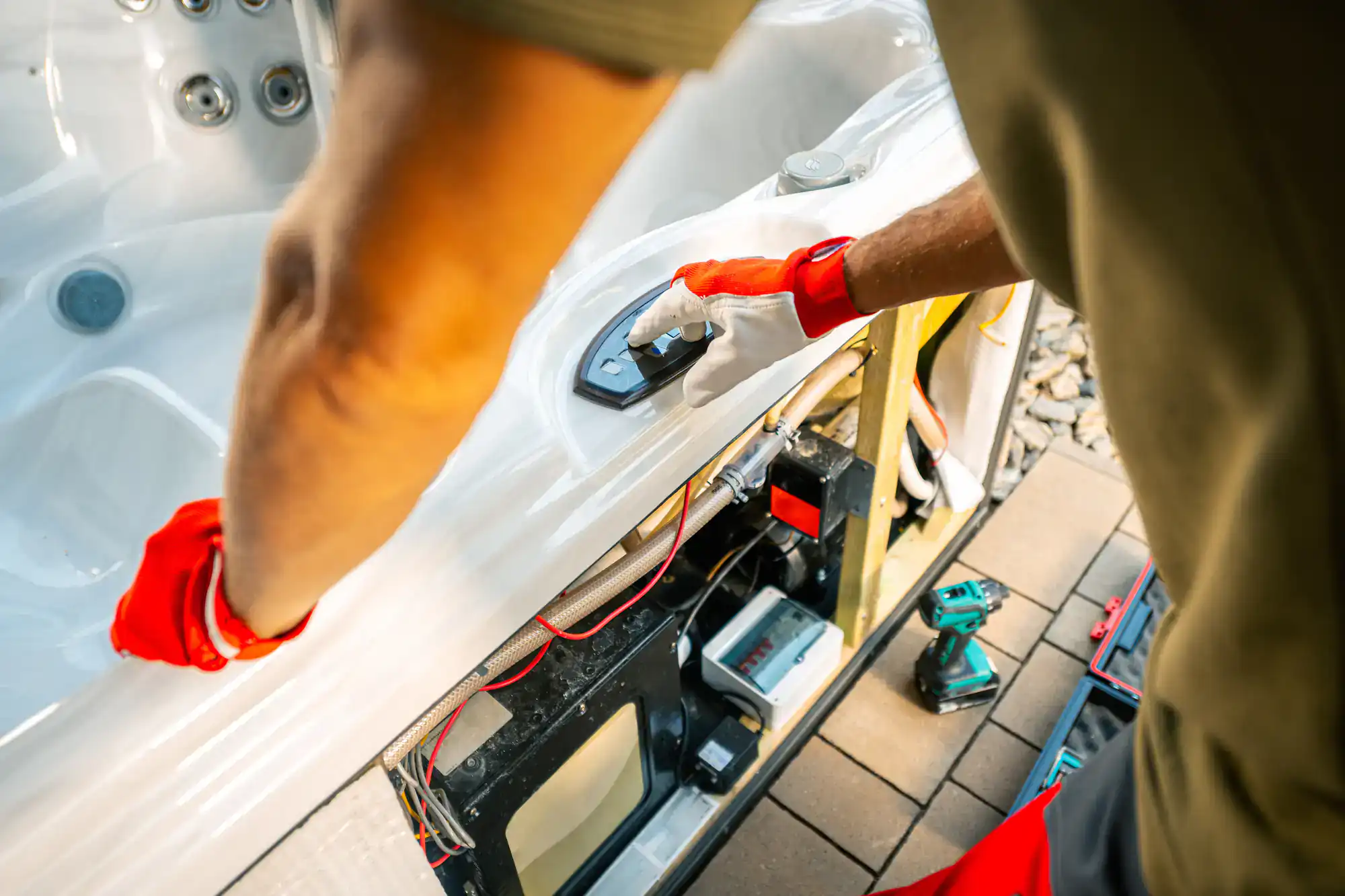
Hot Tub Wiring Experts, Central Oregon
Young Electric LLC is a second-generation, veteran-owned family business with over 40 years of combined electrical experience. Jeremy Young grew up in the trade and built this company on the same principles—show up on time, explain things clearly, do the work correctly, and stand behind it. That last part is literal: every installation comes with a 5-year warranty on labor, which no local competitor in the Redmond or Central Oregon market currently offers.
We have a physical presence in Sunriver, which puts us squarely in the Central Oregon resort corridor. Eagle Crest is a named part of our service area, and we understand HOA-governed resort communities, Deschutes County permit requirements, and the specific electrical demands of high desert properties. This isn’t a Portland company stretching its territory—it’s a team that already works in communities like yours.
With a BuildZoom score of 125, placing us above 99% of all Oregon contractors, and 4.8 stars from over 1,400 Google reviews, the track record is there to check before you make a call.

Eagle Crest Hot Tub Wiring Process
It starts with a free estimate. Before any work is quoted, a licensed electrician assesses your panel, the distance from the panel to the hot tub location, and the site conditions. This step matters more than most people realize—especially in Eagle Crest’s Phase 1 and Phase 2 homes, which were built in the 1980s and 1990s and may have 100-amp panels that can’t support a 240V hot tub circuit without an upgrade. Knowing that upfront means no surprise costs once the job is underway.
Once the scope is clear and you’ve approved the quote, we pull the permit through Deschutes County Community Development. Because Eagle Crest is unincorporated county land, not within the City of Redmond, that distinction matters for where your permit comes from and who inspects the work. Young Electric LLC handles this step. The installation itself covers the dedicated 240V circuit, a properly sized GFCI breaker, weatherproof conduit run to the tub location, a code-compliant disconnect box placed at the correct distance, and full equipotential bonding of all metal components. Nothing gets skipped.
After the work is complete, a county electrical inspector signs off on it. That inspection is what makes the installation legal, insurable, and documented—which is especially important if you’re renting the property or plan to sell. The whole process is straightforward, and you’ll know what’s happening at every step.
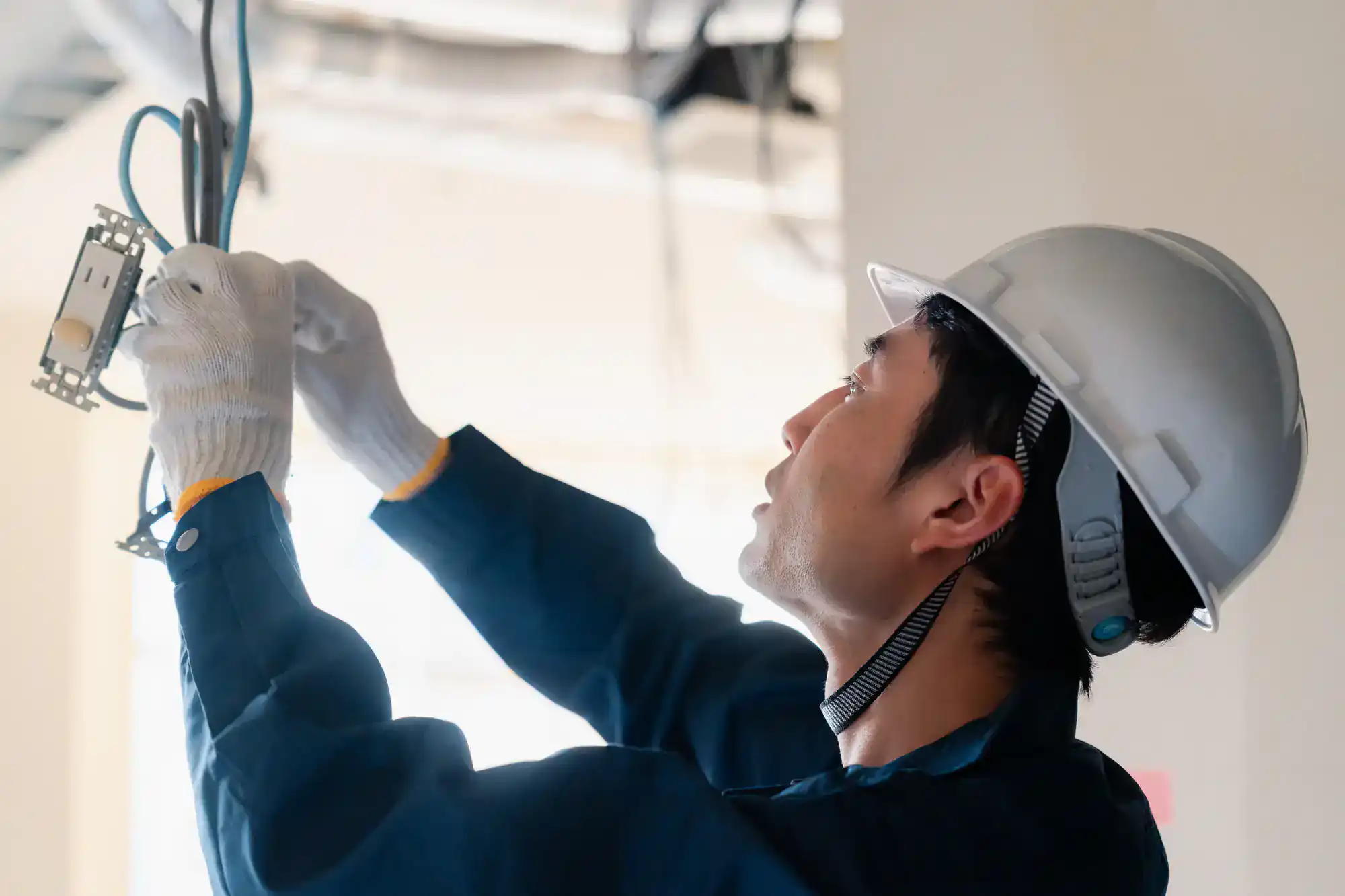
240V Hot Tub Wiring, Eagle Crest OR
Every hot tub electrical installation we perform in Eagle Crest is built around Oregon’s 2023 Electrical Specialty Code and NEC Article 680—the federal standard that governs outdoor spa and hot tub wiring. That means a dedicated 240V circuit on its own breaker, a Class A GFCI breaker for shock protection, weatherproof conduit rated for outdoor exposure, and a properly placed disconnect box within line of sight of the tub.
In Eagle Crest’s high desert climate, where temperatures regularly drop below freezing from October through April, outdoor-rated components aren’t optional—they’re what keeps the system performing through freeze-thaw cycles that would degrade cheaper materials over time. The service also includes equipotential bonding of all metal components—the water, pump housings, fittings, and any other metal near the tub. This is a step that unlicensed contractors and handymen routinely skip, and it’s one of the most important safety requirements in NEC Article 680.
For Eagle Crest properties with older electrical panels—common in the original resort development and Ridge-area homes built before 2000—the free estimate includes a full panel assessment. If an upgrade is needed to support the hot tub circuit, you’ll know before the job starts, not after. We hold both the CCB license and the Oregon Building Codes Division electrical license required to do this work legally in Deschutes County, and every job is permitted and inspected.
Does hot tub electrical installation in Eagle Crest require a Deschutes County permit?
Yes—and this is a detail that trips up a lot of Eagle Crest homeowners. Because Eagle Crest is an unincorporated community in Deschutes County, permits for electrical work are issued through Deschutes County Community Development, not the City of Redmond. The two are separate jurisdictions, and the permit process is different depending on which side of that line your property sits on.
A permit is required for any 240V hot tub electrical installation under Oregon law. That permit triggers a final electrical inspection by a county inspector, which is what officially validates the work as code-compliant. For Eagle Crest vacation rental owners especially, skipping the permit is not a shortcut worth taking—an unpermitted installation can void your homeowner’s insurance coverage and create real liability exposure if something goes wrong while a guest is using the property. Young Electric LLC pulls the permit as part of every installation, so you don’t have to navigate that process yourself.
My Eagle Crest home was built in the late 1980s—will my panel support a hot tub?
It might, but it needs to be assessed before anyone starts running wire. Eagle Crest’s original Phase 1 development dates to the mid-1980s, and many of those homes were built with 100-amp electrical service panels. A standard 240V hot tub circuit draws 50 amps on its own—and if your panel is already carrying the load of a full home, there may not be enough capacity left to add a dedicated hot tub circuit without an upgrade.
The good news is that this is exactly what the free estimate is for. Before any work is quoted or scheduled, a licensed electrician checks your panel capacity, the available breaker space, and the distance from the panel to the hot tub location. If an upgrade is needed, you’ll know the full scope and cost before anything starts. Newer West Ridge homes built in the 2000s and beyond are more likely to have 200-amp panels with room to spare, but the assessment is always the right first step regardless of when the home was built.
What size breaker does a 240V hot tub need, and why does it matter?
Most full-size 240V hot tubs require a 50-amp dedicated circuit with a two-pole GFCI breaker. Some larger or feature-heavy models call for 60 amps—your hot tub’s manual or spec sheet will list the exact requirement. The key word is dedicated: nothing else shares that circuit. No outdoor outlets, no landscape lighting, no other appliances. The hot tub gets its own breaker, its own wire run, and its own disconnect.
The GFCI part is not interchangeable with a standard breaker. A standard breaker protects equipment from overloads. A GFCI breaker protects people—it detects ground faults in milliseconds and cuts power before a dangerous amount of current can pass through a person in the water. Oregon’s 2023 Electrical Specialty Code requires a Class A GFCI breaker for all outdoor spas and hot tubs, and that requirement exists for a reason. In Eagle Crest’s climate, where the tub gets heavy use during cold months when the water-to-air temperature differential is greatest, having that protection working correctly matters every single time someone gets in.
Do I need HOA approval before installing hot tub electrical wiring in Eagle Crest?
Potentially, yes—and it’s worth checking before any exterior work begins. Nearly every property in Eagle Crest falls under at least one HOA: the Eagle Crest Master Association on the east side of Cline Falls Highway, the Ridge at Eagle Crest Owners Association covering the Ridge area’s 1,700-plus home sites, or one of the sub-associations within those larger structures. HOA rules vary, but exterior modifications—including conduit runs, disconnect box installation, or any changes to a deck or patio to accommodate a hot tub—may require prior approval from your association’s architectural committee.
The county permit and the HOA approval are two separate processes. Pulling a permit through Deschutes County Community Development doesn’t automatically satisfy your HOA’s requirements, and vice versa. The practical advice is to contact your HOA first, get any required approval in writing, and then move forward with the permit and installation. We can work around HOA requirements and will discuss the exterior routing of conduit and placement of the disconnect box with you before the job starts to make sure the installation fits within your association’s guidelines.
How long does hot tub electrical installation typically take to complete?
For most straightforward installations—where the panel has adequate capacity, the run from panel to hot tub is a reasonable distance, and no subpanel or panel upgrade is needed—the electrical work itself typically takes four to eight hours. That covers running the conduit, pulling the wire, installing the GFCI breaker and disconnect box, and completing the bonding and grounding. The county inspection happens after the work is done and is scheduled separately.
Where things take longer is when additional work is needed upfront. If your Eagle Crest home has an older 100-amp panel that needs upgrading, or if the hot tub location is on the far side of a large lot requiring a longer underground conduit run, those factors add time and scope. Trenching for an underground run—which is the cleanest and most code-compliant approach for longer distances—adds time but produces a much better finished result than surface-mounted conduit. All of this gets identified during the free estimate so you’re not surprised by the timeline any more than you are by the cost.
Why do Eagle Crest vacation rental owners specifically benefit from a properly permitted hot tub installation?
When you’re operating a short-term rental in Eagle Crest—whether through Airbnb, VRBO, Vacasa, or another platform—the hot tub is often the amenity that closes the booking. Guests searching Central Oregon vacation rentals filter for private hot tubs, and properties that have them consistently outperform those that don’t on both nightly rate and occupancy. That’s a real revenue difference, and it makes the electrical installation a business investment, not just a home improvement.
But the installation has to be done correctly to protect that investment. An unpermitted or improperly wired hot tub creates insurance exposure on a rental property—most homeowner and short-term rental insurance policies require electrical work to be permitted and inspected, and a claim tied to unpermitted work can be denied. Beyond insurance, most hot tub manufacturers void the equipment warranty if the electrical installation wasn’t performed by a licensed professional. Our installations are fully permitted through Deschutes County, inspected, and backed by a 5-year labor warranty—which matters even more when you’re managing a property remotely and can’t always be on-site if something needs attention.
Useful Links