
Hot Tub Electrical Installation in Bull Mountain, OR
Bull Mountain Homes Deserve an Installation Built for the Hill

Hear from Our Customers
Hot Tub Wiring in Bull Mountain, OR
Bull Mountain sits at about 710 feet elevation, and that geography means something practical. You get cooler temperatures and more rain than the valley floor below. With roughly 211 days a year under 50 degrees and over 43 inches of annual rainfall, a hot tub here isn’t a summer accessory — it’s something you’ll actually use in October, January, and March.
That makes the electrical installation matter more, not less. A job done with shortcuts — wrong wire gauge, skipped bonding, no permit — doesn’t just create a safety risk. It creates a problem that follows the home.
When the installation is done correctly, you get a dedicated 240V circuit sized for your tub, a weatherproof disconnect at the right distance, a GFCI breaker that actually protects people in a wet environment, and a permit on file with Washington County Building Services. That last part matters more than most homeowners realize. Bull Mountain is unincorporated Washington County — not the City of Tigard — so your electrical permit comes from the county, not Tigard’s building department. An electrician who doesn’t know that distinction may file with the wrong authority or skip the permit entirely, leaving you with unpermitted work that surfaces at resale or complicates an insurance claim.
Getting this done properly means you step into the tub on a cold November night knowing the wiring behind it was inspected, approved, and backed by a 5-year labor warranty. That’s the outcome. Everything else is just steps to get there.

Ready to get started?

Bull Mountain Hot Tub Electrician You Can Verify
We’re a second-generation, family-owned electrical contractor based in Portland and serving the Portland Metro area — including Bull Mountain and the broader Washington County region. We grew up in this trade and bring over 40 years of combined experience to every job. We hold both a CCB license and a BCD electrical license through Oregon’s Building Codes Division, and we’ve pulled more than 3,200 building permits across the Metro.
That permit history isn’t a marketing number — it’s a record of inspected, code-compliant work. We’re also a Tesla Certified Electrical Contractor and hold a BuildZoom score of 125, placing us above 99% of all contractors in Oregon. With 4.8 stars across more than 1,400 Google reviews, our track record is consistent and verifiable.
Because we’re military veteran-owned and family-operated, when you call, you reach a real person — not a call center routing your request to whoever’s available. For homeowners in Brentwood Estates, East Bull Mountain, and the newer subdivisions going up near the hill’s western side, that combination of credentials, accountability, and local familiarity is exactly what the job calls for.
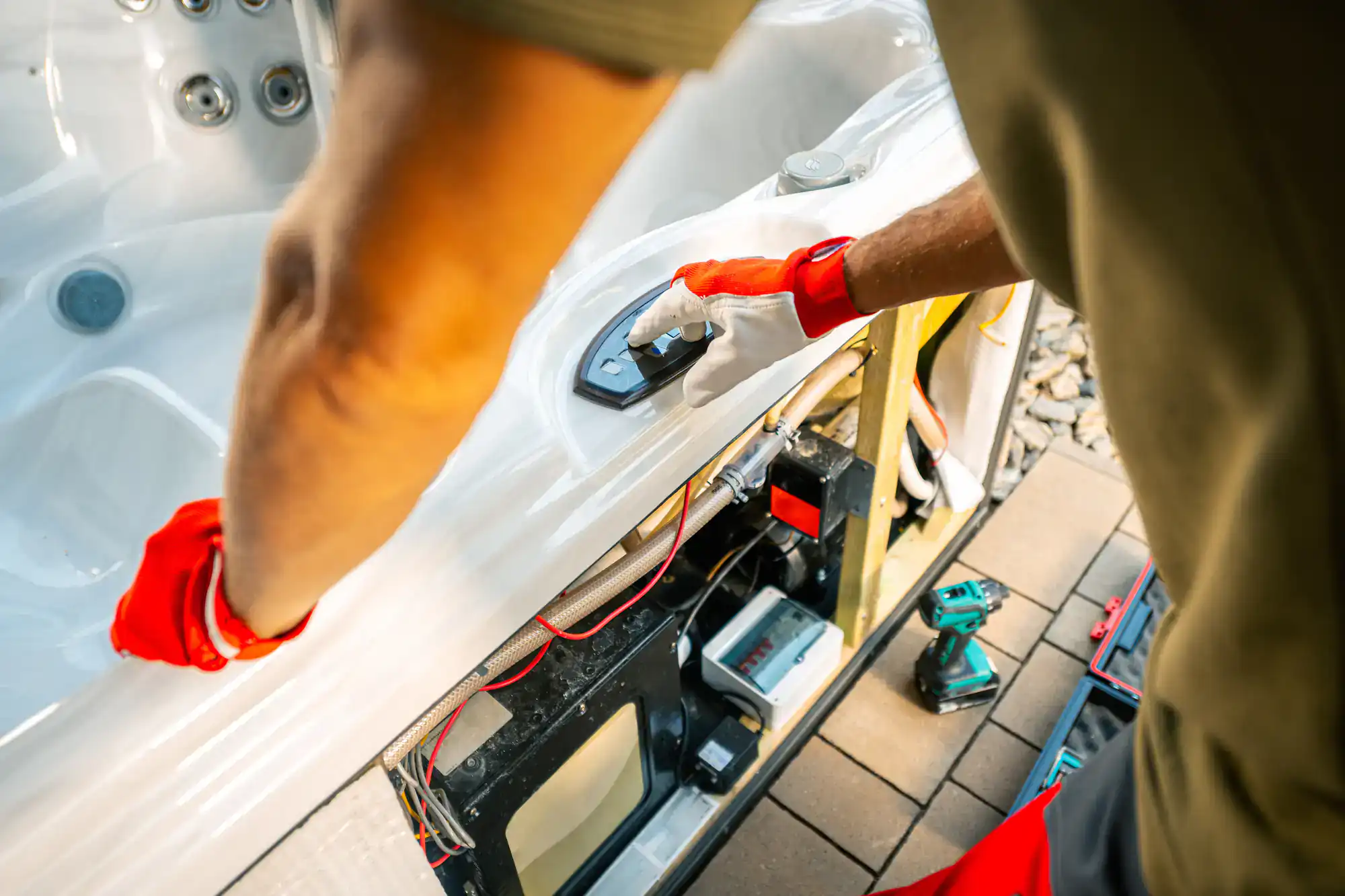
Hot Tub Electrical Wiring Process in Bull Mountain
It starts with a free estimate. Before any work is quoted or scheduled, a licensed electrician assesses your existing panel to see whether it has the capacity to support a hot tub circuit — typically a dedicated 50-amp, 240V line. For many Bull Mountain homes, this is good news. The majority of homes on the hill were built in the last 20 years and tend to have 200-amp panels with available capacity, which means fewer surprises before the job begins. If your panel does need attention, you’ll know upfront, not after the work has started.
Once the scope is clear, the installation plan accounts for your specific lot. Bull Mountain’s terrain is not flat — driveways run at 15 to 20 percent grade, and many lots have terraced landscaping, retaining walls, and irrigation systems that took real money to install. Conduit routing and trenching on a sloped hillside lot requires more planning than a standard suburban yard, and that’s exactly the kind of detail we work out before anyone picks up a shovel.
The installation itself covers the full scope: dedicated circuit, properly sized GFCI breaker, weatherproof disconnect placed at code-required distance from the tub, and equipotential bonding of all metal components. After the work is complete, we file the electrical permit with Washington County Building Services — the correct permitting authority for unincorporated Bull Mountain — and coordinate the final inspection. When the inspector signs off, you have a legal, documented installation backed by a 5-year labor warranty.
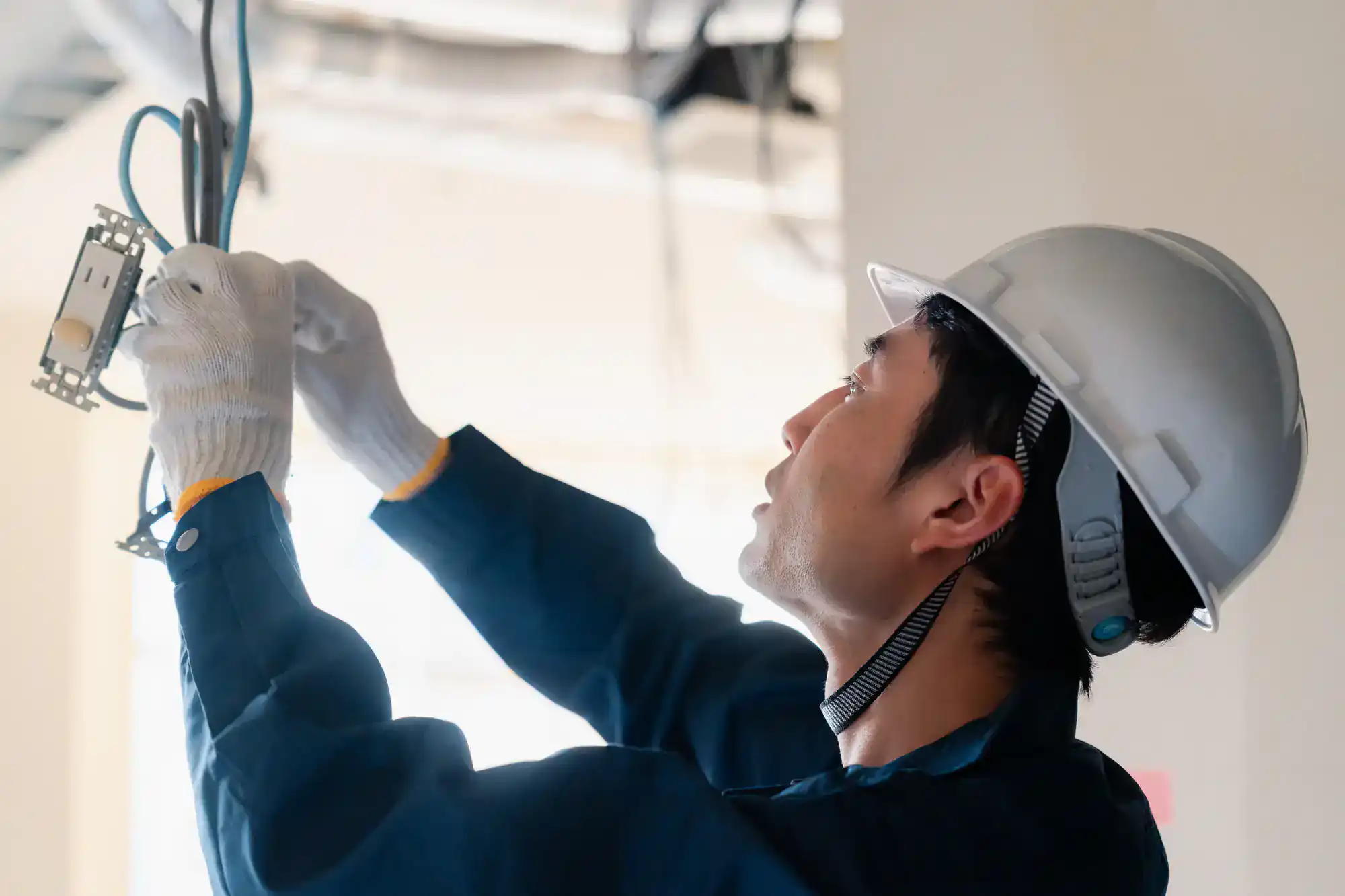
240V Hot Tub Wiring and GFCI Installation in Bull Mountain
Hot tub electrical installation in Bull Mountain covers the full scope of what Oregon code and NEC Article 680 require — and what your hot tub manufacturer requires to keep the warranty intact. That means a dedicated 240V circuit run through weatherproof conduit, a GFCI breaker sized for your tub’s load, a weatherproof disconnect box installed within line of sight of the tub at the correct distance, and equipotential bonding of all metal components including the pump housing, water fittings, and any metal within reach of the tub.
These aren’t optional steps. Skipping bonding and grounding is one of the most common failures on unlicensed installations, and it creates a hidden shock hazard that a standard visual inspection won’t catch.
Because Bull Mountain is unincorporated Washington County, the electrical permit for your installation is filed through Washington County Building Services using the county’s BDAS online permitting portal — not through Tigard or Beaverton. We handle that process from application through final inspection, so you don’t have to figure out which government office to contact or which code edition is currently enforced. The 2023 Oregon Electrical Specialty Code, which went into effect October 1, 2023, is the current standard, and every installation we complete meets that version.
The free estimate includes a panel assessment. You’ll know before any work begins whether your existing panel can handle the new circuit — and for most homes in Bull Mountain’s newer subdivisions, it can. If your lot has specific trenching challenges due to slope, finished landscaping, or existing hardscaping, that gets factored into the plan at the estimate stage, not discovered mid-job.
Do I need a permit for hot tub electrical installation in Bull Mountain, OR?
Yes. The permit authority in Bull Mountain is Washington County Building Services — not the City of Tigard. This is a detail that trips up a lot of homeowners and even some electricians who primarily work in Tigard proper. Because Bull Mountain is unincorporated Washington County, all building and electrical permits for homes in the community are issued through the county, not through any incorporated city’s building department.
Skipping the permit isn’t just a code violation — it creates real downstream problems. Unpermitted electrical work can void your homeowner’s insurance coverage if a claim is ever tied to that installation, and it will surface during a home inspection when you eventually sell. Washington County requires a permit for hot tub electrical work, and the installation must pass a final inspection before it’s considered complete. We handle the permit application and inspection coordination through the county’s BDAS portal, so that process doesn’t fall on you.
What size breaker does a 240V hot tub need, and does wire gauge matter?
Most full-feature hot tubs running on 240V require a dedicated 50-amp GFCI breaker. Some larger models specify 60 amps — your tub’s documentation will list the exact requirement, and that spec drives the breaker size. The wire gauge needs to match: a 50-amp circuit typically calls for 6 AWG copper wire run through weatherproof conduit.
Using undersized wire on a 240V circuit is one of the most common and dangerous mistakes on unlicensed installations — it creates a fire hazard that may not show up immediately but builds over time under load.
The GFCI breaker is not interchangeable with a standard breaker. A standard breaker protects equipment from overloads. A GFCI breaker detects ground faults and cuts power within milliseconds — which is the difference that matters when the circuit is feeding a tub full of water. Oregon requires GFCI protection on all outdoor spa and hot tub installations under NEC Article 680, and the 2023 Oregon Electrical Specialty Code reinforces that requirement. This isn’t optional, and any electrician suggesting otherwise is not current on the code.
Will my electrical panel handle a hot tub, or do I need an upgrade?
This is one of the most common concerns we hear, and for Bull Mountain homeowners specifically, the answer is often more straightforward than expected. The majority of homes on the hill were built within the last 20 years, and newer construction typically comes with 200-amp service panels that have available capacity for a dedicated hot tub circuit.
That doesn’t mean every home is ready without any work, but it does mean the panel upgrade conversation is less common here than in older neighborhoods with 100-amp service or fully loaded panels.
The only way to know for certain is to have a licensed electrician assess your panel before the installation begins. We include that assessment as part of the free estimate visit. You’ll get a clear answer on whether your panel has room, whether any breaker slots need to be reorganized, or whether an upgrade is actually necessary — before any money changes hands. No surprises after the work starts.
How far does the disconnect box need to be from my hot tub?
Under NEC Article 680, the disconnect box — sometimes called the spa panel or emergency shutoff — must be placed no closer than 5 feet from the hot tub and within line of sight of the tub. It also needs to be readily accessible, outdoor-rated, and weatherproof.
For homes on Bull Mountain where the tub is positioned on a deck, patio, or terraced area of the yard, the disconnect placement needs to be planned carefully around the lot’s slope and any existing structures. A disconnect that’s technically at the right distance but blocked by a retaining wall or buried behind landscaping doesn’t meet the “readily accessible” and “line of sight” requirements.
Getting this right at the start saves the headache of a failed inspection — and Washington County’s inspectors do check this. We plan disconnect placement as part of the installation design, not as an afterthought.
What is equipotential bonding and why does my hot tub installation require it?
Equipotential bonding is the process of connecting all metal components in and around the hot tub — pump housings, metal fittings, water, and any other conductive material within a certain radius — to a common ground point. The purpose is to eliminate voltage differences between metal surfaces that a person in the water could bridge with their body.
When bonding is done correctly, there’s no potential difference for current to travel through. When it’s skipped or done wrong, the risk is a low-level shock that’s hard to detect but can be dangerous over time, or in a worst case, far worse.
This step is required by NEC Article 680 and is one of the most commonly skipped elements on unlicensed or handyman hot tub installations. It’s not visible once the installation is finished, which means a homeowner has no way to know if it was done without pulling the work apart. A licensed electrician who pulls a permit and passes inspection has demonstrated that bonding was completed correctly — because the inspector checks it. That’s one of the core reasons the permit and inspection process exists, and it’s a step we include on every installation in Bull Mountain.
Does Young Electric LLC serve unincorporated Bull Mountain, or just nearby Tigard?
We serve Bull Mountain directly — including the unincorporated portions of the community that fall under Washington County jurisdiction rather than the City of Tigard. This distinction matters because the permitting process is different. Homes in unincorporated Bull Mountain file permits through Washington County Building Services, not through Tigard’s building department, and an electrician who doesn’t know that difference may create a compliance problem without realizing it.
The service area covers the full hill — Brentwood Estates, East Bull Mountain, Bull Mountain Meadows, Bull Mountain Parks, and the newer construction going up on the western side near Roy Rogers Road. Whether your lot is a flat newer build or a terraced hillside property with finished landscaping and a 15-percent-grade driveway, the installation approach gets planned around your specific site. We’ve pulled over 3,200 permits across the Portland Metro, including Washington County unincorporated territory, and we handle the full permit and inspection process through the county’s BDAS portal so you don’t have to navigate that on your own.
Useful Links