
Hot Tub Electrical Installation in Beavercreek
Acreage Lots Need More Than a Standard Hot Tub Wiring Job

Hear from Our Customers
Hot Tub Wiring in Clackamas County
Beavercreek’s wet season starts in October and doesn’t let up until late spring. If your hot tub is sitting on the property and the electrical isn’t done, you’re watching the best months of the year go by without being able to use it. Getting the wiring handled before fall arrives means you actually get what you paid for—a year-round amenity that earns its keep on a cool, rainy evening when the rest of the yard is soaked.
What makes Beavercreek different from a typical suburban job is the property itself. Lots here run an acre or more, and many of the homes—farmhouses, ranch-styles, older builds from the 1920s through the 1970s—were wired for a different era. A 240V hot tub circuit isn’t something you can just tack onto an already-loaded rural panel without evaluating what’s there first. When the assessment is done right upfront, there are no surprises after the tub is delivered.
Once the work is complete and the county inspection is signed off, you get a clean, permitted installation backed by a 5-year labor warranty. The wiring is buried, the disconnect is properly placed, and the GFCI protection is in. No loose ends, no skipped steps, and nothing that will create a problem when you eventually sell the property.

Ready to get started?

Beavercreek Hot Tub Electrician You Can Verify
Young Electric LLC is a second-generation, family-owned electrical contractor based in Portland and serving the Portland Metro area—including unincorporated Clackamas County communities like Beavercreek. Jeremy Young grew up in this trade. Our team has been working on residential electrical systems of every age and configuration for over 40 years combined, which matters when you’re dealing with a 1950s farmhouse panel on a rural acreage lot rather than a clean new subpanel in a suburban development.
We hold both an Oregon CCB license and a BCD electrical license—the two credentials Oregon requires for legal electrical contracting work. Those aren’t just numbers on a business card; they’re verifiable at ccb.oregon.gov and oregon.gov/bcd. With a BuildZoom score of 125, placing us in the top 1% of all Oregon contractors, and 3,224 permits pulled across the state, the track record is there to back it up.
When you call, a real person answers. That’s not a talking point—it’s how we’ve operated since the beginning.
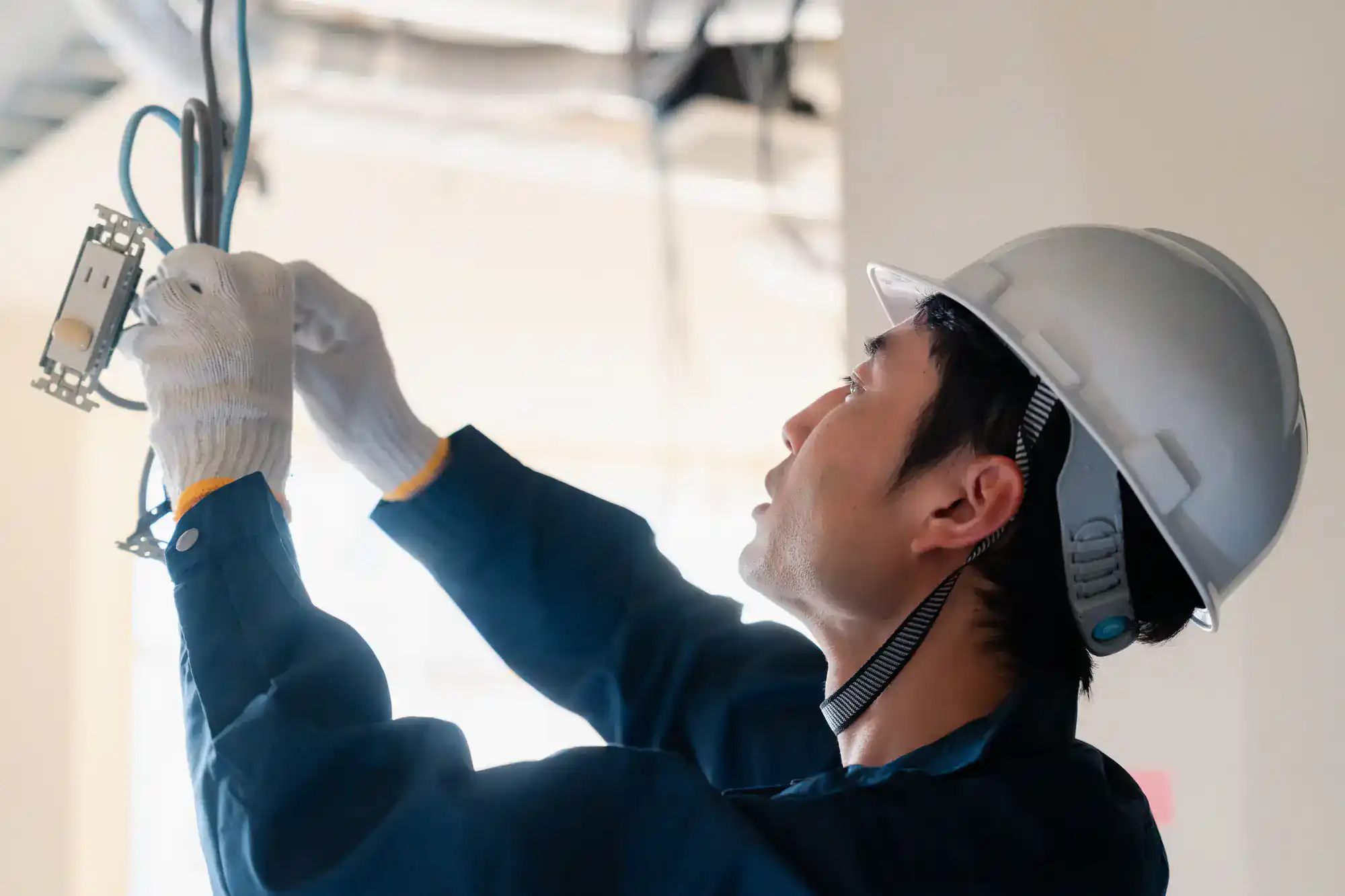
Hot Tub Electrical Wiring Process in Beavercreek
It starts with a free estimate—and on a Beavercreek property, that estimate includes more than just a glance at the panel. Our electrician walks the site with you, looks at where you want the tub placed, and maps out the conduit run. On a one-acre or larger lot, that run can easily stretch 50 to 100 feet or more depending on the layout. The distance matters because it affects wire sizing, voltage drop calculations, and the amount of trenching involved. You’ll get a clear number that reflects what your specific property actually requires—not a generic quote that grows after the work starts.
Once the scope is confirmed, we pull the electrical permit through Clackamas County Building Codes. Because Beavercreek is unincorporated, permits don’t go through a city building department—they go through the county office on South Beavercreek Road in Oregon City. That step is handled for you. The installation itself covers the dedicated 240V circuit, properly sized GFCI breaker, weatherproof underground conduit, and a disconnect box placed at the correct distance from the tub. All metal components are bonded—a step that’s required by NEC Article 680 and one that unlicensed installers routinely skip.
After the installation is complete, a Clackamas County electrical inspector signs off on the work. That final inspection is what protects you—it confirms the wiring is safe, the installation is code-compliant, and your homeowner’s insurance has no grounds to deny a future claim tied to the electrical work.

240V Hot Tub Wiring and GFCI Breaker Installation
Every hot tub electrical installation we perform in Beavercreek includes a full panel assessment before any work begins. For older homes in the area—and there are plenty of them, from early farmhouses to 1970s ranch-styles—this step is especially important. Rural properties often carry well pump loads, outbuilding circuits, and other electrical demands that a suburban panel never sees. If your current service can support the additional 50-amp, 240V circuit a hardwired hot tub requires, the installation moves forward. If it can’t, you’ll know that before the tub is sitting in your driveway waiting.
The installation covers a dedicated 240V circuit run from your panel to the tub location, weatherproof underground conduit for the full length of the run, a GFCI breaker sized for your specific unit, and a code-compliant disconnect box positioned within line of sight of the tub. Equipotential bonding of all metal components—the pump housing, water fittings, and any nearby metal structures—is included as a standard part of every job, not an add-on. This is what NEC Article 680 requires, and it’s what keeps the installation safe in a wet outdoor environment.
The Clackamas County electrical permit and final inspection are part of the process, not an afterthought. For Beavercreek homeowners with properties valued near or above $800,000, having a permitted, inspected installation on record matters at resale and with your insurance carrier. The 5-year labor warranty on every install adds another layer of protection on top of that.
Who issues hot tub electrical permits for properties in Beavercreek, Oregon?
Because Beavercreek is an unincorporated hamlet in Clackamas County, there’s no city building department handling permits here. All electrical permits for hot tub installations in Beavercreek go through Clackamas County Building Codes, which is located at 150 S Beavercreek Road in Oregon City. The county’s permit system is called Development Direct, and a Clackamas County electrical inspector performs the final inspection once the work is complete.
This is different from what homeowners in Oregon City or other incorporated municipalities experience, where a city inspector signs off on the work. For Beavercreek residents, the county is the authority. We handle the permit application and coordinate the inspection, so you don’t have to navigate the county system yourself. The inspection isn’t a formality—it’s the step that confirms your installation is safe, code-compliant, and on record for insurance and resale purposes.
My Beavercreek home is older—will my electrical panel handle a hot tub?
This is one of the most common concerns we hear from homeowners in rural Clackamas County, and it’s a fair one. A significant portion of Beavercreek’s housing stock dates from the 1920s through the 1970s—farmhouses and ranch-style homes that were built when a 100-amp service panel was considered more than adequate. Today, those same panels often carry well pump loads, outbuilding circuits, electric heat, and modern appliances. Adding a 240V, 50-amp hot tub circuit to a panel that’s already near capacity isn’t a simple task.
The free estimate from Young Electric LLC includes a panel assessment as a standard part of the visit—not a separate paid evaluation. Our electrician looks at your current service, what’s already on the panel, and whether there’s capacity for the additional load. If there is, the installation moves forward. If there isn’t, you’ll get an honest explanation of what a service upgrade would involve before any work begins. No surprises after the tub has already been delivered.
How much does hot tub electrical installation typically cost in the Beavercreek area?
We don’t publish set pricing because the cost of a hot tub electrical installation varies too much from property to property to give a number that’s actually useful. Nationally, hot tub electrical installation ranges from around $1,900 to $4,200 for most residential projects, but Beavercreek properties frequently fall toward the higher end of that range—or above it—for a straightforward reason: the lots are bigger.
On a one-acre or larger rural property, the conduit run from your main panel to the hot tub location can stretch significantly further than a typical suburban backyard installation. Longer runs mean more wire, more conduit, more trenching, and more labor. If your panel also needs a capacity upgrade before the circuit can be added, that’s an additional cost. The free estimate accounts for all of this—the panel, the run distance, the site conditions, and the Clackamas County permit fee—so you get a complete number before you commit to anything.
Does a hot tub installation really need a permit in unincorporated Clackamas County?
Yes—and this is a misconception that catches some rural homeowners off guard. Because Beavercreek sits outside city limits, some residents assume the permit and inspection process is more relaxed. It isn’t. Oregon law requires an electrical permit for hot tub installations regardless of whether the property is inside or outside an incorporated city. In unincorporated Clackamas County, the permit is issued by the county building department, and a county inspector performs the final sign-off.
Skipping the permit doesn’t just mean skipping a bureaucratic step—it means no one has independently verified that the wiring is safe. More practically, an unpermitted electrical installation can create real problems when you file a homeowner’s insurance claim or when the property changes hands. In a market where Beavercreek homes are valued at or above $800,000, that’s not a risk worth taking to save a few hundred dollars on a permit fee. We pull the permit and coordinate the inspection as part of every installation.
What is a GFCI breaker and why does my hot tub specifically need one?
A standard circuit breaker protects equipment—it trips when the circuit draws more current than it’s rated for. A GFCI breaker does something different: it monitors the flow of electricity in real time and shuts off power within milliseconds if it detects a ground fault, meaning electricity is flowing somewhere it shouldn’t, like through water or through a person. In a dry indoor environment, a standard breaker may be adequate protection. In a hot tub, where the water, the pump, and the bather are all in close proximity, a GFCI breaker is the difference between a shock and something far worse.
NEC Article 680, which governs all outdoor spa and hot tub electrical installations in the US, requires a Class A GFCI breaker on every dedicated hot tub circuit. This isn’t optional and it isn’t negotiable—it applies to every installation in Oregon, including those in unincorporated Clackamas County. The GFCI breaker is sized to match your specific hot tub’s electrical requirements and is installed as part of every Young Electric LLC hot tub wiring job.
Why does equipotential bonding matter for a hot tub installation on a rural property?
Equipotential bonding is one of those installation steps that’s easy to skip if you’re cutting corners—and one of the most important ones to get right. The concept is straightforward: all metal components near the hot tub—the pump housing, the water fittings, any metal handrails or nearby structures—are connected to a common bonding conductor. This ensures that if there’s ever a stray electrical current in the system, it has nowhere to go except back to the panel, rather than through the water or through a person in the tub.
On rural Beavercreek properties, this step deserves particular attention. Older homes with aging electrical systems, longer conduit runs with more potential for ground fault exposure, and metal outbuildings or farm equipment in the vicinity all add complexity to the bonding picture. NEC Article 680 requires equipotential bonding on every hot tub installation, and it’s included as a standard part of every job we perform—not an optional add-on. If a contractor quotes you a hot tub wiring job without mentioning bonding, that’s worth asking about directly before you sign anything.
Useful Links