
Electrical Inspection in Beavercreek, OR
Beavercreek Homes Carry a Century of Wiring History

Hear from Our Customers
Home Electrical Inspection Beavercreek, OR
Most electrical problems don’t announce themselves. There’s no warning label on a panel that’s been quietly overloading for years, or on wiring installed when your home’s previous owner was still in high school. After a proper electrical inspection, you’ll have something most Beavercreek homeowners have never actually had: a clear, documented picture of where your system stands.
Beavercreek’s housing stock is genuinely diverse in ways that matter for electrical safety. A home built in the 1920s may still have wiring that predates modern safety codes by 80 or more years. A 1970s ranch home on Leland Road or Steiner Road sits squarely in the aluminum wiring era—a period when aluminum branch circuit wiring was common and is now recognized as a fire risk when it hasn’t been properly maintained or updated. Even homes from the 1990s weren’t designed to handle today’s electrical loads: EV chargers, smart home systems, and high-draw appliances all put pressure on systems sized for a different era.
Because Beavercreek properties aren’t standard suburban lots, the scope of what we check goes further than most people expect. Detached garages, outbuildings, well pump circuits, and underground service runs connecting structures across an acre or more of land are all part of the picture. After a thorough electrical safety inspection, you walk away with a full written report—not a verbal rundown at the door—that documents findings, flags deficiencies, and gives you a clear path forward.

Ready to get started?

Residential Electrical Inspection Clackamas County
We’ve been doing this work since 1974. That means we’ve inspected homes across Clackamas County through every decade of wiring standards, from knob-and-tube in pre-war bungalows to the aluminum wiring era of the 1970s to today’s NEC 2023 code. When you’re dealing with a rural property in Beavercreek that spans multiple structures and a century of construction decisions, that history matters.
Jeremy Young, our owner, is a second-generation electrician and military veteran. We’re family-run and Clackamas-based—the same county as Beavercreek, just north of Oregon City via OR-213. That’s not a coincidence. Young Electric LLC has 93 Nextdoor recommendations from neighbors in Clackamas County and a 4.8-star rating across more than 1,400 Google reviews. We’re IAEI-certified, meaning our inspections are performed to the standard of the International Association of Electrical Inspectors, not just a general electrician’s best judgment.
When the inspection is done, we can handle any follow-up repairs too. One team, full accountability.
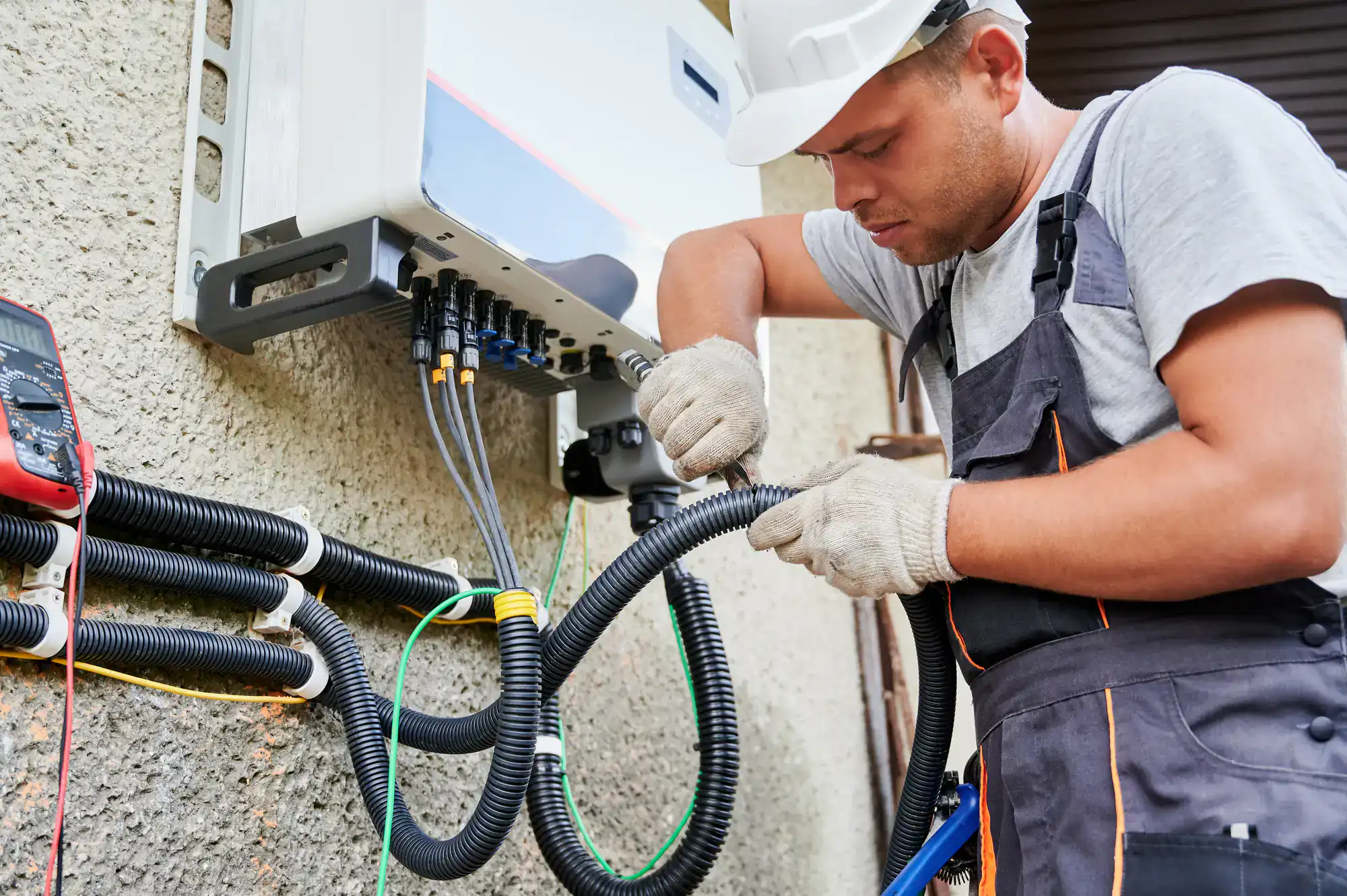
Electrical System Inspection Process Beavercreek, OR
It starts with a free estimate. You describe the property—the main house, any outbuildings, detached garage, well pump, or other structures—and we give you a clear picture of what the inspection will cover before anyone shows up. No surprises on scope, no vague commitments.
On inspection day, we work through the full electrical system. That means the main panel, every circuit, outlets, switches, GFCI and AFCI protection, smoke and carbon monoxide detectors, and surge protection. We also go where a lot of contractors skip: the attic, crawl space, and for rural Beavercreek properties, the outbuildings and underground service runs connecting structures across the property. Clackamas County enforces the Oregon Electrical Specialty Code, based on NEC 2023, across all unincorporated areas including Beavercreek. Our inspection checks for code compliance, not just visible damage—because a lot of what creates risk is buried inside walls or hidden in spaces that haven’t been opened in years.
At the end, you receive a full written report. It covers what was found, what needs attention, and what’s in good shape. If the inspection turns up issues, we can handle the repair work directly—same team, same standards, no starting over with a new contractor. For Beavercreek homeowners who’ve dealt with extended power outages that hit rural Clackamas County in severe winters, a post-restoration inspection follows the same process—because surge events and thermal stress from extended outages can compromise older systems in ways that aren’t immediately visible.

Electrical Wiring Inspection Services Beavercreek, OR
Our electrical inspection covers the full electrical system—not just the panel on the wall inside the house. We check the main panel and breakers, all branch circuits, outlets and switches throughout the living spaces, GFCI protection in kitchens, bathrooms, garages, and outdoor areas, AFCI protection on bedroom circuits, smoke and carbon monoxide detectors, surge protection, and the meter box. Attic and crawl space wiring is included—these are the areas where serious hazards most often hide, and where a general home inspector typically does a surface-level pass at best.
For Beavercreek properties, our inspection scope extends to the full electrical footprint of the property. Detached garages, barns, outbuildings, and well pump circuits all get checked. Underground service runs connecting structures across acreage lots are assessed for condition and code compliance. Because Beavercreek sits in unincorporated Clackamas County, all electrical work falls under county and state permitting authority—not a city permit office. Young Electric LLC is fully licensed under Oregon’s CCB and BCD requirements, and a certificate of insurance is available on request before you schedule.
We hold IAEI certification—the International Association of Electrical Inspectors—which is the organization specifically dedicated to electrical inspection standards. Most electricians who offer inspections don’t hold this credential. The inspection closes with a full written report you can use for insurance purposes, real estate negotiations, or a prioritized repair plan. Free estimates are available, and if the inspection reveals issues, we can handle repairs directly.
Does my older Beavercreek farmhouse actually need an electrical inspection?
If your home was built before 1980, the honest answer is yes—and the older it is, the more urgent that answer gets. Beavercreek has a wide range of housing ages, from 1920s farmhouses to 1970s ranch-style homes, and each era came with wiring materials and standards that don’t hold up well by today’s codes. Homes from the 1920s through the 1940s may still contain original knob-and-tube wiring, which was never designed to handle modern electrical loads and can be a fire risk when it’s been modified or covered with insulation over the decades.
Homes built in the 1960s and 1970s often used aluminum branch circuit wiring, which expands and contracts differently than copper and can loosen at connections over time—creating heat and fire risk at outlets and fixtures. An electrical wiring inspection will identify which type of wiring is present, assess its condition, flag any code violations or deficiencies, and give you a written report with specific recommendations. For homes 40 years and older in Beavercreek, the inspection isn’t a formality—it’s the only way to know what’s actually going on inside the walls.
What's the difference between a home inspector's electrical check and a licensed electrician's inspection?
This is one of the most common points of confusion for homeowners, especially those who’ve just gone through a home purchase. A general home inspector performs a visual walkthrough of the electrical system—they look at the panel, check a sample of outlets, and note anything obviously wrong. They are not licensed electricians, they don’t perform testing, and they typically don’t go into the attic or crawl space specifically to assess wiring condition. Their report on electrical systems is surface-level by design.
A licensed electrician performing a residential electrical inspection goes significantly deeper. We test circuits for voltage, amperage, and grounding. We check GFCI and AFCI protection across the home. We assess breaker capacity and condition, inspect attic and crawl space wiring, look for code violations under Oregon’s current Electrical Specialty Code, and deliver a detailed written report with findings and recommendations. For a Beavercreek property with outbuildings, well pumps, or older wiring, that difference in scope is not minor—it’s the difference between a general impression and an actual assessment of your system’s safety and capacity.
How often should a home in Beavercreek get an electrical safety inspection?
For most homes, every three to five years is the general recommendation from industry sources. But that’s a baseline for homes in reasonable condition with relatively modern wiring. In Beavercreek, where a significant portion of the housing stock is 40 to 100 years old, more frequent inspections are worth considering—especially if the home hasn’t been inspected in years, has had renovations done over time, or has had any wiring work done by previous owners that may not have been permitted.
There are also specific triggers that should prompt an inspection regardless of the last one: adding a high-draw appliance like an EV charger or hot tub, completing a major renovation, experiencing storm damage or an extended power outage, or purchasing a home where the electrical history is unknown. Clackamas County’s rural areas—including Beavercreek—have experienced severe winter storms that left thousands of PGE customers without power for extended periods. After power is restored following a long outage, an electrical code inspection of older systems is a reasonable precaution, since surge events during restoration can stress components that were already aging.
Will the inspection just turn into a sales pitch for expensive repairs?
The inspection produces a written report—not a verbal conversation at the door where you feel pressured to say yes to something on the spot. The report documents what was found, what’s working correctly, what needs attention, and what the recommendations are. You take that report home and decide what to do with it. There’s no obligation to book repairs with us, though many Beavercreek homeowners choose to because it’s simpler to work with a team that already knows the property.
Young Electric LLC has a 4.8-star rating across more than 1,400 Google reviews, with recurring themes around honest pricing and no-pressure service. We’ve been family-run since 1974—this isn’t a company that needs to manufacture work to stay busy. The goal of the inspection is to give you accurate information about your electrical system. Whether that means finding a significant issue that needs attention or confirming that everything is in solid shape, the report reflects what’s actually there.
Does electrical work in unincorporated Beavercreek require a permit and inspection?
Yes. Because Beavercreek is an unincorporated community in Clackamas County, there is no city permit office—all electrical permitting falls under the Clackamas County Building Codes Program. The county enforces the Oregon Electrical Specialty Code, which is based on NEC 2023, across all structures in unincorporated areas. Any electrical work beyond minor repairs requires a permit, and permitted work must be inspected by the county’s electrical inspectors before it’s considered complete.
Clackamas County explicitly advises homeowners to hire a licensed electrical contractor for electrical work, noting that exposed wiring creates safety hazards. Young Electric LLC is fully licensed under Oregon’s Construction Contractors Board and Building Codes Division requirements—the two licenses required to legally perform electrical work in Oregon. We handle the permitting process as part of any repair or installation work that follows an inspection, so you’re not navigating the county’s permit system on your own. A certificate of insurance is available on request before you schedule anything.
What should I do if my Beavercreek home lost power during a winter storm and recently had it restored?
Extended outages followed by power restoration are harder on older electrical systems than most people realize. When power comes back after a significant outage—especially the kind that rural Clackamas County has experienced, where some areas went without power for more than a week—the restoration event itself can send surges through the system. For a home with an aging panel, older wiring, or breakers that were already near the end of their service life, that surge can cause damage that isn’t immediately visible but creates ongoing risk.
The specific things worth checking after a major outage include the main panel and individual breakers for signs of heat or damage, GFCI and AFCI devices which can trip or fail during power events, any circuits that were under load when power was lost, and the condition of any surge protection equipment. If the home also has a generator that was used during the outage, the transfer switch and generator connection point should be assessed for safe, code-compliant integration with the home’s system. A post-storm electrical inspection covers all of these—and for a rural Beavercreek property where the home may include outbuildings and well pump circuits that were also affected by the outage, the scope of that check extends beyond just the main house.
Useful Links