
Electrical Panel Upgrade in Lake Oswego
Lake Oswego's Older Homes Deserve a Panel That Keeps Up

Hear from Our Customers
Panel Replacement in Lake Oswego, OR
When your electrical panel is sized right for how you actually live, a lot of small frustrations stop happening. Breakers stop tripping when you run the dishwasher and the dryer at the same time. The lights stop flickering when someone plugs in a space heater. And you stop wondering whether your house can handle the next thing you want to add to it.
For homeowners in Mountain Park, Lake Grove, and First Addition, that “next thing” is often an EV charger or a heat pump. Lake Oswego’s Sustainability and Climate Action Plan has made EV adoption a real community push, and a lot of residents are either already charging at home or planning to. The problem is that a panel installed during Mountain Park’s 1970s build-out was never designed for a Level 2 charger drawing 48 amps on top of a modern kitchen, a home office, and central air. Getting the panel right means you’re not just fixing today’s problem—you’re ready for what comes next.
There’s also the home value angle. With median home values in Lake Oswego sitting close to $900,000, an outdated or undersized panel isn’t just an inconvenience. It’s a liability that shows up on home inspections, can affect your insurance, and can complicate a sale at exactly the wrong moment. A properly permitted, properly sized upgrade protects the investment you’ve already made.
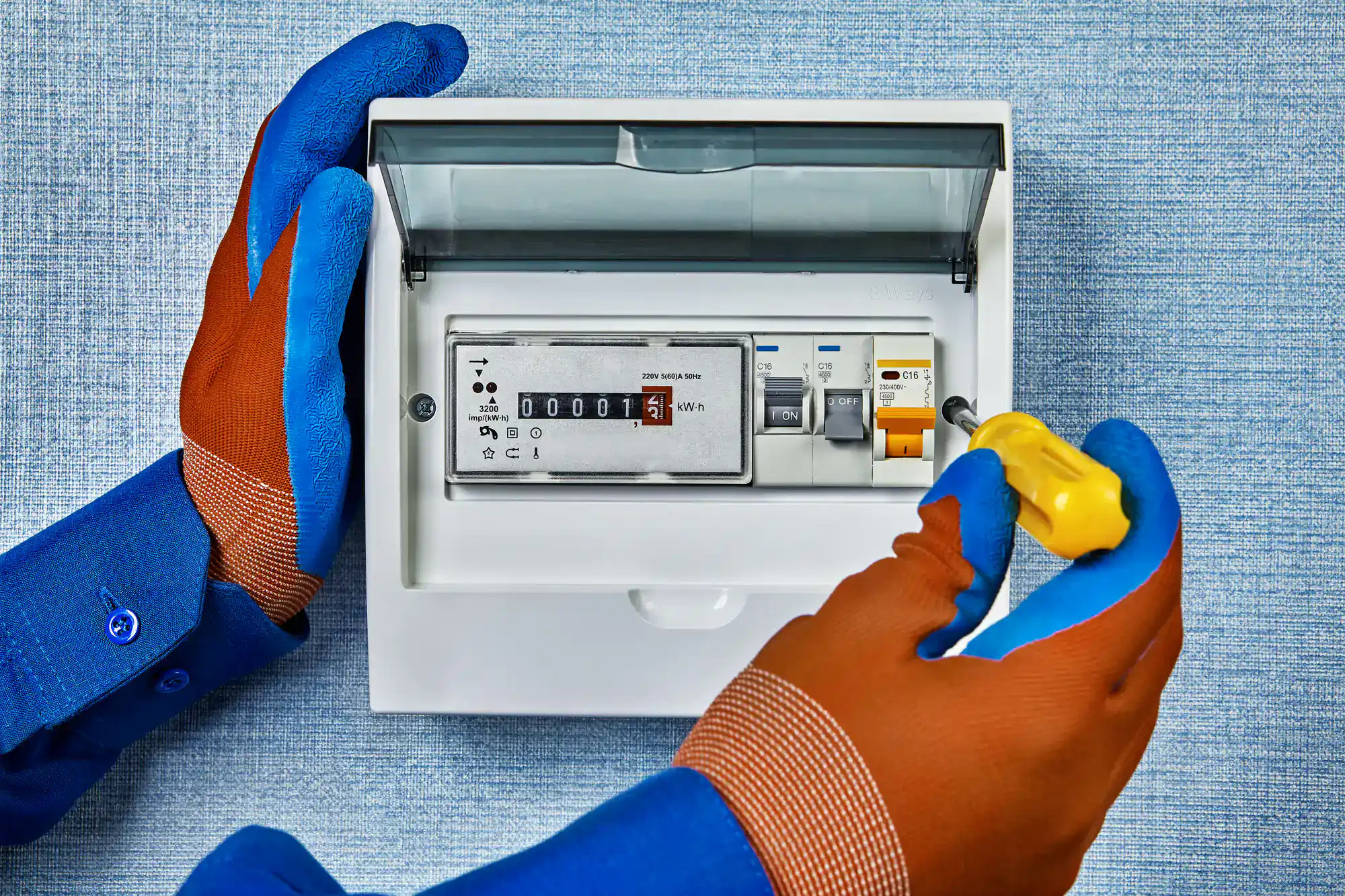
Ready to get started?

Licensed Electricians in Lake Oswego, OR
We’re a second-generation, family-owned electrical contractor based in Clackamas—right in Lake Oswego’s backyard, not driving in from across the metro or from Vancouver, WA. We’ve been doing electrical work in this part of Oregon for over 40 years across two generations, and that experience shows up in the details: knowing what’s inside the walls of a 1960s First Addition home, knowing how Portland General Electric handles meter pulls for service upgrades, and knowing how to navigate the City of Lake Oswego’s own building permit process without leaving you to figure it out alone.
With a 4.8 out of 5 rating across more than 1,400 Google reviews, our track record speaks for itself. We carry both the Oregon CCB license and the BCD electrical contractor license required for panel work in this state, and we back every installation with a five-year labor warranty. That’s not standard in this industry.
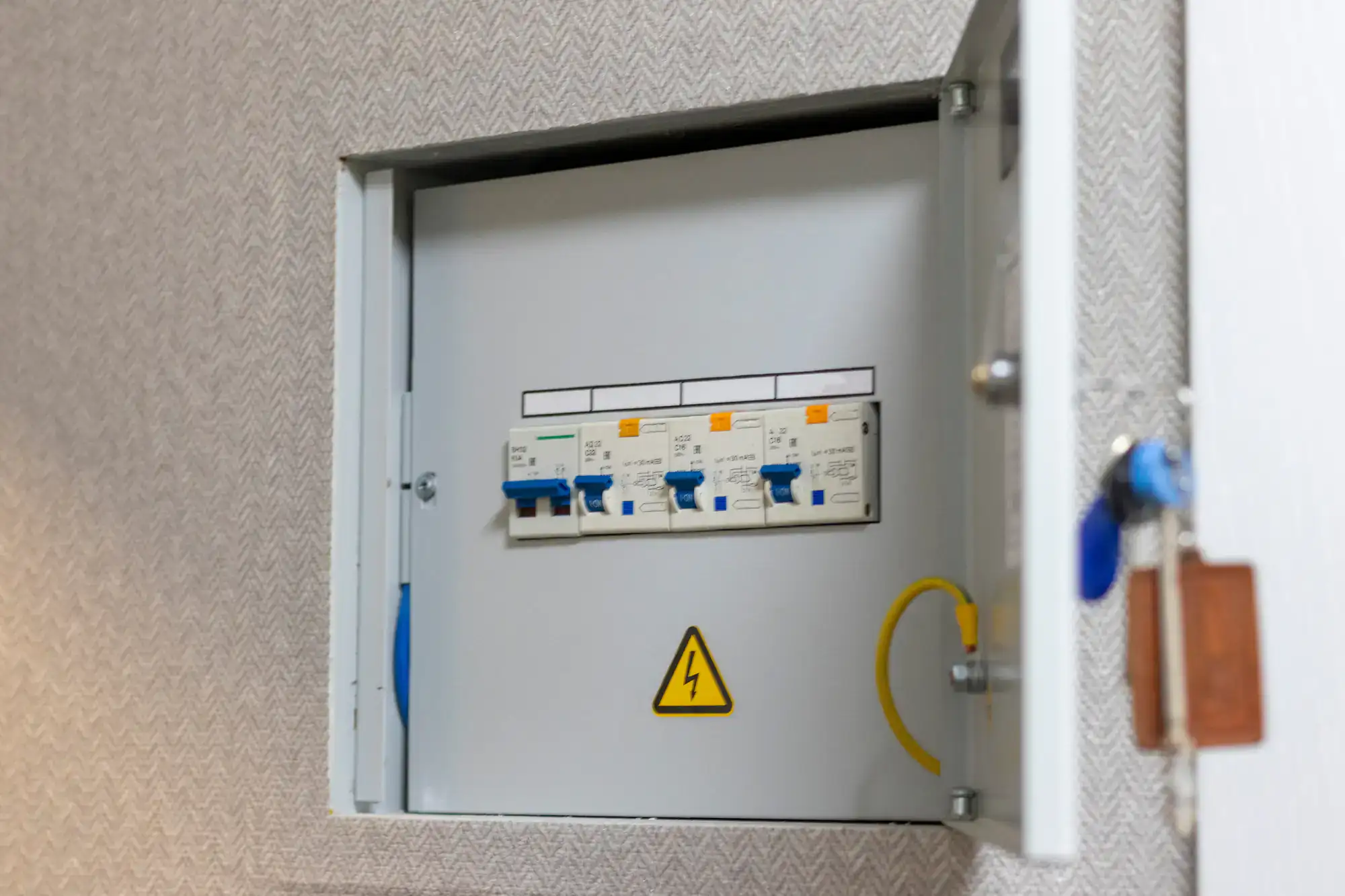
Electrical Panel Installation in Lake Oswego
It starts with a free estimate. One of our licensed electricians comes out, looks at your existing panel, listens to what you’re planning—whether that’s an EV charger, a renovation, a generator, or just getting ahead of an aging system—and gives you a clear picture of what the work involves and what it costs before anything is scheduled. No pressure, no commitment at that stage.
Once you decide to move forward, we handle the permit. In Lake Oswego, electrical panel upgrades require a permit through the City of Lake Oswego Building Services, and Oregon law puts that responsibility on the contractor, not the homeowner. That’s handled for you. For homes with underground utility service—which is common in several Lake Oswego neighborhoods, particularly on larger or wooded lots—the process also involves coordinating with Portland General Electric for the meter pull. That coordination happens before the installation day so there are no delays on the day of the work.
On installation day, the power goes off while the work is done, and for most residential panel upgrades, it comes back on the same day. We start at 7:00 a.m., which means the work gets done and wrapped up within normal hours. After the installation, the city inspection is scheduled and completed—and that inspection is what puts the work on record, which matters when your home eventually sells.

Breaker Panel Upgrade in Lake Oswego, OR
A panel upgrade with us covers the full scope—not just swapping out the box. That means the assessment of your existing system, the permit pulled through the City of Lake Oswego, utility coordination with Portland General Electric for the meter pull, the installation itself, and the follow-up inspection. The five-year labor warranty on the installation is included as well. There are no separate line items for permit handling or inspection coordination—that’s part of doing the job correctly.
For Lake Oswego homes specifically, a few things come up more often than they do elsewhere. Older homes in First Addition, Old Town, and Lakewood are more likely to have Federal Pacific or Zinsco panels—brands that were installed widely in the 1950s through the early 1980s and are now considered fire hazards by most insurers. If that’s what’s in your home, replacement isn’t optional—it’s overdue. We identify these during the initial assessment and explain exactly what needs to happen.
On the other end of the spectrum, lakefront properties and larger custom homes in the Country Club District and Glenmorrie often need a more involved service upgrade—sometimes to a 400-amp system—to support the electrical loads that come with dock wiring, heated driveways, whole-home automation, and multi-car EV charging. We also install EV chargers, Tesla Powerwall systems, generators, and hot tub electrical, so if the panel upgrade is step one of a larger project, that can often be coordinated as part of the same scope of work.
Do I need a permit for an electrical panel upgrade in Lake Oswego?
Yes—and in Lake Oswego, that permit comes from the city’s own building department, not Clackamas County. The City of Lake Oswego Building Services handles electrical permits for properties within city limits, and the application goes through Oregon’s statewide portal at buildingpermits.oregon.gov. Oregon law is clear that when a licensed contractor does the work, the contractor is responsible for obtaining the permit—not the homeowner.
This matters for a few reasons. The permit triggers a city inspection after the work is complete, which puts the upgrade on official record. That record is what protects you when you sell the home—a buyer’s inspector will look for permitted electrical work, and unpermitted panel replacements can derail a sale or force a price renegotiation at the worst possible time. We pull the permit and coordinate the inspection as part of the job. You don’t have to call the city or figure out the application process on your own.
How do I know if my panel actually needs to be replaced or just repaired?
The honest answer is that it depends on what’s causing the problem and what the panel is. A single tripping breaker can sometimes be replaced on its own—that’s a repair, not a full upgrade. But if the panel is undersized for your home’s current load, if it’s a recalled brand like Federal Pacific or Zinsco, or if it’s more than 40 years old and you’re planning to add an EV charger or a heat pump, a repair doesn’t solve the underlying issue.
In Lake Oswego, the most common scenario is a panel that was installed during the 1970s or 1980s—Mountain Park and Westlake both have a lot of this—that simply wasn’t sized for how people live now. Running a Level 2 EV charger, central air, a heat pump, and a home office at the same time is a completely different load than what a 1970s household drew. Our free estimate is specifically designed to answer this question: we look at what you have, listen to what you’re planning, and tell you whether a repair makes sense or whether an upgrade is the right call. No upsell, just an honest assessment.
How long does a panel upgrade take, and will my power be off all day?
For most residential panel upgrades in Lake Oswego, the work is completed in a single day. Power goes off at the start of the job and comes back on once the installation is done and the work is verified. We start at 7:00 a.m., so for a standard upgrade, you’re typically looking at power being restored in the afternoon rather than at the end of the day.
The one factor that can extend the timeline is utility coordination. When a service upgrade requires Portland General Electric to pull the meter—which is required for most panel replacements—that coordination has to happen before installation day. We handle that scheduling as part of the process, so by the time the installation date arrives, the utility side is already arranged and there’s no waiting around on the day of the work. For homes with underground utility service, which is more common in some of Lake Oswego’s newer and more heavily wooded neighborhoods, the logistics are slightly more involved, but the goal is always to have power restored the same day.
What size panel does my Lake Oswego home actually need?
For most Lake Oswego homes, a 200-amp panel is the right starting point—and for many, it’s the right finish line too. A 200-amp service handles a modern household with central air, a heat pump, a washer and dryer, and a home office without issue. If you’re adding a Level 2 EV charger, a 200-amp panel with room to grow is usually sufficient.
Where it gets more complex is in larger homes—particularly lakefront properties and custom homes in the Country Club District or Glenmorrie—that are running multiple EV chargers, whole-home automation, dock electrical, heated driveways, and high-end kitchen equipment simultaneously. Those homes sometimes need a 400-amp service to avoid capacity issues. The other factor is what you’re planning down the road. If a Tesla Powerwall or a whole-home generator is on the list, the panel needs to be sized and configured to accommodate a transfer switch. We install all of those systems, so when we assess your panel, we’re thinking about the full picture—not just what you need today.
Can a panel upgrade help me add an EV charger to my Lake Oswego home?
Yes, and in Lake Oswego specifically, this is one of the most common reasons homeowners call us right now. The city’s Sustainability and Climate Action Plan has made EV adoption a stated community goal, and a lot of residents are either buying EVs or planning to. A Level 2 home charger—the kind that charges overnight instead of over three days—typically requires a dedicated 240-volt circuit drawing 40 to 50 amps. If your panel is already running close to capacity, adding that circuit isn’t possible without upgrading the panel first.
We install both panel upgrades and EV chargers, which means these can often be coordinated as a single project rather than two separate service calls. That’s more efficient and usually more cost-effective than doing them separately. If you’re in Mountain Park, Lake Grove, or anywhere else in Lake Oswego and you’re trying to figure out whether your current panel can handle a charger without an upgrade, the free estimate will answer that question directly—no guesswork, no assumptions.
What happens if my Lake Oswego home has a Federal Pacific or Zinsco panel?
If your home has a Federal Pacific Stab-Lok or a Zinsco panel, replacement is the right move—and sooner rather than later. These panels were installed widely in homes built between the 1950s and early 1980s, which covers a significant portion of Lake Oswego’s housing stock in First Addition, Old Town, Lakewood, and other mid-century neighborhoods. The core problem with both brands is that the breakers don’t always trip when they’re supposed to. That means a circuit can overheat without the breaker cutting power, which is a fire risk that doesn’t announce itself in advance.
From a practical standpoint, many insurance companies in Oregon either refuse to cover homes with these panels or charge significantly higher premiums. If you’re planning to sell, a Federal Pacific or Zinsco panel will almost certainly be flagged in the home inspection and can affect your sale price or kill the deal entirely. We identify these panels during the initial assessment and walk you through exactly what replacement involves—what gets removed, what goes in, what the permit process looks like through the City of Lake Oswego, and what the timeline is. There’s no pressure to decide on the spot, but if that’s what’s in your home, you’ll have a clear picture of why it needs to come out and what the process looks like.
Useful Links