
Hot Tub Electrical Installation in Milwaukie, OR
Milwaukie's Older Homes Deserve an Honest Panel Assessment First

Hear from Our Customers
Hot Tub Wiring in Milwaukie, OR
Milwaukie gets rain from November through March — and those are exactly the months when a properly wired hot tub earns its keep. Getting the electrical done right, and done before the wet season arrives, means you’re actually using the thing when the weather pushes you outside. That’s the whole point of owning one in the Pacific Northwest.
The bigger issue for most Milwaukie homeowners is what they discover mid-project. The city’s housing stock skews heavily toward 1940s through 1960s construction — homes built when a 60-amp panel was considered plenty. A dedicated 240V hot tub circuit needs capacity your current panel may not have. We evaluate this during the free estimate, before any work begins, so you know exactly what’s involved and what it will cost.
Once the electrical is done correctly — permitted, inspected, and built to the 2023 Oregon Electrical Specialty Code — you’re not just getting a hot tub that works. You’re getting one that’s covered by your homeowner’s insurance, won’t create problems at resale, and is backed by our 5-year labor warranty that no other electrician serving Milwaukie currently offers.
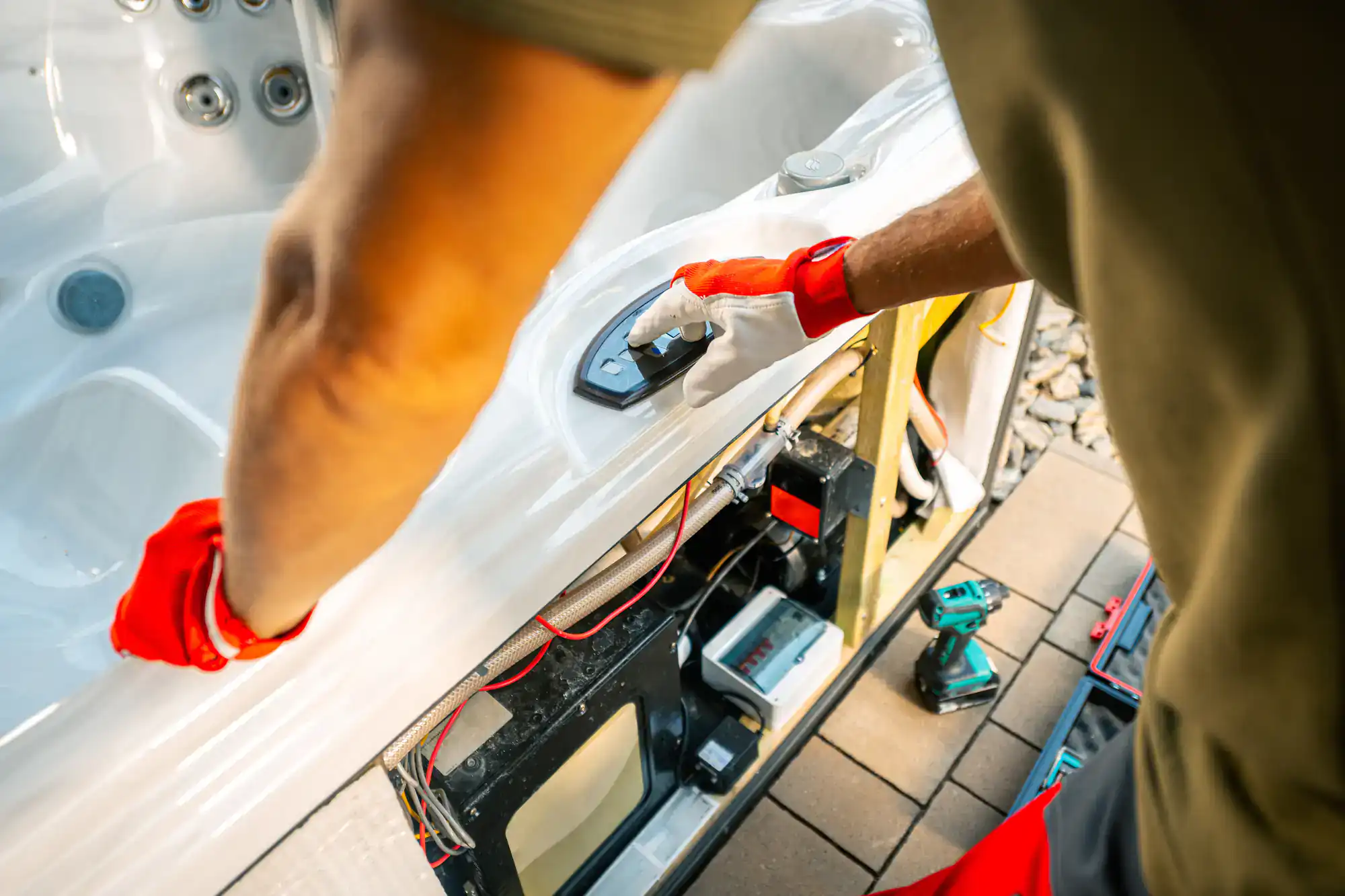
Ready to get started?

Hot Tub Electrician Serving Milwaukie, OR
Young Electric LLC is a second-generation, family-owned electrical contractor based in the Portland Metro area, with more than 40 years of combined experience working in homes across the region — including the mid-century ranches and bungalows that make up most of Milwaukie’s neighborhoods from Ardenwald to Linwood East. Jeremy Young, our owner, is a military veteran who grew up in the trade. That background shows up in how we operate — straightforward communication, no upselling, and a team that answers the phone personally rather than routing you through a call center.
We hold both a CCB license and a BCD electrical license — Oregon’s two-part licensing requirement. That matters specifically in Milwaukie because electrical permits here are processed through Oregon’s Building Codes Division, not the city’s building department. Both credentials are active and verifiable, and our BuildZoom score of 125 places us in the top 1% of all contractors in Oregon, based on 3,224 permits pulled. Over 1,400 Google reviews back that up with a 4.8-star average.

240V Hot Tub Wiring Process in Milwaukie
It starts with a free estimate — not a sales call. We send someone out to look at your panel, your hot tub location, and the distance between the two. In Milwaukie, that assessment carries extra weight because older homes in neighborhoods like Historic Milwaukie and Island Station frequently have panels that were never sized for a 240V dedicated circuit. If an upgrade is needed, you’ll know before any work starts — not after.
Once the scope is confirmed, we pull an electrical permit through Oregon’s Building Codes Division, which handles electrical work for Milwaukie residents in Clackamas County. Then the installation begins: a dedicated 240V circuit, properly sized GFCI breaker, weatherproof conduit run to the disconnect box, and equipotential bonding of all metal components around the tub. Every one of those steps is required by NEC Article 680 and the 2023 Oregon Electrical Specialty Code — and every one gets done.
After the installation, a state electrical inspector comes out to verify the work. That inspection is part of the permit process, not an optional add-on. When it passes — and it will — you have a documented, code-compliant installation that protects your insurance coverage and your investment in the tub itself. Our 7am start time means the job can often be completed in a single day, which matters if you’re working around a commute on McLoughlin Boulevard or catching the MAX Orange Line into Portland.

Jacuzzi and Hot Tub Electrical Wiring Milwaukie, OR
Every hot tub electrical installation we handle in Milwaukie includes the full scope — not just running wire and calling it done. That means a dedicated 240V circuit on its own breaker, a GFCI breaker sized correctly for the load, weatherproof conduit from the panel to the disconnect box, proper placement of the disconnect (within line of sight of the tub, no closer than 5 feet), and equipotential bonding of all metal components in and around the water. These aren’t optional steps — they’re required by Oregon code and by most hot tub manufacturers to keep the warranty valid.
For Milwaukie homes built in the 1950s and 1960s, the panel assessment is where the conversation often starts. Many of these homes are still running on original panels that don’t have the capacity for a 50-amp dedicated circuit without an upgrade. We evaluate this upfront and walk you through the options clearly — whether that’s a subpanel installation or a full service upgrade — so you can make an informed decision before any work begins.
Electrical permits for hot tub wiring in Milwaukie go through Oregon BCD, and we pull that permit as a standard part of every job. We also hold Tesla Certified Electrical Contractor status, which reflects a level of technical commitment that goes beyond minimum licensing. And every installation is backed by our 5-year labor warranty — a written commitment that the work holds up, and that Young Electric LLC will be around to stand behind it.
Does my Milwaukie home's electrical panel need an upgrade for a hot tub?
It depends on what you have now — and that’s exactly what the free estimate is designed to find out. Many Milwaukie homes, particularly those built between the 1940s and 1960s, were wired with 60-amp or early 100-amp panels. A 240V hot tub requires a dedicated 50-amp circuit, and if your panel is already loaded or simply too small, there won’t be room for it without an upgrade.
The good news is that this is a solvable problem, and it’s better to know before the tub arrives than after. We assess your panel as part of every estimate, give you a clear picture of what’s needed, and walk you through the options — whether that’s adding a subpanel or upgrading the main service. No pressure, no guesswork, just a straight answer so you can plan accordingly.
Do I need a permit for hot tub electrical installation in Milwaukie, Oregon?
Yes, and it’s not optional. In Milwaukie, electrical permits for hot tub wiring are issued through Oregon’s Building Codes Division — not the city building department. That’s because electrical work in Clackamas County falls under state jurisdiction rather than local. The permit triggers a required inspection by a state electrical inspector, who verifies that the installation meets the 2023 Oregon Electrical Specialty Code before the job is considered complete.
Skipping the permit isn’t just a code violation — it creates real problems down the road. Unpermitted electrical work can void your homeowner’s insurance coverage if a claim is ever tied to it, and it shows up as a liability when you sell the home. Given how many older Milwaukie properties already carry unpermitted work from previous owners, adding a properly documented, inspected hot tub installation is actually a selling point. We pull the permit as a standard part of every job — it’s not an extra step you have to manage yourself.
How long does hot tub electrical installation take in Milwaukie?
Most hot tub wiring jobs can be completed in a single day, assuming the panel has the capacity for the new circuit and the site is reasonably accessible. We start work at 7am, which means the crew can often be done before the afternoon — useful if you’re working around a commute or trying to minimize time off.
The variable is the panel. In Milwaukie’s older housing stock, it’s not uncommon to discover during the estimate that the existing panel needs work before the hot tub circuit can be added. If a subpanel or service upgrade is required, that adds time and a separate scope of work. That’s exactly why the upfront assessment matters — so the timeline is clear before the job starts, not something you find out about on installation day. Once the work is complete, the permit inspection is scheduled through Oregon BCD, and that’s typically a separate appointment we coordinate on your behalf.
What is a GFCI breaker and why does my hot tub need one?
A GFCI breaker — Ground Fault Circuit Interrupter — is a specialized breaker that monitors the flow of electricity through a circuit and cuts power within milliseconds if it detects a ground fault. In plain terms, it detects when electricity is going somewhere it shouldn’t — like through water, or through a person — and shuts the circuit off faster than a standard breaker ever could.
For a hot tub, a GFCI breaker is not optional. NEC Article 680, which governs all hot tub and spa electrical installations in the US, requires a GFCI-protected dedicated circuit on every hardwired hot tub. Oregon’s 2023 Electrical Specialty Code follows the same requirement. A standard breaker protects equipment from overloads — it does not protect people from electrocution. In a wet environment, that distinction is the difference between a safe installation and a dangerous one. Every hot tub wiring job we do in Milwaukie includes a correctly sized GFCI breaker as a non-negotiable part of the installation.
Can I use my hot tub dealer's electrician for the wiring in Milwaukie?
You can — but it’s worth knowing what you’re agreeing to before you do. Hot tub dealers often have a preferred installer they recommend, and those referrals sometimes prioritize speed and low cost over code compliance. The most common shortcuts are skipping the permit, skipping the bonding and grounding steps, and using wire or breakers that technically work but don’t meet NEC Article 680 or Oregon’s current electrical code.
The consequences show up later. Most hot tub manufacturers void the equipment warranty if the electrical installation wasn’t done by a licensed professional who pulled a permit. Your homeowner’s insurance can deny a claim tied to unpermitted work. And if the installation fails inspection — or was never inspected — you’re the one holding the liability. In Milwaukie specifically, where older homes already have complicated electrical histories, adding a non-compliant installation to the mix creates problems that are expensive to untangle. Whoever you hire, ask for their Oregon CCB license number and BCD electrical license — both are required, and both are verifiable online.
What does hot tub electrical installation actually cost in Milwaukie, OR?
We provide free estimates, so the first conversation costs you nothing. What the job actually costs depends on a few factors specific to your home and site — the distance from your panel to the hot tub location, whether your panel has capacity for a dedicated 50-amp circuit, and how the conduit needs to be routed given your yard layout and existing structures.
For Milwaukie homeowners, the panel question is the biggest variable. Homes built in the 1950s and 1960s — which make up a large share of the city’s housing stock — often need a subpanel or service upgrade before a hot tub circuit can be added. That’s a separate cost from the wiring itself, and it’s one you want to know about before committing to the project. The estimate visit covers all of this: we look at the panel, evaluate the site, and give you a clear number for the full scope of work — not a low-ball quote that grows once the job starts. No published price list exists because every home is different, but the estimate is free, honest, and comes with no pressure attached.
Useful Links