
Hot Tub Electrical Installation in Cedar Hills, OR
Cedar Hills Ranch Homes Need More Than a Basic Wiring Quote

Hear from Our Customers
Hot Tub Wiring Cedar Hills, OR
Cedar Hills is a neighborhood of well-loved, mid-century ranch homes — and that’s part of what makes it such a great place to live. But those same homes, built mostly between the late 1940s and early 1970s, were wired for a different era. A 100-amp service panel was the standard back then. A modern 240V hot tub pulls a dedicated 50-amp circuit, and if your panel is already loaded, you need to know that before the hot tub shows up in your driveway.
Getting a real assessment upfront means no surprises mid-job. You’ll know whether it’s a straightforward circuit run from your existing panel, or whether a subpanel addition makes more sense for your setup. Either way, you make the call with full information — not after the work has already started.
Cedar Hills gets close to seven months of wet weather annually, running from mid-October through early May. A hot tub here isn’t a summer novelty — it’s something you’ll actually use on a cold, rainy Tuesday in November after a commute home from the Nike campus or downtown Portland. That kind of year-round use makes the quality of the electrical installation matter more, not less. Weatherproof conduit, proper GFCI protection, and correct bonding aren’t extras here — they’re the baseline for a safe setup that holds up through a Pacific Northwest winter.

Ready to get started?

Licensed Hot Tub Electrician Cedar Hills, OR
Young Electric LLC is a second-generation, family-owned electrical contractor based in Portland, serving the Portland Metro area — including Cedar Hills and the broader unincorporated Washington County neighborhoods surrounding it. Owner Jeremy Young grew up in this trade, and that depth of experience shows in how the work gets done and how we communicate with customers.
With over 40 years of combined experience, more than 1,400 Google reviews averaging 4.8 stars, and a BuildZoom score that places us in the top 1% of all Oregon contractors, we’ve built a reputation that holds up to scrutiny. We hold both the CCB license and the BCD electrical license Oregon requires — and you can verify both before anyone sets foot in your home.
Cedar Hills sits right at the US 26 and OR 217 interchange — one of the most accessible locations in the entire metro. We know this area, we know Washington County’s permitting process, and we’ve pulled thousands of permitted electrical jobs across the region. You’re not calling a franchise call center. You’re reaching a local team that answers the phone personally and gives you straight answers.
Hot Tub Electrical Wiring Process Cedar Hills, OR
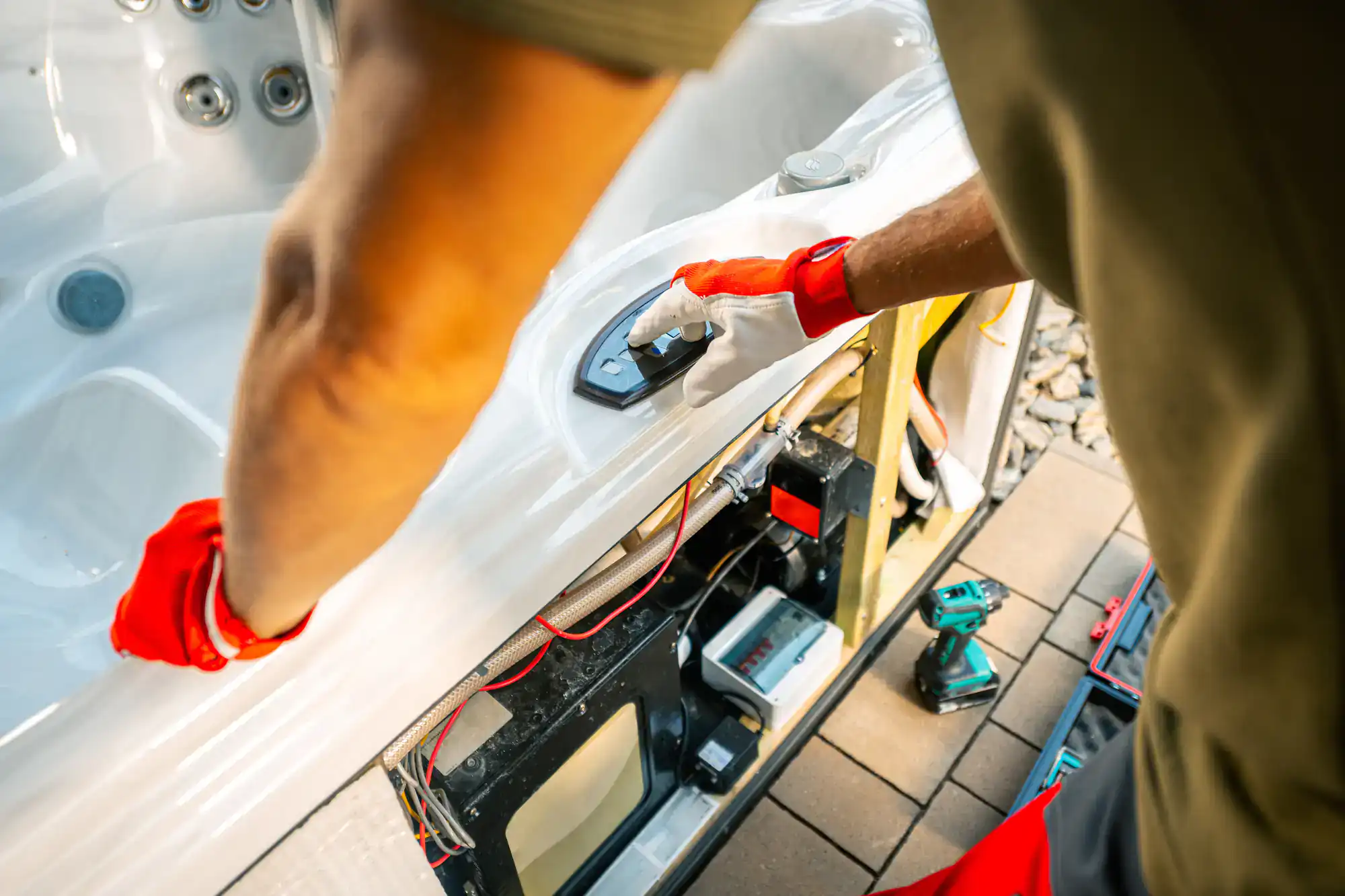
It starts with a free estimate. A licensed electrician comes to your Cedar Hills home, looks at your panel, walks the route from the panel to your hot tub location, and gives you a clear picture of what the job involves. Because so many homes in Cedar Hills were built in the 1950s and 60s, the panel assessment is especially important — it determines whether you need a straightforward new circuit or whether a subpanel addition is the smarter path. You get that answer before any work is scheduled.
Once the scope is clear and you’re ready to move forward, we handle the electrical permit through Washington County Building Services — the authority that governs unincorporated Cedar Hills, not the City of Beaverton and not Portland. This is a distinction that trips up a lot of homeowners who assume their neighbor’s city-based contractor knows the county process. The permit gets filed, the work gets scheduled, and the installation follows the Oregon Electrical Specialty Code — dedicated 240V circuit, properly sized GFCI breaker, weatherproof disconnect placed at the correct distance from the tub, and full equipotential bonding of all metal components.
After the installation is complete, a Washington County electrical inspector signs off on the work. That inspection is your protection — it confirms the job was done to code, keeps your homeowner’s insurance intact, and means there are no hidden issues waiting to surface later. We back every installation with a 5-year labor warranty, so if anything related to the workmanship ever comes up, you’re covered.
240V Hot Tub Wiring Cedar Hills, OR
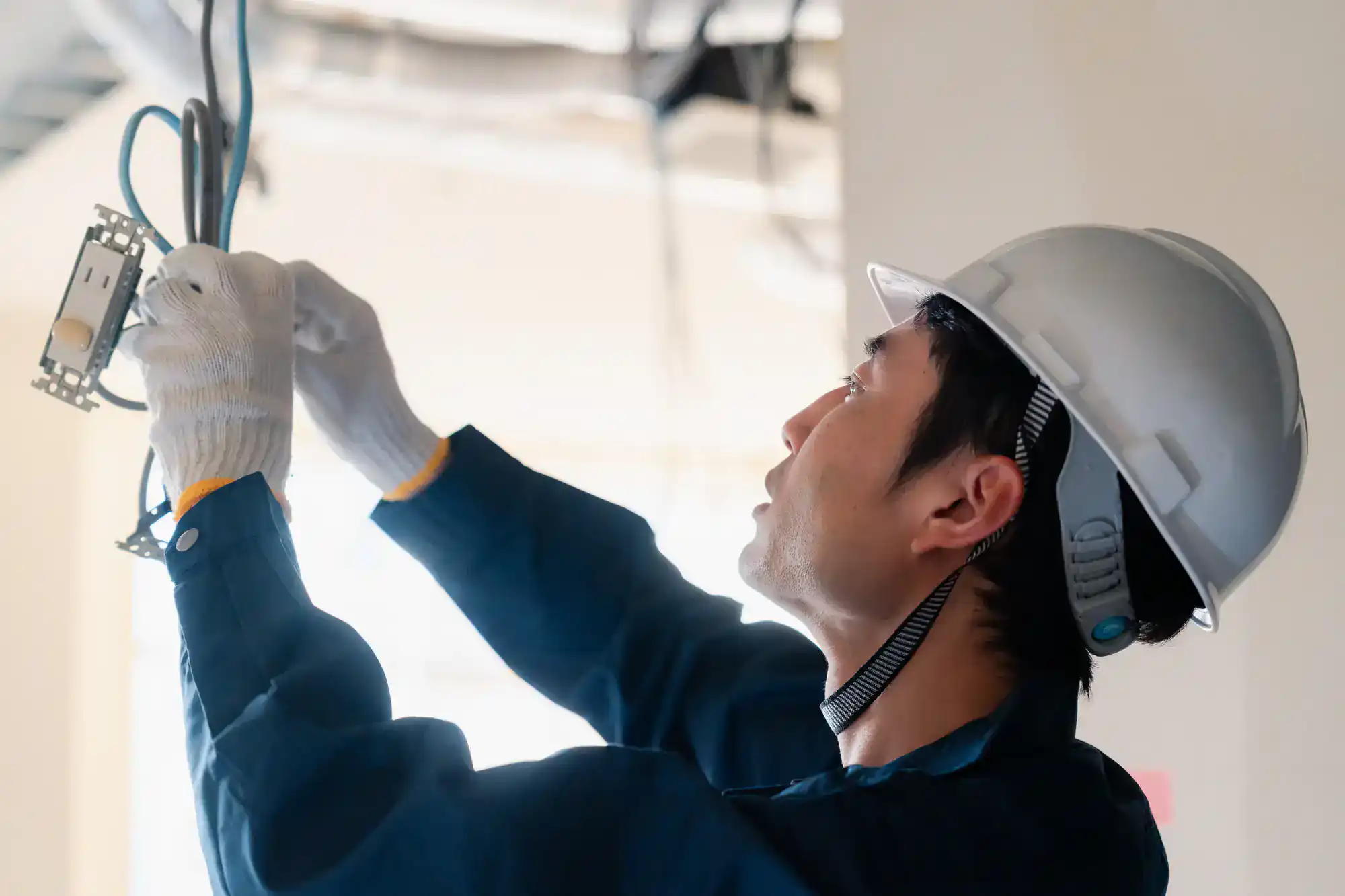
Every hot tub electrical installation starts with an honest look at your home’s existing electrical setup. For Cedar Hills homes — many of which were built before 1970 — that means checking whether the current panel has the capacity to support a dedicated 240V, 50-amp circuit without affecting the rest of the home. If it does, the job moves forward cleanly. If it doesn’t, you’ll know exactly what’s needed and why, with no pressure to decide on the spot.
The installation itself covers everything the job requires: running a dedicated circuit from your panel to the hot tub location, installing a properly sized GFCI breaker, setting a weatherproof disconnect box at the code-required distance from the tub, and completing the equipotential bonding of all metal components near the water. All conduit is run to be weatherproof and durable — built for the kind of wet, overcast winters Cedar Hills sees from October through May, not just for occasional summer use.
We pull the required electrical permit through Washington County Building Services and coordinate the final inspection. Because Cedar Hills is unincorporated, that permit comes from the county — not from the City of Beaverton or Portland — and the process runs through Washington County’s BDAS online portal. All work is performed by licensed electricians holding both the CCB license and Oregon BCD electrical license, and every installation is backed by a 5-year labor warranty. No named service tiers, no upsell packages — just a clear scope, a fair quote, and work done right the first time.
Who issues electrical permits for hot tub wiring in Cedar Hills, Oregon?
Cedar Hills is an unincorporated community in Washington County, which means it falls outside the city limits of both Beaverton and Portland. Electrical permits for hot tub installations in Cedar Hills are issued by Washington County Building Services — specifically through the Department of Land Use and Transportation. This is a common point of confusion for Cedar Hills homeowners who assume their jurisdiction works the same as their neighbors in the City of Beaverton just to the south.
Washington County launched a new online permitting portal called BDAS (Building and Development Application Services) in January 2025, which now allows contractors to submit electrical permit applications online for unincorporated areas like Cedar Hills. We handle the permit process on your behalf — you don’t need to figure out which portal to use or which office to call. The permit is required, the inspection is required, and both protect you as the homeowner.
Can my older Cedar Hills home's electrical panel support a hot tub?
This is one of the most common questions that comes up for Cedar Hills homeowners, and it’s a fair one. The majority of homes in Cedar Hills were built between the late 1940s and early 1970s, when 100-amp service panels were the standard. A modern 240V hot tub requires a dedicated 50-amp circuit, and if your panel is already running close to capacity with your current appliances, HVAC, and lighting, adding a hot tub circuit without an assessment first is a real risk.
The honest answer is: it depends on your specific panel. Some Cedar Hills homes have already been updated to 200-amp service, especially if they’ve gone through renovations. Others are still running the original 100-amp setup. During the free estimate, a Young Electric LLC electrician will look at your actual panel — not guess based on the year your home was built — and tell you exactly where you stand. If a subpanel is the right solution, that gets explained clearly before any work starts. No surprises after the fact.
What size breaker does a 240V hot tub require, and why does it matter?
Most full-size 240V hot tubs require a dedicated 50-amp circuit protected by a GFCI breaker — though some models call for 60 amps, so the manufacturer’s specs always take priority. The breaker size matters because it has to match both the hot tub’s electrical draw and the wire gauge running to it. Undersizing the breaker or using the wrong wire gauge creates a fire hazard — not a theoretical one, a real one that shows up over time as the connection heats and degrades.
The GFCI part is just as important as the amperage. A standard breaker protects equipment from overloads. A GFCI breaker protects people — it detects ground faults and cuts power within milliseconds. In a wet environment like a hot tub, that’s the difference between a shock and something far worse. NEC Article 680 requires GFCI protection on all outdoor spas and hot tubs, and the Oregon Electrical Specialty Code — updated October 2023 — enforces that standard in Cedar Hills. This is not optional, and it’s not a detail to leave to a handyman or an unlicensed installer.
Does a hot tub electrical installation in Cedar Hills require a permit?
Yes, and skipping it creates more problems than it solves. In Cedar Hills, hot tub electrical work requires an electrical permit from Washington County Building Services. The permit triggers a final inspection by a county electrical inspector, who verifies that the work meets the Oregon Electrical Specialty Code. Without that inspection, there’s no third-party confirmation that the installation is safe.
Beyond safety, the permit protects you financially. Most homeowner’s insurance policies won’t cover claims tied to unpermitted electrical work — so if something ever goes wrong with an unpermitted hot tub installation, you could be looking at an uninsured loss. Unpermitted work can also create complications when you sell your home, since buyers’ inspectors and lenders often flag it. We pull the permit as part of every installation, handle the scheduling with Washington County, and coordinate the inspection. It’s included in the process — not an add-on.
How far does the disconnect box need to be from the hot tub?
The disconnect box — sometimes called the spa panel or emergency shutoff — must be placed no closer than 5 feet from the hot tub and within line of sight of it. It also needs to be readily accessible, which means it can’t be tucked behind a fence or obscured by landscaping. The NEC and Oregon’s electrical code are specific about this because the disconnect exists for emergency use — if something goes wrong, someone needs to be able to cut power immediately without having to search for the shutoff.
In practice, the exact placement depends on your yard layout and where the hot tub is positioned relative to the house. A backyard in Cedar Hills with a longer run from the panel, or one where the tub sits in a corner of the yard, may require more planning around conduit routing and disconnect placement than a straightforward setup. That’s part of what the free estimate covers — not just the electrical capacity question, but the physical layout of how the job gets done on your specific property.
What happens if a hot tub is wired by someone who isn't a licensed electrician in Oregon?
Oregon requires a licensed electrician — holding both a CCB license and a BCD electrical license — to perform 240V hot tub wiring. If the work is done by someone who isn’t properly licensed, the permit can’t be pulled, the inspection won’t happen, and the installation has no legal standing. That matters for several reasons beyond just the code violation.
Most hot tub manufacturers void the product warranty if the electrical installation wasn’t performed by a licensed professional. Your homeowner’s insurance can deny a claim if the electrical work that caused or contributed to a loss was unpermitted or unlicensed. And if you ever sell your home, an unpermitted electrical installation in the backyard is the kind of thing that shows up in an inspection report and delays or derails a closing. Hot tub dealers sometimes suggest their own electrician as a lower-cost option — and that may be fine if that electrician is properly licensed and pulls the permit. The question worth asking is whether they hold both the CCB and BCD credentials Oregon requires, and whether a permit is included in their quote. If the answer to either is no, the savings aren’t worth the exposure.
Useful Links