
Hot Tub Electrical Installation in Canby, OR
Canby Hot Tubs Deserve Wiring That Actually Passes Inspection

Hear from Our Customers
Hot Tub Wiring Canby, OR
Most hot tub owners in Canby don’t think much about the electrical side until something goes wrong—a tripped breaker, a failed inspection, or a call from their insurance company after an unpermitted installation surfaces at resale. Getting the wiring done correctly from the start means none of that becomes your problem.
Canby’s housing stock runs the full spectrum. If you’re in one of the newer developments like Tofte Farms or Beckwood Place, you likely have a 200-amp panel with room to work with. But a hot tub still requires its own dedicated 240V circuit, a properly rated GFCI breaker, a weatherproof disconnect at the right distance, and a permit pulled through the Oregon Building Codes Division. None of that is optional, and none of it is complicated when you have the right electrician handling it.
If your Canby home is older—built in the 1970s or 1980s with a 100-amp panel that’s already carrying a full load—the wiring question gets more involved. That’s exactly why we include a full panel assessment with every free estimate. You’ll know what the job actually requires before the hot tub shows up in your driveway, not after.

Ready to get started?

Hot Tub Electrician in Canby, OR
Young Electric LLC is a second-generation, family-owned electrical contractor that has been working across the Portland Metro and Clackamas County area for over 40 years. Our founder’s son, Jeremy Young, grew up in this trade. That background means our team understands older Canby homes with loaded 100-amp panels just as well as we understand new construction in Northwood Estates or Ivy Ridge Estates—because we’ve worked on both, repeatedly, for decades.
We’re licensed and bonded under Oregon’s dual-licensing structure: both a CCB license and an Oregon Building Codes Division electrical license. That’s what Oregon law requires and what Canby Utility Board expects when any service-related work is coordinated at the utility level. We also carry a 5-year labor warranty on every installation, which no other electrician serving this area advertises. That warranty isn’t a marketing move—it’s what backing your own work actually looks like.
With over 1,400 Google reviews at 4.8 stars and a BuildZoom score in the top 1% of all Oregon contractors, the track record is there to verify.
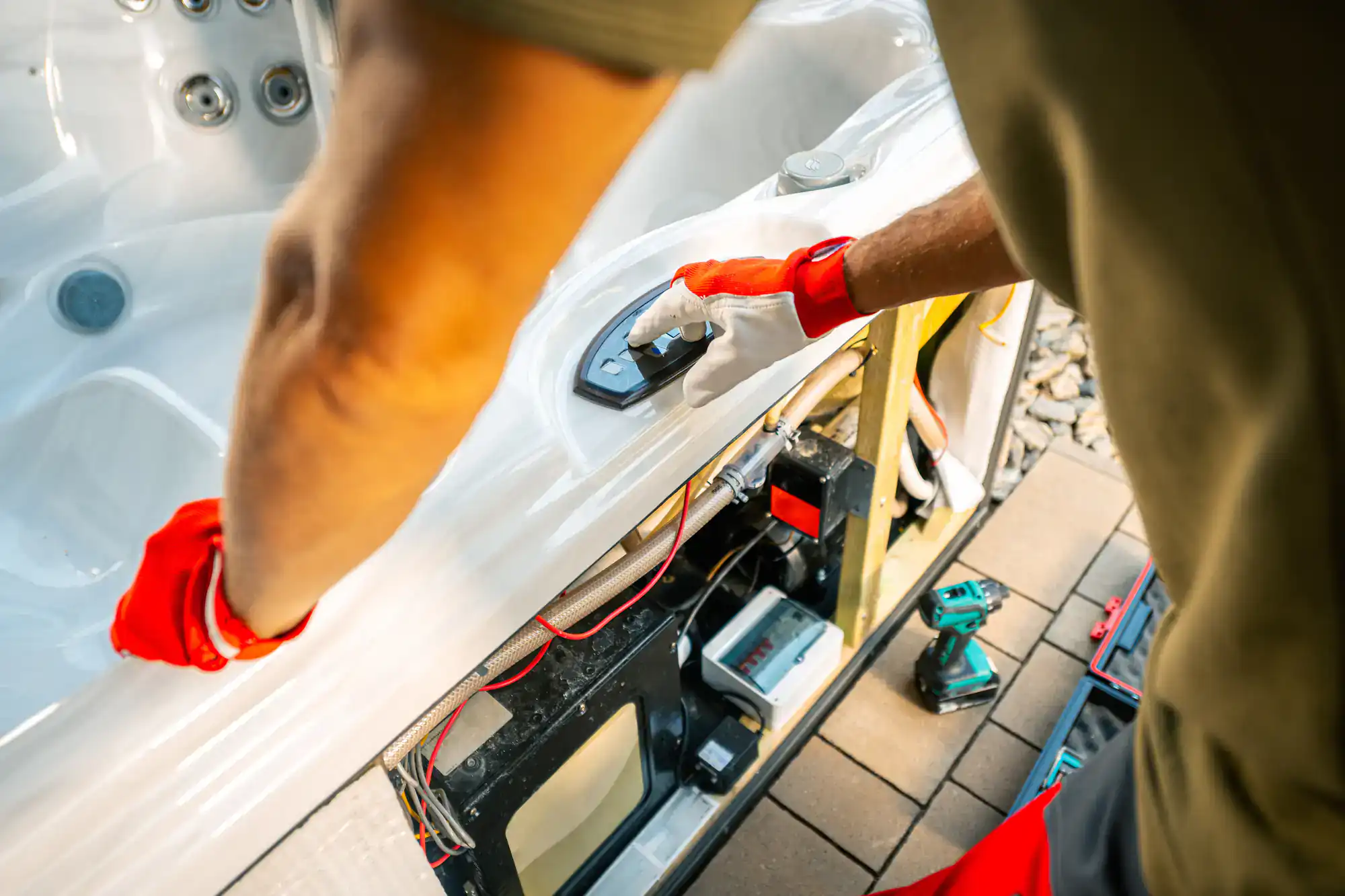
240V Hot Tub Wiring Process Canby
It starts with a free estimate visit. Before any work is quoted or scheduled, one of our licensed electricians comes out to assess your panel, the planned hot tub location, and the distance of the run from your main service. For Canby homeowners—especially those in established neighborhoods where the panel may be older—this step matters a lot. It’s where you find out whether your existing service can handle the load or whether a subpanel or upgrade makes sense. You get a straight answer, not a surprise after the fact.
Once the scope is clear and you’ve approved the work, the installation begins. We run weatherproof conduit from your panel to the hot tub location, install a dedicated 50-amp 240V circuit with a properly rated GFCI breaker, and place a code-compliant disconnect box at the right distance from the tub—no closer than 5 feet, within line of sight, and accessible. All metal components get bonded per NEC Article 680, which is a step that unlicensed installers routinely skip and one that directly affects safety in a wet environment.
We pull the permit through the Oregon Building Codes Division and coordinate the final inspection. In Canby, where Canby Utility Board handles your electric service, any coordination needed at the utility level is handled by a contractor who is properly licensed to do it. Once the inspection passes, the tub is ready. The 5-year labor warranty starts the day the work is done.

GFCI Breaker and Hot Tub Wiring Canby
Hot tub electrical installation in Canby covers everything from the panel to the tub—not just the wire run. We install a dedicated 240V circuit on its own breaker, sized correctly for your specific unit. The GFCI breaker for the hot tub is a Class A unit, which is what Oregon’s electrical code requires and what actually protects people—not just equipment—in a wet outdoor environment. A standard breaker does not do that job.
The disconnect box is installed weatherproof and outdoor-rated, placed within the required distance from the tub and within line of sight as NEC Article 680 specifies. Equipotential bonding of all metal components—the water, the pump housing, the fittings—is completed as part of every job. This is the step that creates a safe electrical environment around the tub, and it’s a step that handymen and unlicensed installers frequently miss entirely.
For Canby homeowners, there’s one more thing worth knowing: Canby is served by the municipally-owned Canby Utility Board, which sources power from the Bonneville Power Administration. Canby’s residential electricity rate averages around 9.34 cents per kilowatt hour—roughly 36% below Oregon’s average. A hot tub wired correctly on a dedicated circuit runs efficiently and takes full advantage of that lower rate. One wired with undersized wire or a wrong breaker trips constantly and costs more to run. The installation quality directly affects your ongoing operating cost, and in Canby, that cost is already lower than almost anywhere else in the state.
Does hot tub electrical installation in Canby, OR require a permit?
Yes—a permit is required for hot tub electrical work in Canby, and it’s not something you want to skip. Oregon law mandates that 240V hot tub wiring be performed by a licensed electrician and inspected by the Oregon Building Codes Division. The permit triggers that inspection, which is the official confirmation that the work is safe and code-compliant.
Skipping the permit creates real downstream problems. Homeowner insurance policies typically will not cover claims tied to unpermitted electrical work. If you sell your home, an unpermitted installation can surface during the buyer’s inspection and become a negotiation issue or a deal-breaker. And practically speaking, if something goes wrong with an unpermitted installation, you’re carrying that liability alone. We pull the permit and manage the inspection scheduling as part of every job—so you don’t have to navigate that process yourself.
What size breaker does a 240V hot tub need, and does it have to be GFCI?
Most full-size 240V hot tubs require a 50-amp dedicated circuit, though some units call for 60 amps—the exact requirement is listed in your hot tub’s owner manual or on the equipment label. That circuit has to be its own breaker, separate from everything else in your panel. Nothing else shares it.
The breaker must be a Class A GFCI breaker—not a standard breaker. This is a code requirement under NEC Article 680, which governs all outdoor spa and hot tub electrical installations in the US, including in Oregon. A standard breaker protects equipment from overloads. A GFCI breaker protects people by detecting ground faults and cutting power within milliseconds—which is the difference that matters when you’re sitting in water. This is not an optional upgrade; it is a code requirement, and any installation that uses a standard breaker in place of a GFCI is both non-compliant and genuinely unsafe.
My Canby home is older—can my electrical panel actually handle a hot tub?
That’s one of the most common questions homeowners in Canby ask, and it’s the right one to ask before the hot tub is delivered. The honest answer is: it depends on your panel’s amperage and how loaded it already is. Homes in Canby built in the 1960s through the 1980s often have 100-amp service panels. If that panel is already running a full load—electric dryer, HVAC, electric water heater, and a full set of circuits—adding a 50-amp hot tub circuit may not be feasible without a subpanel or a full service upgrade.
Newer construction in Canby neighborhoods like Tofte Farms or Beckwood Place typically comes with 200-amp service, which usually has room to accommodate a hot tub circuit without major upgrades. We assess your panel as part of the free estimate visit—before you’ve committed to anything. If an upgrade is needed, you’ll know the scope and the cost upfront. No surprises after the tub is sitting in your backyard.
How far does the disconnect box need to be from the hot tub?
The disconnect box—sometimes called a spa panel or emergency shutoff—must be placed no closer than 5 feet from the hot tub and no further than 50 feet, with some interpretations of the code setting the practical maximum at 15 feet for easy access. The key requirements are that it must be within line of sight of the tub and readily accessible. It also has to be outdoor-rated and weatherproof, since it’s exposed to the elements year-round.
This placement matters more than most people realize. The disconnect exists so that anyone near the tub can cut power quickly in an emergency—which means it can’t be hidden around a corner, inside a structure, or in a location where it’s hard to reach. In Canby’s wet fall and winter months, when hot tub use is at its highest, having a properly placed and weatherproof disconnect is not just a code requirement—it’s a practical safety feature. We handle placement as part of every installation, and it’s reviewed during the final inspection by the Oregon Building Codes Division.
Will running a hot tub significantly increase my electricity bill in Canby?
Less than you might expect—and less than it would in most other Oregon cities. Canby is served by the Canby Utility Board, a municipally-owned public power utility that sources wholesale electricity from the Bonneville Power Administration. Canby’s residential electricity rate averages around 9.34 cents per kilowatt hour, which is roughly 36% below Oregon’s average rate and about 42% below the national average.
In markets where homeowners pay PGE rates or higher, running a hot tub can add $50 to $100 or more per month to the electric bill depending on usage and insulation quality. In Canby, that operating cost is meaningfully lower. A properly wired hot tub on a dedicated circuit also runs more efficiently than one on an undersized or shared circuit—so the quality of the installation directly affects your ongoing cost. Getting the wiring done right from the start is the most practical way to keep those operating costs as low as Canby’s rates allow.
Can the electrician my hot tub dealer recommends actually do the job in Canby?
Maybe—but it’s worth asking the right questions before you assume so. Hot tub dealers sometimes refer buyers to electricians who quote low and move fast. The problem is that low bids often reflect skipped steps: no permit pulled, no GFCI breaker installed, bonding and grounding left incomplete. In Oregon, any electrician doing this work is required to hold both a CCB license through the Construction Contractors Board and an individual electrician license through the Oregon Building Codes Division. If either is missing, the work is not legally compliant—and in Canby, where Canby Utility Board handles your electric service, improperly licensed work can create complications at the utility level as well.
Beyond licensing, the real risk of a low-cost referral install is what happens later. Most hot tub manufacturers void the equipment warranty if the electrical installation was not performed by a licensed professional and permitted through the local authority. If the tub malfunctions and the installation wasn’t permitted, you may be left with no warranty coverage and no recourse. Young Electric LLC is fully licensed under both Oregon requirements, pulls every permit, and backs the labor with a 5-year warranty—so what you get is a job that holds up to inspection, to your manufacturer, and to your insurance carrier.
Useful Links