
EV Charger Installation in River Road, OR
River Road Runs on EVs — Does Your Home Keep Up?

Hear from Our Customers
Level 2 EV Charger Installation River Road
A standard 120V outlet adds maybe 3 to 5 miles of range per hour. For most River Road drivers commuting along River Road or heading out on the Beltline, that math doesn’t work. A Level 2 charger adds 25 to 40 miles of range per hour — which means overnight charging actually finishes overnight, and you’re not doing mental math every morning about whether you have enough range to get where you’re going.
River Road’s housing stock is a mix of mid-century ranch homes and newer planned community builds. That matters because older homes — especially those built in the 1950s through 1970s — sometimes raise questions about panel capacity. The honest reality is that most homes can support a Level 2 charger without a full panel upgrade. A proper assessment tells you for sure, and that’s always our first step.
The Willamette Valley’s wet season runs from October through April, with River Road averaging around 40 inches of rain per year. Proper weatherproofing, correct enclosure ratings, and code-compliant conduit runs mean your charger works just as well in a January rainstorm as it does on a dry August evening. We don’t cut corners on outdoor installations in this climate.

Ready to get started?

EV Charger Electrician Serving River Road, OR
Young Electric LLC is a second-generation, family-owned electrical contractor with 40 years of Oregon electrical experience. Our owner is a military veteran who grew up in the trade — this isn’t a franchise operation or a startup chasing the EV wave. We’ve been doing this kind of work in Oregon homes long before EV chargers were a line item on anyone’s to-do list.
Lane County homeowners in River Road and Santa Clara get a crew that understands how Oregon homes are actually wired, how local inspectors work, and what the Willamette Valley climate does to electrical installations over time. We hold Oregon CCB License No. 178887 and carry Tesla Certified Electrical Contractor status — which matters if you drive a Tesla and want the Wall Connector installed the way Tesla actually recommends.
With a 4.8 rating across more than 1,400 Google reviews, our track record speaks for itself. Reviewers consistently mention specific electricians by name, on-time arrivals, and clear communication from start to finish — not because we script it, but because that’s how the work actually goes.

EV Charging Station Installation Process River Road
It starts with a free estimate. You describe your setup — where the car parks, where the panel is, whether you have a garage or an exterior wall situation — and we assess what the job actually requires. No assumptions, no upselling on panel upgrades you don’t need. Just an honest look at what your home can support and what it will take to get a Level 2 charger running correctly.
Once the scope is clear, the permit process begins. In River Road, that means coordinating with either City of Eugene Building and Permit Services or Lane County Building Services, depending on which side of the incorporation line your property sits on. We handle it. You don’t need to figure out which jurisdiction applies to your address or track down the right permit application.
Installation typically happens in a single visit. We run the circuit from your panel to the charger location, mount the unit, and make sure everything passes inspection before the job is closed out. If your home qualifies for the EWEB EV Chargers Program rebate — which offers $500 for qualifying Level 2 installations — we can walk you through what that process looks like so you’re not leaving money on the table.
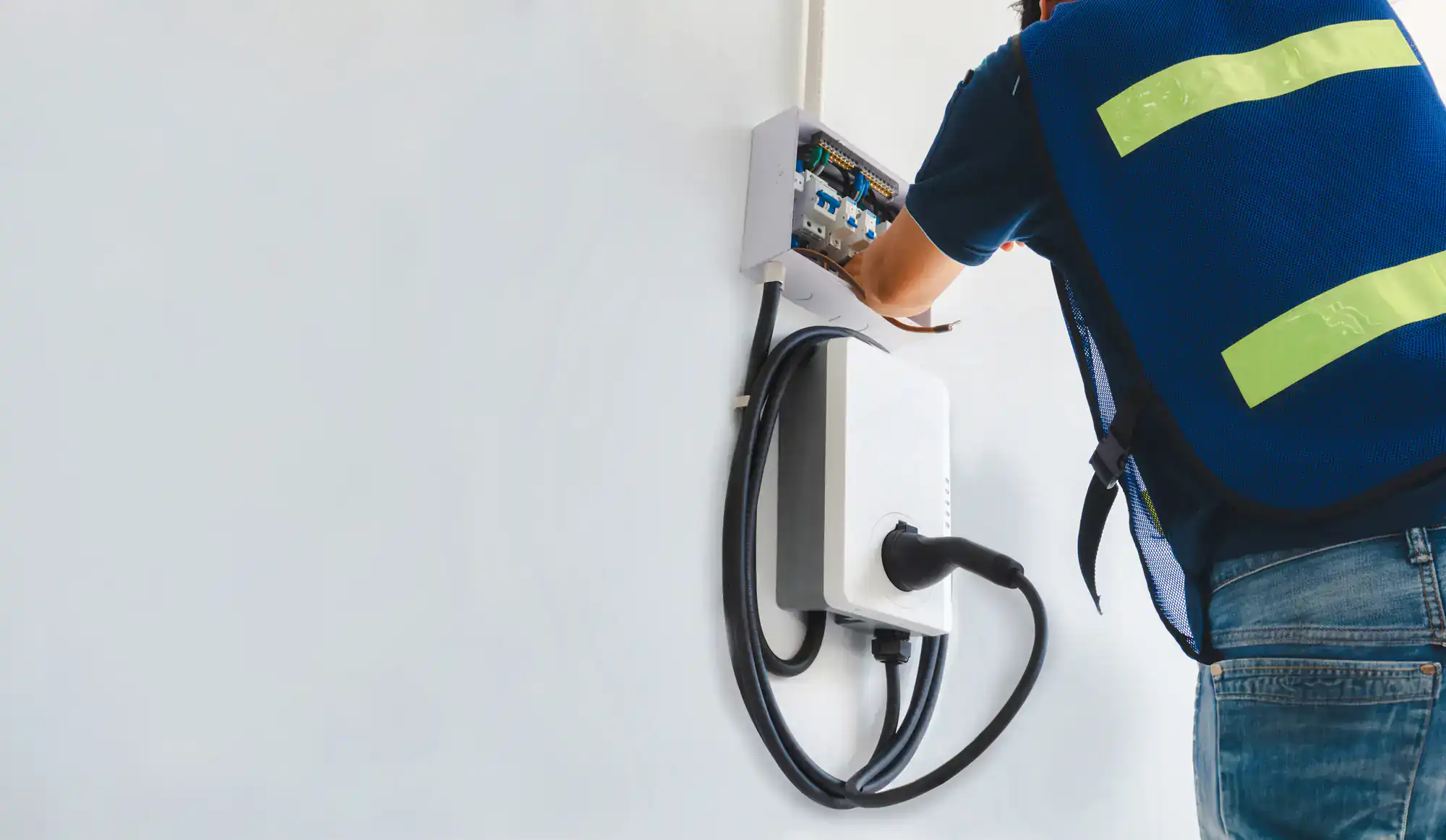
Home EV Charger Installation River Road, Oregon
We install all major EV charger brands — Tesla Wall Connectors, Ford Charge Station Pro, ChargePoint, and others. It doesn’t matter what’s in your driveway. River Road’s EV community has grown well beyond any single brand, and we’re equipped to handle whatever you drive.
For River Road homeowners, the installation scope depends on a few key variables: how far the charger location is from your electrical panel, whether your panel has available capacity, and whether the charger will be mounted indoors or on an exterior wall exposed to the Willamette Valley’s wet season. Outdoor installations in this climate require NEMA-rated weatherproof enclosures and properly sealed conduit — not optional, and not something to cut corners on. We install to Oregon code, which covers all of that by default.
If a panel upgrade is needed, the cost typically runs between $1,800 and $4,500 on top of the charger installation itself. A standard Level 2 installation in the Oregon market generally runs $1,200 to $2,700 before any rebates. The EWEB $500 residential rebate for qualifying installations brings that net cost down meaningfully for River Road homeowners in EWEB’s service territory. We offer free estimates so you know the real number before any work begins — no mystery invoices, no surprises after the fact.
Does EWEB offer a rebate for EV charger installation in River Road?
Yes — EWEB’s EV Chargers Program offers a $500 rebate per qualifying Level 2 charger installed at a residential property in their service territory. River Road falls within EWEB’s service area, so this rebate is available to homeowners here. It’s not automatic, though — there are qualifying criteria and a process to follow, and the rebate applies to Level 2 chargers, not standard 120V outlet installations.
The best way to make sure you actually capture the rebate is to work with an installer who knows the program. We’re familiar with Oregon utility rebate programs and can walk you through what EWEB requires so the paperwork gets handled correctly. A $500 offset on a $1,200 to $2,700 installation is a meaningful reduction in out-of-pocket cost, and it’s worth making sure you don’t miss it on a technicality.
Do I need a permit for EV charger installation in River Road, OR?
Yes, a permit is required for Level 2 EV charger installation in River Road. The specific jurisdiction depends on your property’s location — some parts of River Road fall within City of Eugene limits and are handled by Eugene Building and Permit Services, while other parts are in unincorporated Lane County and go through Lane County Building Services. Either way, the same Oregon Electrical Specialty Code applies, and the work requires a licensed electrical contractor.
This is not something you want to skip. Unpermitted electrical work can create problems when you sell the home, and it can affect your homeowner’s insurance coverage if something goes wrong. We manage the permit process from start to finish — we know which jurisdiction applies, we handle the application, and we coordinate the inspection. You don’t have to figure any of that out on your own.
Will my older River Road home need a panel upgrade before installation?
Probably not, but it depends on your specific panel. A significant portion of River Road’s housing stock was built during the mid-century ranch-style boom of the 1950s through 1970s, when 100-amp panels were standard. Those panels can sometimes support a Level 2 EV charger circuit without a full upgrade — it depends on what’s already drawing power from the panel and whether there’s available capacity for a dedicated 240V circuit.
The only way to know for sure is a proper load assessment, which is part of the estimate process. If your panel has room, you’re good to go. If it doesn’t, we’ll tell you exactly what’s needed and what it will cost — panel upgrades typically run $1,800 to $4,500 if required. What we won’t do is recommend a panel upgrade you don’t actually need just to pad the job.
What's the difference between Level 1 and Level 2 EV charging at home?
Level 1 charging uses a standard 120V household outlet — the kind already in your garage. It adds roughly 3 to 5 miles of range per hour, which sounds fine until you do the math on a 250-mile battery. At that rate, a full charge from empty takes well over 40 hours. For most River Road drivers who use their car daily, Level 1 is more of an emergency backup than a real charging solution.
Level 2 charging uses a dedicated 240V circuit — the same voltage as a dryer or range — and adds 25 to 40 miles of range per hour. An overnight charge, even starting from a low battery, finishes before you wake up. That’s the practical difference: Level 1 keeps you managing your battery constantly, while Level 2 means you plug in when you get home and stop thinking about it. For anyone using their EV as a daily driver in River Road, Level 2 is how home charging is actually supposed to work.
How long does EV charger installation take from start to finish?
The physical installation itself usually takes a single visit — a few hours for a straightforward job where the panel has available capacity and the charger location is close to the panel. More complex runs, exterior mounting situations, or jobs that require conduit through finished walls can take longer, but most residential installations in River Road are completed in one appointment.
The longer part of the timeline is typically the permit process. In the Eugene area, residential electrical permits generally take one to four weeks from application to approval, depending on the jurisdiction and current workload at the permit office. We handle the permit application and coordinate the inspection, so the timeline moves as efficiently as it can without you having to chase it. When you get your free estimate, we can give you a realistic sense of the full timeline based on current conditions.
Is Young Electric LLC able to install Tesla Wall Connectors in River Road?
Yes — Young Electric LLC is a Tesla Certified Electrical Contractor, which means Tesla has specifically approved us to install the Wall Connector. That certification isn’t just a marketing label. It means we’ve gone through Tesla’s own training and meet the standards Tesla sets for how the Wall Connector should be wired, mounted, and configured. For Tesla owners in River Road, that distinction matters — a Wall Connector installed by a non-certified electrician may not be set up to take full advantage of the charger’s capabilities, and it may create complications if you ever need warranty support.
River Road has an active EV community, and Tesla ownership is a significant part of it. We have experience installing Wall Connectors across Oregon and understand both the technical requirements and the permit process that applies in Lane County. If you drive a Tesla and want the charger done right, the Tesla Certified credential is the clearest signal that you’re calling the right crew.
Useful Links