
Generator Installation near Terrebonne, OR
When the Grid Goes Down in Terrebonne, Your Well Pump Goes With It
Hear from Our Customers
Backup Generator Installation for Terrebonne Properties
Most homeowners don’t think about what a power outage actually takes from them until it’s already happening. No lights is one thing. But for a lot of Terrebonne properties—especially those on well water with no connection to a community system—an outage means no water at all. No drinking water, no flushing, no water for livestock or irrigation.
In the middle of a Central Oregon winter, when temperatures drop into the 20s and the roads make utility crew access slow, that’s not a minor inconvenience. That’s a real problem.
A standby generator changes that equation completely. The moment Pacific Power cuts out, the generator detects it and starts within seconds—no extension cords, no going outside in the dark, no manual setup. Your heating system stays on. Your well pump keeps running. Your refrigerator holds temperature. Life continues, more or less as normal, while the rest of the neighborhood waits.
At nearly 2,900 feet of elevation, Terrebonne also deals with summer heat events that push the grid in the opposite direction. The National Weather Service has issued Heat Advisories for this area, with temperatures approaching triple digits. That’s a second season of outage risk most homeowners don’t plan for. A properly installed home generator covers both ends—the hard freezes of a Central Oregon winter and the heat-driven grid stress of a high desert summer.

Ready to get started?

Whole House Generator Installer Serving Terrebonne, OR
Young Electric LLC is a second-generation, veteran-owned electrical contracting company that has been doing this work since 2007. Military service builds a specific kind of discipline around doing things correctly, not just quickly. That carries into every installation we do.
We serve Central Oregon as part of our established service area, including Sunriver and Bend—both in Deschutes County, the same county as Terrebonne. This isn’t a Portland company making a one-time trip out to the high desert. We already know the region, the permit process through Deschutes County, and what Central Oregon properties actually look like—larger lots, rural infrastructure, and conditions that are nothing like the Willamette Valley.
Every installation we complete comes backed by a five-year warranty. That’s longer than what most electrical contractors in this area offer, and it matters more on a rural property in Terrebonne where you can’t just call someone to fix it tomorrow morning.
Home Generator Installation Process in Terrebonne, OR
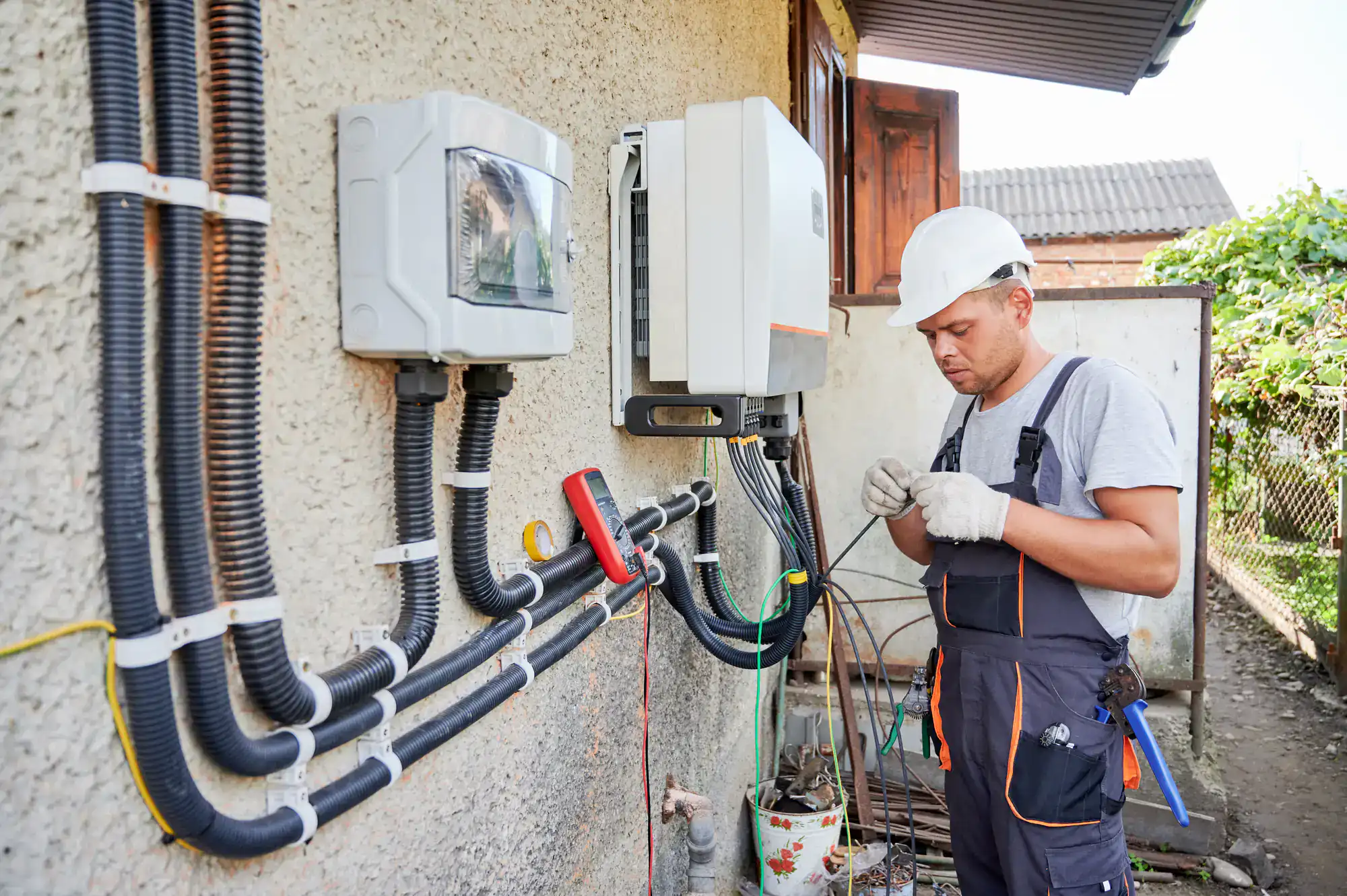
The first step is a site assessment. Before any equipment is ordered or any work begins, we determine the right generator size based on your actual electrical load—not a rough guess. For Terrebonne properties, that conversation often includes well pumps, heating systems, outbuildings, and irrigation equipment that wouldn’t come up on a standard suburban installation. A 5-acre property in the TeR5 zone has different power needs than a neighborhood home in Redmond.
From there, we handle the permitting through Deschutes County. Terrebonne is unincorporated, which means there’s no city building department—all permits run through the county, and Oregon state law requires a licensed electrician and a permit for any generator connection. This is not optional, and any installer who skips it is cutting a corner that could void your warranty and create liability down the road. We manage all of it as part of the standard process.
Once permits are in place, the physical installation typically takes a day—site prep, the generator pad, fuel line connection, transfer switch installation, and final inspection. The full process from first call to a running system takes several weeks, which is worth knowing before storm season arrives. The homeowners who call in October are often the ones waiting in line. Getting started earlier means you’re covered before the first hard freeze hits along the US-97 corridor.
Standby Generator Installation for Terrebonne Homes
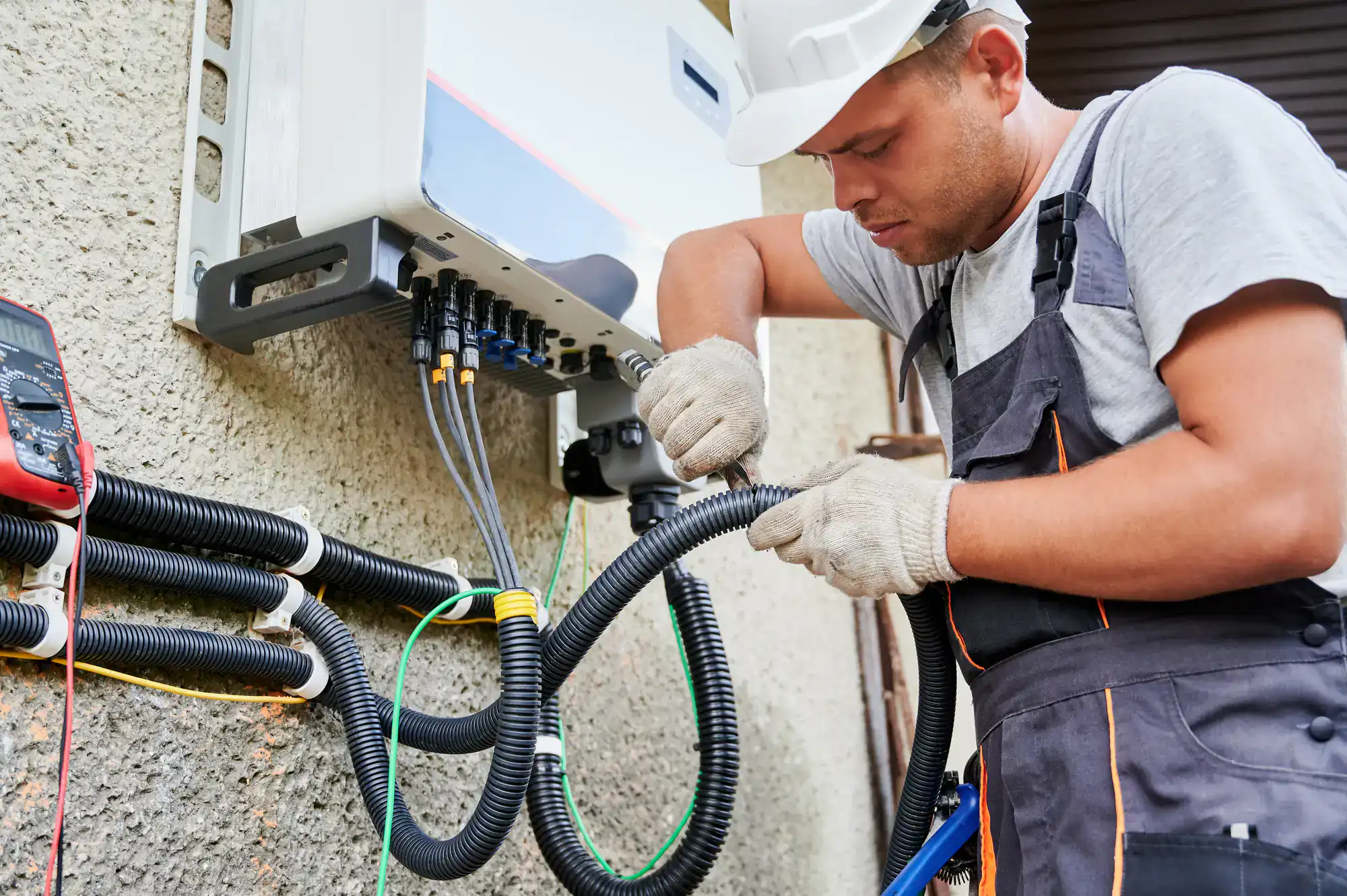
We install the full range of residential standby generators—from portable units to whole-house standby systems that run on natural gas or propane. In Terrebonne, propane is a common fuel source for properties that aren’t connected to a natural gas line, and we can advise on fuel type and coordinate the propane connection as part of the installation process.
Every installation we complete includes a code-compliant transfer switch, which is required under Oregon’s Electrical Specialty Code. The transfer switch is what allows the generator to safely take over from the utility grid without creating a back-feed hazard—and it’s the piece of the job that legally requires a licensed electrician. We install automatic transfer switches as standard, meaning the system switches over without any action required from you.
For properties in areas like Ranch at the Canyons or on larger rural lots throughout Deschutes County, we size and configure the installation to the specific load of that property. That includes the well pump, the HVAC system, and any other critical loads that need to stay on during an outage. There are no named service tiers—every job is assessed and quoted based on what your property actually needs. We back every installation with a five-year warranty, which covers the work itself beyond what most local contractors offer.
Will a standby generator keep my well pump running during a Terrebonne outage?
Yes—and for many Terrebonne-area homeowners, this is the most important thing a generator does. A large portion of properties in unincorporated Deschutes County are not connected to a community water system. When the power goes out, the well pump stops, and so does everything that depends on water—drinking, cooking, flushing, and any livestock or irrigation systems on the property.
A properly sized standby generator powers the well pump along with the rest of your home’s critical systems. The key word there is “properly sized”—the generator needs to be matched to the startup load of your specific pump, not just the running load. Well pumps draw significantly more power when they start than when they’re running steadily. We size every installation based on your actual electrical load, including the well pump, so you’re not left with a generator that trips out the moment the pump kicks on.
How long does the full generator installation process take from start to finish in Terrebonne?
The physical installation—setting the pad, connecting the fuel line, installing the transfer switch, and wiring everything in—typically takes about a day once the work actually starts. But the full process from first call to a running system takes considerably longer, usually several weeks.
The reason is permitting and coordination. In Terrebonne, permits run through Deschutes County since the community is unincorporated. Oregon law requires a permit and a licensed electrician for any generator connection, and that permit process takes time. If a propane connection is needed—which is common on rural properties in this area that aren’t on natural gas—coordinating the fuel supply adds another step. Factor in the site assessment, equipment lead times, and the county inspection after installation, and you’re looking at a multi-week timeline even when everything goes smoothly. If you’re thinking about this before winter, the right time to call is now, not when the first storm is already in the forecast.
What size generator do I need for a home in Terrebonne, OR?
There’s no single answer that applies to every property, and any installer who gives you a number before doing a load calculation is guessing. The right size depends on what you want the generator to power and what your home’s specific electrical demands are.
For a standard Terrebonne home that needs to cover the basics—lights, refrigerator, heating system, and a well pump—a system in the 14kW to 20kW range is a reasonable starting point. But if you’re on a larger rural lot with irrigation equipment, outbuildings, or a larger HVAC system, the number goes up. Properties in the Ranch at the Canyons community or on TeR5-zoned acreage often have load requirements that go well beyond what a smaller standby unit can handle. We do a full load assessment before recommending a system size, which is the only reliable way to make sure the generator you install is actually the generator you need.
Do I need a permit to install a generator in Terrebonne, Oregon?
Yes. Oregon state law requires a permit for any generator connection, and the work must be done by a licensed electrical contractor. There are no exceptions for unincorporated communities like Terrebonne—the Oregon Electrical Specialty Code applies statewide.
In Terrebonne specifically, permits are processed through Deschutes County’s Community Development Department rather than a city building department, since the community has no municipal government of its own. The permit covers the electrical connection and the transfer switch installation, and the work is subject to a county inspection after it’s complete. Skipping the permit isn’t just a code violation—it can void the manufacturer’s warranty on the generator and create liability if something goes wrong. We handle all permitting as part of the standard installation process, so you’re not navigating the county system on your own or trying to figure out which forms to file.
Is a whole house generator worth the cost for a rural property like mine in Terrebonne?
For most Terrebonne homeowners, the math works out better than you’d expect. A standby generator adds roughly 3% to 5% to your home’s value—on a $400,000 property, that’s $12,000 to $20,000 in added resale value. The system itself lasts 20 to 40 years with proper maintenance, so you’re not replacing it every decade.
The other side of the equation is what a bad outage actually costs. Food loss, hotel stays if the house gets too cold to stay in, pipe repairs from a freeze, and the disruption to anything that depends on your well pump—those costs add up fast. Deschutes County ranks fifth in Oregon for total tracked power outages, and rural customers on exposed distribution lines along the US-97 corridor typically wait longer for restoration than urban customers in Redmond or Bend. For a rural property on well water in Terrebonne, a standby generator isn’t a luxury item—it’s a practical response to conditions that are already happening.
Can Young Electric LLC install a generator at a vacation rental near Smith Rock State Park?
Yes, and it’s a smart investment for any short-term rental property in the Terrebonne area. Smith Rock draws visitors year-round—climbers, hikers, and tourists who book stays expecting a fully functioning property. A power outage during a guest’s stay is a bad review waiting to happen, and in a market where rental income depends on consistent five-star experiences, that kind of disruption has real financial consequences.
A standby generator installation at a rental property works the same way as a residential installation—automatic transfer switch, full load coverage, and a system sized to the specific property. The difference is that with a rental, you’re not there to manage the situation when the power goes out. The generator starts on its own, within seconds, without anyone having to flip a switch or call a service line. We handle the Deschutes County permitting, install to Oregon code, and back the work with a five-year warranty—so the property is covered whether you’re on-site or not.
Useful Links