
Generator Installation in La Pine, OR
When Midstate Cuts Power at 20 Degrees, You Need More Than Candles
Hear from Our Customers
Backup Generator Installation, La Pine OR
La Pine does not have one outage season. It has two. Winter storms knock out power when temperatures are already sitting at 20 degrees. Then in summer and fall, Midstate Electric Cooperative runs what they call Hotline Tag protocols — deliberate shutoffs during hot, dry, windy conditions to reduce wildfire ignition risk. In September 2023, thousands of Midstate members in southern Deschutes County dealt with extended outages because of exactly that. A standby generator handles both scenarios without you lifting a finger.
At 4,229 feet, a power outage is not just an inconvenience. It is frozen pipes, a furnace that goes quiet, and a well pump that stops pulling water. For homeowners on rural La Pine lots — especially those with aging plumbing, well systems, or anyone who depends on powered medical equipment — losing power in February is a genuine problem, not a minor disruption. A properly installed standby generator keeps your heat, your water, and your refrigerator running from the moment the power drops.
And if you commute up US-97 to Bend for work, you already know what it means to leave your home unattended for eight or nine hours. A standby generator does not need you home to start. It detects the outage and kicks on within seconds — automatically, quietly, and without anyone needing to go outside in a snowstorm to get it going.
Ready to get started?
Whole House Generator Installer, La Pine OR
Young Electric LLC has been doing electrical work since 2007, built on more than four decades of combined experience across residential, commercial, and industrial projects. We are veteran-owned and family-run — not a franchise, not a national call center. When you call, someone picks up. When you ask a question, you get a straight answer.
La Pine is part of our Central Oregon service area, and we are familiar with what installations here actually involve — Deschutes County Building Department permits through the La Pine branch on 6th Street, rural lot considerations, well pump loads, and the kind of dispersed housing stock that sits back from US-97 across Antelope Meadows, Newberry Estates, and the Lazy River area. This is not a company guessing at your situation.
Every installation we complete comes with a five-year warranty on the work itself — not just the equipment. That matters in a community where finding a replacement contractor is not as simple as scrolling through a list.

Home Generator Installation Process, La Pine OR
The process starts with a site assessment and load calculation. Before anything gets ordered or scheduled, we look at what your home actually needs to run during an outage — not a generic number, but a real calculation based on your panel, your appliances, your heating system, and any specific equipment like a well pump or medical device. That calculation determines the right generator size for your property.
From there, we handle the permit application through Deschutes County Building Department. Oregon law requires a licensed electrical contractor and a permit for any generator connection — and in La Pine, that means working through the county’s La Pine branch and scheduling a final electrical inspection before the system is considered complete. We manage all of it. You do not have to figure out the permit process or chase down inspectors.
Once permits are in place, the physical installation typically takes one day — concrete pad or pea gravel base, transfer switch, fuel line connection, and final wiring. The full timeline from first call to a running system usually spans several weeks when you factor in permits, gas line coordination, and inspection scheduling. That is why fall is the right time to start, not the week a storm rolls in. If you are thinking about getting a generator installed in La Pine before winter, the time to call is now.

Emergency Generator Installation, La Pine OR
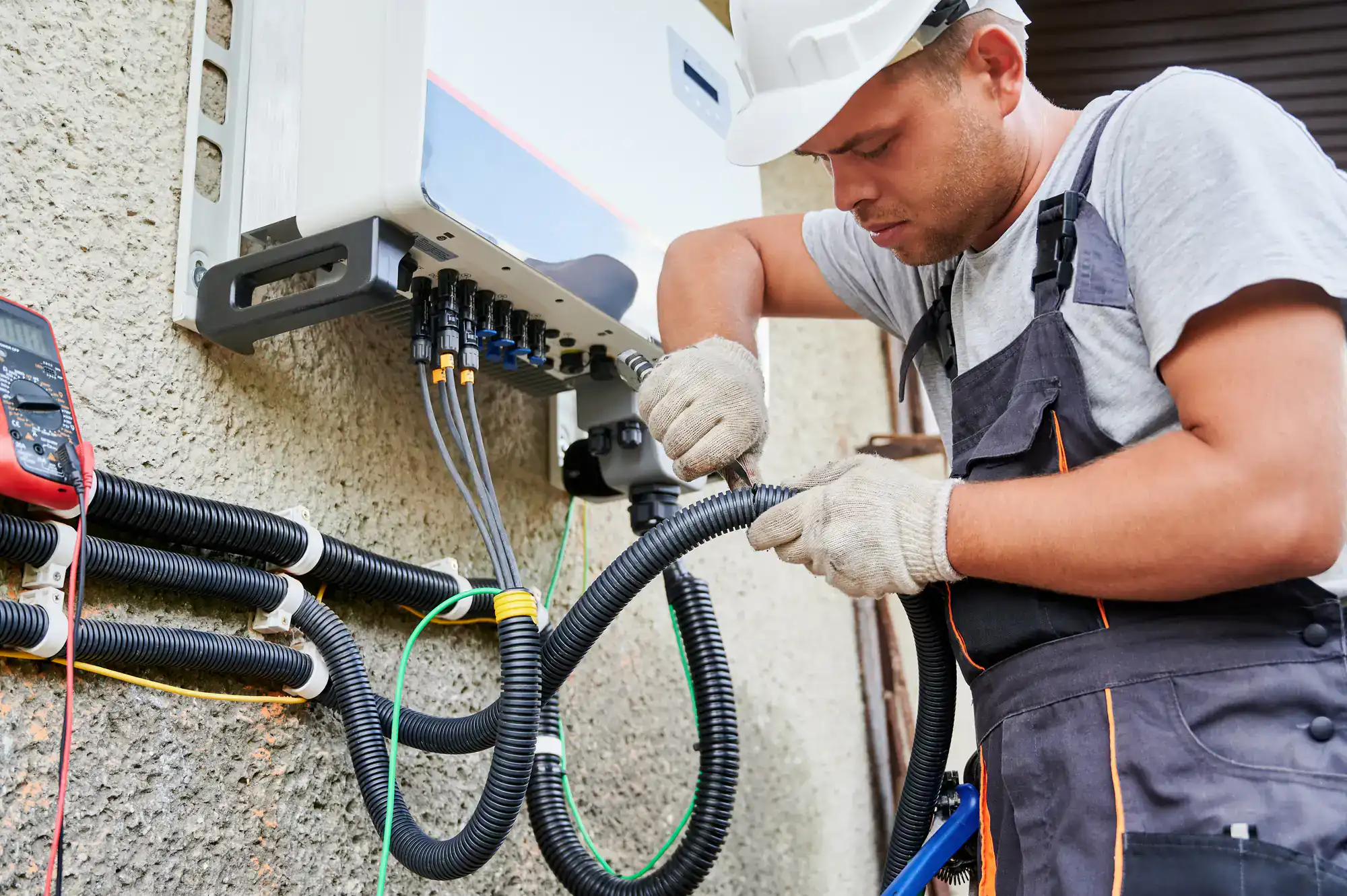
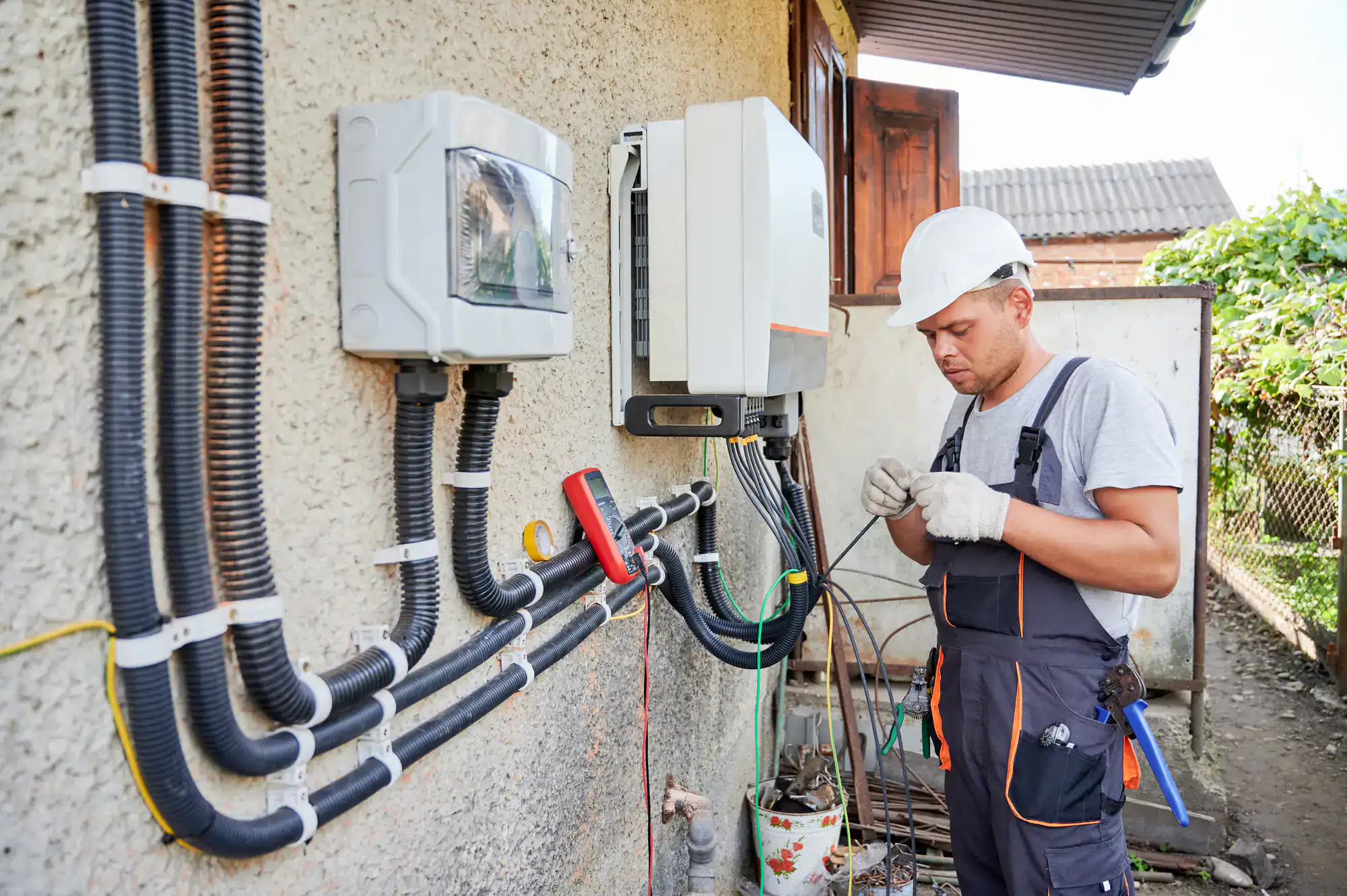
We install standby whole house generators, portable generator setups, and backup systems for both residential and small commercial properties. Every installation includes transfer switch work — the component that safely disconnects your home from the utility grid before the generator takes over. Oregon code requires it, and it is what prevents dangerous back-feeding onto Midstate Electric’s lines during a shutoff or outage event.
For La Pine homes specifically, we account for the things that matter here: well pump loads on rural acreage lots, propane or natural gas fuel line access, older panel configurations common in the area’s established housing stock, and the site conditions that come with properties bordering Deschutes National Forest or sitting back from US-97 on gravel access roads. Generator placement follows local setback requirements and is selected with noise, ventilation, and access in mind.
We also help with system selection — if you are not sure whether you need a unit that covers your whole home or one sized for essential circuits only, that conversation happens before anything is quoted or ordered. The goal is a system that actually fits your home and your budget, with no pressure to go bigger than you need. And when the work is done, it comes with a five-year installation warranty — which is not something most electrical contractors in this area offer.
Does La Pine require a permit for residential generator installation?
Yes — and this applies statewide, not just in La Pine. Oregon law requires a licensed electrical contractor and a building permit for any generator connection. In La Pine, permits are processed through the Deschutes County Building Department, which has a branch office at 16345 6th Street in La Pine. The county requires that all contractors be listed on the permit before any inspections take place, and every electrical installation requires a final electrical inspection before the system is considered complete and legal.
This is not a technicality you want to skip. An installation done without a permit can void the generator manufacturer’s warranty, create liability issues if something goes wrong, and cause problems when you sell the home. We pull the permit, schedule the inspection, and handle the sign-off as a standard part of every installation — not an add-on. You do not have to navigate Deschutes County’s permitting process on your own.
What size generator do I need for a typical La Pine home?
There is no single right answer without looking at your specific home, which is exactly why we start every job with a load calculation. That said, most La Pine homeowners are not just trying to keep the lights on — they want their furnace blower running, their well pump pulling water, their refrigerator holding temperature, and ideally their hot water heater staying functional. When you add up those loads, you are typically looking at a system in the 14 to 22 kilowatt range for whole house coverage, though that number shifts based on your panel, your appliances, and how your home is heated.
Rural La Pine properties often have higher electrical demands than a comparable home on city water and sewer. Well pumps draw significant startup current, and older homes with electric heat or large panel configurations may need more capacity than a newer build in a standard subdivision. The right size is the one that matches your actual load — not the one that fits a brochure. We size the system to your home before anything gets ordered.
How does a standby generator handle Midstate Electric's wildfire shutoffs?
A standby generator works the same way regardless of why the power went out. Whether Midstate Electric cuts power because a storm brought down a line or because they activated their Hotline Tag protocol during a high fire-danger day, the generator detects the loss of utility power and starts automatically within seconds. The transfer switch disconnects your home from the grid first — which is both an Oregon code requirement and a safety measure that protects utility workers on the line — and then the generator takes over your home’s electrical load.
The September 2023 shutoffs that affected thousands of Midstate members in southern Deschutes County were not a one-time event. Wildfire-prevention de-energization is part of how rural cooperatives manage fire risk, and it is likely to continue as fire seasons extend. A standby generator gives you a response to both outage types — the ones caused by weather and the ones caused by the utility’s own safety protocols — without you needing to be home or take any action.
How long does the full generator installation process take in La Pine?
The physical installation itself — setting the pad, connecting the transfer switch, running the fuel line, and completing the wiring — typically takes one day. But the full process from first call to a running system usually takes several weeks, and that timeline is important to understand before you call expecting next-week availability.
In La Pine, the timeline includes a site assessment, load calculation, equipment ordering, permit application through Deschutes County Building Department, any coordination needed with your gas or propane supplier, and scheduling the final electrical inspection. Each of those steps takes time, and some of them depend on county and utility schedules that are outside anyone’s control. This is why homeowners who want a generator in place before winter need to start the conversation in late summer or early fall — not after the first storm of the season. By the time a big storm is in the forecast, installation wait times stretch out significantly as demand spikes across the region.
Is a whole house generator worth the cost for a La Pine homeowner?
For most La Pine homeowners, the math works out better than people expect. A standby generator typically adds 3 to 5 percent to a home’s resale value. On a $350,000 property in the La Pine area, that is $10,500 to $17,500 in added value — a figure that approaches or exceeds the cost of the installation before you count a single hour of actual protection. As Deschutes County continues to grow and La Pine attracts buyers from Bend looking for more affordable housing, that value addition becomes more relevant, not less.
Beyond resale value, consider what a bad outage actually costs. A multi-day winter outage at 20 degrees can mean frozen pipes, burst plumbing, hotel stays in Bend, lost food, and repair bills that dwarf the cost of a generator. Standby generators last 20 to 40 years with routine maintenance, which means you are spreading that cost across decades of protection — not a single season. For a home with a well pump, aging plumbing, elderly residents, or anyone dependent on powered medical equipment, the case for backup power in La Pine is not abstract. It is grounded in the specific conditions of living here.
Can Young Electric LLC install a generator on a rural La Pine property?
Yes — and rural properties are actually where this kind of installation matters most. Many La Pine homes sit on acreage lots with well systems, propane tanks, gravel road access, and older electrical panels that require careful attention during the installation process. Our team has over four decades of combined experience across residential and rural property work, and we account for the specific conditions that come with properties spread across the La Pine area — whether that is a home near Newberry Estates backing up to Deschutes National Forest, a lot in Antelope Meadows accessed off Highway 31, or a place along the Little Deschutes River corridor.
Rural properties often have higher electrical demands because of well pumps and septic systems that rely on power to function. When the grid goes down, those systems stop — which means no running water, not just no lights. We size the generator to cover those loads specifically, not just the standard household circuits. Site selection for the generator unit also takes into account setback requirements, fuel line routing, and access for future maintenance — all of which matter more on a rural lot than on a standard in-town parcel.
Useful Links