
Hot Tub Electrical Installation in Oak Hills
Oak Hills Homes Built in the 1960s Need More Than a Generic Wiring Quote

Hear from Our Customers
Hot Tub Wiring Oak Hills OR
You get in your hot tub. That’s the outcome. Everything between now and that moment — the panel check, the permit, the conduit run through your backyard — is what separates a clean installation from one that causes problems later.
When the wiring is done correctly the first time, you’re not thinking about it again. It just works.
For Oak Hills homeowners, that process has a few layers that newer neighborhoods don’t. Many homes in the historic district off NW Cornell Road were built in the 1960s, when a 100-amp service panel was considered more than enough. That was before modern HVAC systems, home offices, EV chargers, and a 240V hot tub all needed to share the same box.
A proper installation starts with understanding what your panel can actually handle — before a single wire gets pulled. We assess your existing service capacity first, because rushing past that step is how mid-job surprises happen.
The other thing that changes is peace of mind around safety. A hot tub running on a correctly sized dedicated circuit, with a Class A GFCI breaker and properly bonded metal components, is a fundamentally different situation than one that was wired fast and cheap by someone who skipped the permit. The inspection that follows a permitted installation is documentation — for your insurance, for a future buyer, and for yourself.

Ready to get started?
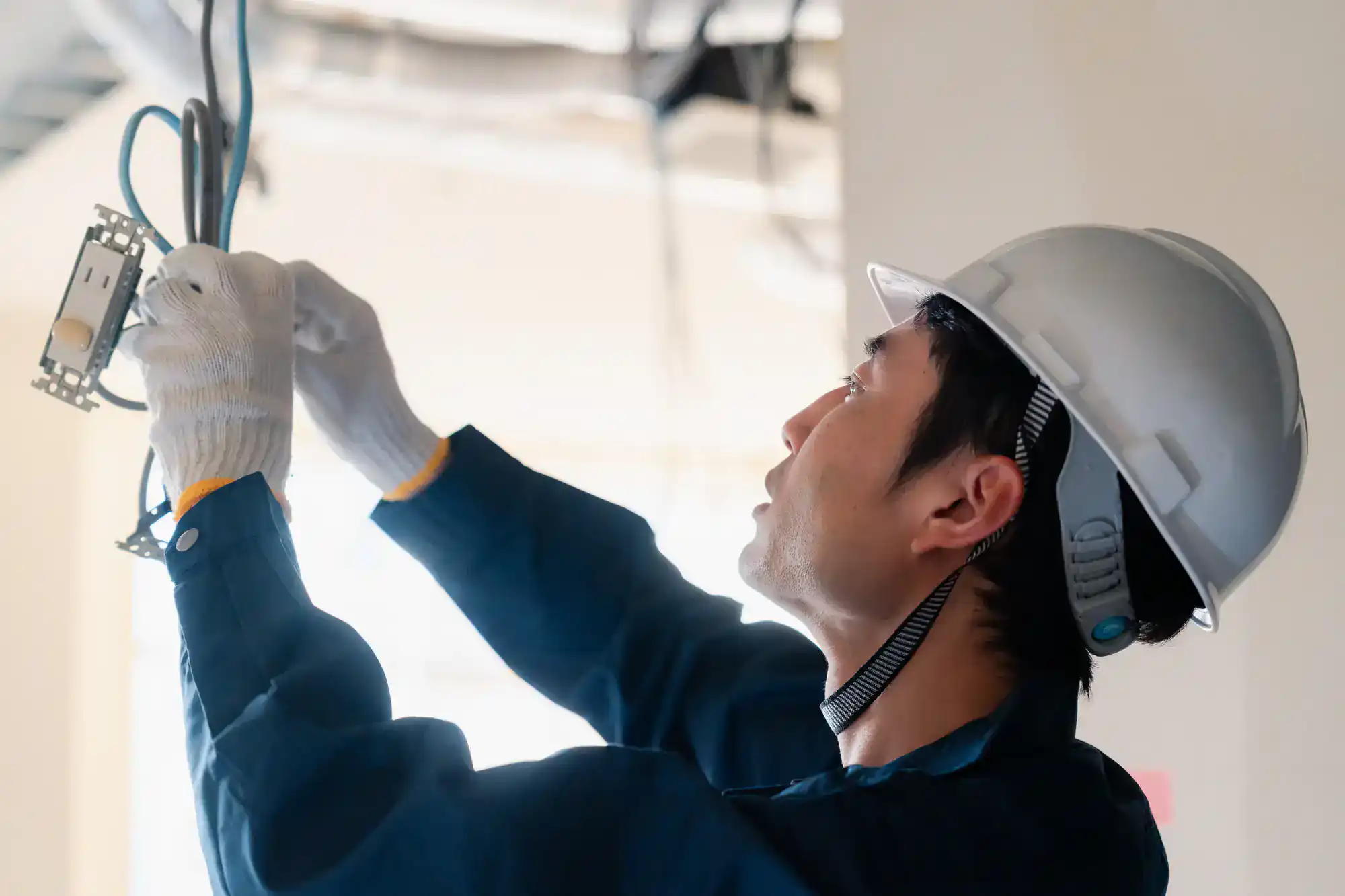
Hot Tub Electrician in Oak Hills OR
Young Electric LLC is a second-generation, family-owned electrical contractor that has been working across the Portland Metro area for over 40 years. Jeremy Young grew up in this trade. He’s a military veteran, a licensed Oregon electrician, and someone who built this company on the idea that every customer’s situation is different — and deserves to be treated that way.
Oak Hills is the kind of neighborhood where that approach matters. The homes here aren’t interchangeable. The historic district off NW Cornell Road has mature trees, irregular lot layouts, and electrical panels that were installed before most of the people living in them were born. We’ve worked in Washington County for decades, including in communities just like this one — and that experience shows up in how we assess a job, not just how we complete it.
With a 4.8-star Google rating from over 1,400 verified reviews and a BuildZoom score in the top 1% of all Oregon contractors, the track record is there to look up before you ever pick up the phone.

240V Hot Tub Wiring Oak Hills Oregon
It starts with a free estimate — and that estimate includes an actual look at your electrical panel. In Oak Hills, this step matters more than it does in a newer subdivision.
A home built in 1967 may be running close to capacity already. Before quoting anything, we check whether your existing service can support a dedicated 240V circuit or whether a subpanel or service upgrade needs to be part of the conversation. You get a clear answer upfront, not a surprise call mid-job.
Once the scope is confirmed, the permit gets pulled through Washington County’s Building Services division — because Oak Hills is unincorporated Washington County, not the City of Beaverton. That distinction matters for who issues the permit and who conducts the inspection. We handle that process, including the county’s newer online permitting portal that went live in early 2025.
The installation itself involves running a dedicated 240V circuit from your panel to the hot tub location, installing a weatherproof disconnect within the required distance from the tub, and connecting a properly sized GFCI breaker. All metal components get bonded — this step protects people, not just equipment, and it’s one that shortcuts often skip. After the work is complete, a county electrical inspector signs off. That inspection is your confirmation that everything was done to code under the 2023 Oregon Electrical Specialty Code.
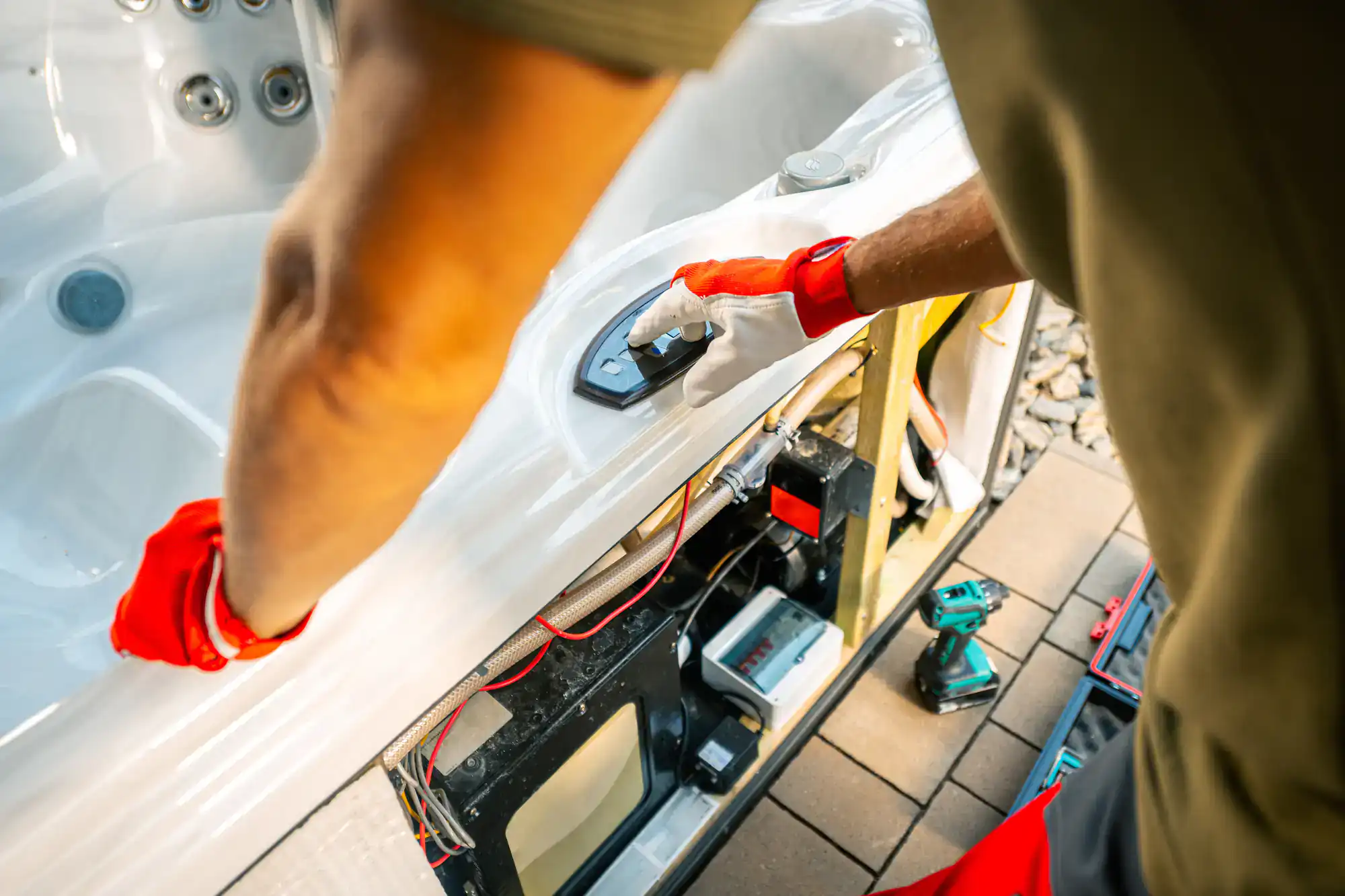
GFCI Breaker and Hot Tub Electrical Wiring Oak Hills
Hot tub electrical installation under NEC Article 680 involves more than running wire from point A to point B. The dedicated circuit needs to be the right size — typically a 50-amp, 240V setup for most full-feature hot tubs. The GFCI breaker has to be a Class A unit, which responds to ground faults in milliseconds. The disconnect box has to be weatherproof, within line of sight of the tub, and placed at the right distance.
Every metal component — pump housings, water fittings, the tub shell itself — has to be bonded together as part of the equipotential bonding system required by code. These aren’t optional steps. They’re what separates a safe installation from a liability.
In Oak Hills specifically, the conduit run from your main panel to the hot tub location often involves navigating mature landscaping, root systems, and yards that weren’t designed with a future spa pad in mind. We route conduit underground wherever possible — a cleaner result that doesn’t compromise the look of a mid-century property or leave surface-mounted conduit running across a carefully maintained yard.
Every installation comes with a 5-year labor warranty. No competitor in this market offers that. It’s not a promotional add-on — it’s how we’ve operated for decades, because standing behind the work is part of doing it right.
Who issues electrical permits for hot tub wiring in Oak Hills, Oregon?
Oak Hills is an unincorporated community in Washington County, which means permits don’t go through the City of Beaverton or the City of Portland — they go through Washington County’s Building Services division, part of the Department of Land Use and Transportation. This is a detail that catches some homeowners off guard, especially if they’ve done permitted work before in an incorporated city and assume the process is the same.
Washington County launched a new online Building and Development Application Services portal in early 2025, which has made the permit application process more accessible for unincorporated areas. We handle the permit on your behalf — so you don’t have to figure out which agency to contact or how to navigate the county’s system. The electrical inspection that follows is conducted by a county inspector and confirms that the installation meets the 2023 Oregon Electrical Specialty Code, including all NEC Article 680 requirements for outdoor spas and hot tubs.
My Oak Hills home was built in the 1960s — can my panel handle a hot tub?
This is one of the most common questions from homeowners in the Oak Hills historic district, and it’s exactly the right one to ask before any work begins. Homes built in the 1960s were typically wired with 100-amp main service panels, which were appropriate for the electrical loads of that era. Today, those same panels are often running HVAC systems, home offices, modern appliances, and sometimes EV chargers — and a 240V hot tub circuit requires its own dedicated 50-amp breaker on top of all of that.
Whether your panel can support that addition depends on how much capacity is currently being used and how many open breaker slots remain. We include a full panel evaluation as part of every free estimate, so you’ll know the answer before committing to anything. If the panel has capacity, great — the installation moves forward without additional cost. If it doesn’t, you’ll get a clear explanation of what’s needed, whether that’s a subpanel addition or a service upgrade, and what that looks like in terms of scope and timeline.
What size breaker does a 240V hot tub actually need?
Most full-feature hot tubs that run on 240V require a dedicated 50-amp circuit with a double-pole, Class A GFCI breaker. Some models specify 60 amps — you’ll want to check the hot tub manufacturer’s installation manual for the exact requirement, since using an undersized breaker can cause nuisance tripping, and using an oversized one creates a different kind of safety problem.
The GFCI component is not optional and cannot be substituted with a standard breaker. A standard breaker protects equipment from overloads. A Class A GFCI breaker protects people by detecting ground faults — tiny imbalances in current that can occur when electricity finds a path through water or a person — and cutting power within milliseconds. In a wet environment like a hot tub, that response time is the difference between a startling experience and a fatal one. Oregon code requires GFCI protection on all outdoor spas and hot tubs, and the inspection that follows a permitted installation confirms it’s in place and functioning correctly.
Does a hot tub installation in Washington County require a permit and inspection?
Yes, and skipping it creates real problems down the line. Oregon requires a permit for hot tub electrical work, and that permit triggers a final inspection by a licensed electrical inspector. For Oak Hills residents in unincorporated Washington County, that inspection is conducted by a county inspector through Washington County Building Services — not a city inspector.
The reason this matters beyond legal compliance is practical. Homeowner’s insurance policies typically exclude coverage for incidents tied to unpermitted electrical work. If something goes wrong — a fire, a shock incident, a water damage claim with an electrical component — an unpermitted installation can give the insurer grounds to deny the claim. Similarly, when you sell your home, an unpermitted electrical installation can surface during a buyer’s inspection and create complications at closing. The permit and inspection process exists to protect you, not just to satisfy a bureaucratic requirement. We pull the permit and coordinate the inspection as part of every installation.
What is equipotential bonding and why does my hot tub need it?
Equipotential bonding is a requirement under NEC Article 680 that connects all metal components associated with a hot tub — the pump motor housing, water fittings, the tub shell, any metal handrails or steps — to a common bonding conductor. The purpose is to eliminate voltage differences between those metal parts that could cause a shock if someone touches two of them simultaneously while in or near the water.
It’s one of the steps that unlicensed contractors and DIY installations most commonly skip, because it’s not visible once the installation is complete and it requires specific knowledge of what needs to be bonded and how. The consequence of skipping it isn’t always immediately obvious — but it creates a hidden shock hazard that persists for as long as the tub is in use. Oregon’s electrical inspection process includes a bonding check, which is one of the reasons a permitted installation matters. We perform the full bonding procedure on every hot tub installation as a non-negotiable part of the job, not an optional add-on.
How far in advance should Oak Hills homeowners book hot tub electrical installation?
The Pacific Northwest’s climate makes hot tubs genuinely useful year-round, but the installation calendar has real peaks. Oak Hills residents who want their hot tub ready for fall and winter use — which is when a soak in the rain actually sounds appealing — tend to call in August and September. That’s when scheduling gets tightest, and wait times stretch out further than they do in spring or early summer.
If you’ve already taken delivery of your hot tub, the best move is to call as soon as the tub is in place and you know the installation location. The free estimate visit can happen quickly, and once the scope is confirmed and the permit is submitted to Washington County, the actual installation can usually be scheduled within a reasonable window. We start at 7am, which works well for Oak Hills homeowners who need work done before heading out to the Sunset Highway corridor for the commute. The earlier you get into the schedule, the more flexibility you have on timing — especially if your panel assessment reveals that a subpanel or service upgrade is part of the picture.
Useful Links