
Hot Tub Electrical Installation in King City, OR
King City Homes Built in the '60s Deserve Wiring Done Right Today

Hear from Our Customers
Hot Tub Wiring King City, OR
Most King City homeowners who call about hot tub wiring ask the same question first: can my panel even handle this? It’s a fair question—and one that deserves a straight answer before any work starts.
A lot of the original homes in King City’s planned community were built starting in the 1960s, and the electrical panels from that era were sized for a much lighter load than what a 240V hot tub circuit demands. Getting that panel assessment done upfront is not a formality. It’s the difference between a smooth installation and an expensive mid-job surprise.
Once we confirm your panel has the capacity, the rest of the process gets simpler. A properly wired hot tub in King City means a dedicated 240V circuit, a code-compliant GFCI breaker, a weatherproof disconnect placed at the right distance from the tub, and conduit run cleanly to the equipment. The result is a tub that runs the way it was designed to—and wiring that holds up through King City’s long, wet winters without a second thought.
For a lot of residents here, the hot tub is not just a backyard feature. It’s a daily wellness tool—for joint pain, for recovery, for getting through the gray months from October through April when the rain doesn’t let up. That kind of use deserves an installation that was done correctly, not just quickly.

Ready to get started?

Hot Tub Electrician in King City, OR
Young Electric LLC is a second-generation, family-owned electrical contractor based in the Portland Metro area, serving King City and the surrounding Washington County communities. Our experience goes back further than many of the homes in King City’s original planned community. We have 40-plus years of combined experience across residential, commercial, and industrial work, and we hold both a CCB license and a BCD electrical license through the State of Oregon—the two credentials required by law for this type of work.
What sets us apart is not just the credentials. We offer a 5-year labor warranty on every installation—something no local competitor offers—and a 4.8-star rating from over 1,400 Google reviews built on consistent themes: on time, honest pricing, and clear communication. When you call, a real person answers. When we give you a quote, it reflects the actual scope of the job, including whether your home needs a panel upgrade before the hot tub circuit can go in. No surprises after the fact.
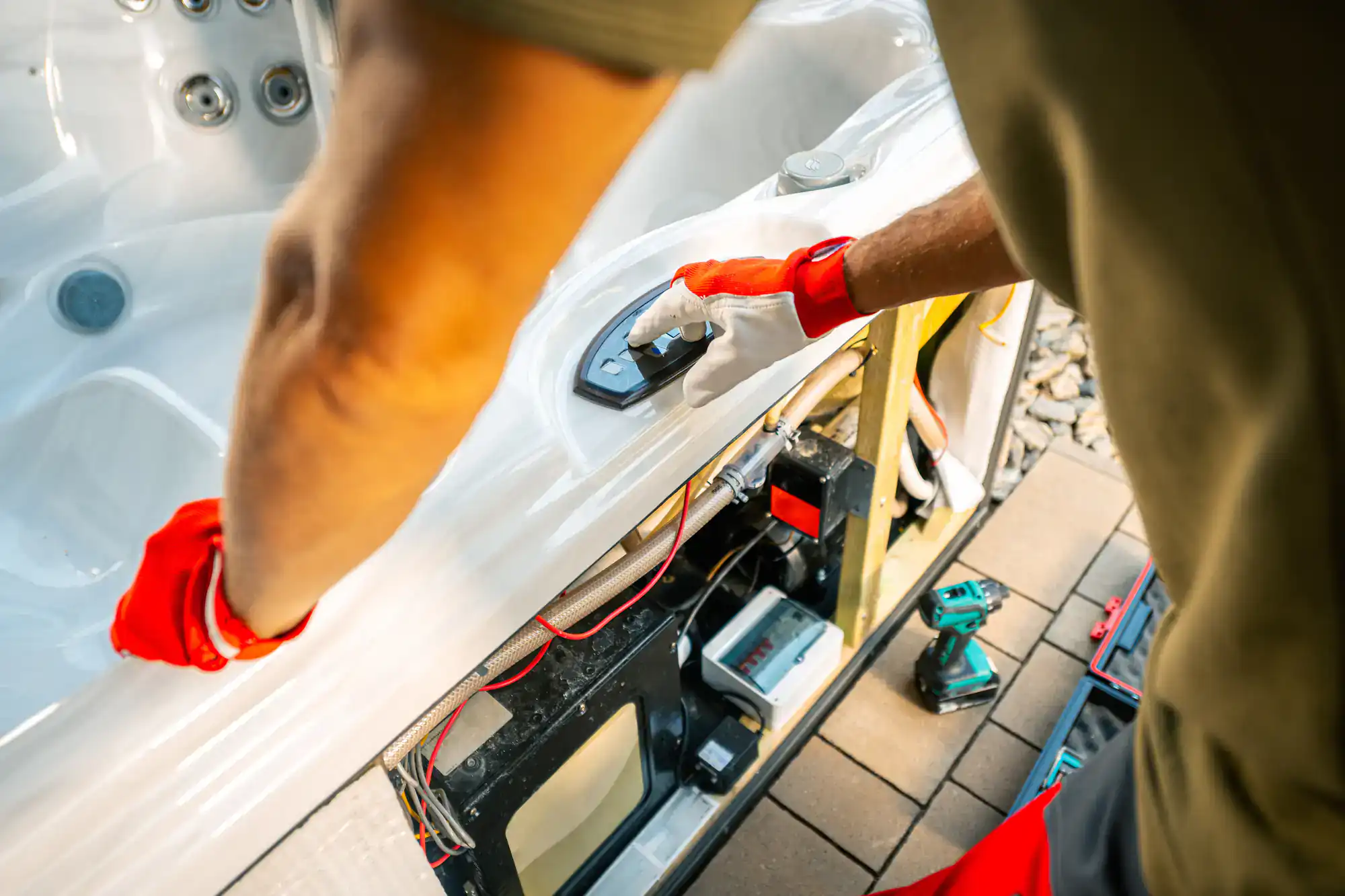
240V Hot Tub Wiring King City, Oregon
It starts with a free estimate. When we come out to your King City home, we assess whether your existing electrical service can support a dedicated 240V circuit. For homes in the original planned community, built in the 1960s and 1970s, this step matters more than it does in newer construction. If your panel needs an upgrade, you’ll know that before any work begins, not after.
Once the scope is confirmed and you accept the estimate, we pull the permit through Oregon’s Building Codes Division system. King City transitioned to the state’s e-permitting platform in October 2024, and we handle that process—you don’t have to navigate it yourself. The electrical work follows the 2023 Oregon Electrical Specialty Code: a dedicated circuit sized for your tub’s load, a properly rated GFCI breaker, weatherproof conduit, equipotential bonding of all metal components, and a disconnect box placed at the code-required distance from the water.
After the work is done, a Washington County electrical inspector signs off on the installation. That inspection verifies your wiring is safe, code-compliant, and insurable. Our track record of 3,224-plus permits pulled in Oregon means this part of the process runs smoothly.

Jacuzzi Wiring and Hot Tub Electrical in King City
Hot tub electrical installation in King City covers more than running wire from point A to point B. Every job starts with a panel assessment to confirm your home’s electrical service can support the load. For a standard 240V hot tub, that means a dedicated 50-amp circuit—nothing else sharing that breaker.
If your panel is a 100-amp service from the 1960s or 1970s, common in King City’s original KCCA-area homes, a panel upgrade may be part of the conversation. We address this at the estimate stage, not mid-job.
The installation itself includes all the components the job requires: properly sized GFCI breaker protection, outdoor-rated weatherproof conduit to handle King City’s 41 inches of annual rainfall, a weatherproof disconnect box at the correct distance from the tub, and full equipotential bonding of the tub’s metal components per NEC Article 680. These are not optional steps—they are code requirements, and skipping any one of them creates real safety risk in a wet environment.
We are also a Tesla Certified Electrical Contractor, which reflects the level of technical rigor we bring to every job. The 5-year labor warranty applies to every hot tub installation we complete—including yours in King City. If something is not right with the work within five years, we stand behind it. No other electrician serving this area offers that.
Does my older King City home need a panel upgrade before hot tub installation?
It depends on the age of your home and how loaded your current panel is—but for a lot of homes in King City’s original planned community, the answer is yes. Homes built in the 1960s and 1970s were typically wired with 100-amp electrical service panels. That was standard for the era, but a 240V hot tub requires a dedicated 50-amp circuit, and a 100-amp panel that is already carrying a full load of circuits may not have the capacity to add one safely.
The only way to know for certain is to have a licensed electrician assess your panel before the work starts. We include that assessment as part of the free estimate. If an upgrade is needed, you’ll know what it involves and what it costs before any commitment is made. If your panel has the capacity, the installation can move forward without that additional step. Either way, you get a clear picture upfront—not a surprise invoice after the work has already started.
Do I need a permit for hot tub electrical wiring in King City, OR?
Yes—a permit is required for hot tub electrical work in King City. Oregon law under OAR 918-309 requires that an electrical permit be obtained before any work begins. If work starts without a permit, an investigative fee is added on top of the standard permit cost, and the work still has to be inspected and brought into compliance. Skipping the permit does not save money—it creates more of it.
King City transitioned to Oregon’s state e-permitting system in October 2024, so all electrical permit applications now go through the state’s online portal. Washington County’s building services department handles the inspection side. We pull the permits and manage this process as part of every installation—you don’t have to figure out the system on your own. After the work is done, a Washington County electrical inspector reviews the installation and signs off. That inspection validates the work as safe, code-compliant, and covered by your homeowner’s insurance.
What size breaker does a 240V hot tub need, and why does it matter?
Most 240V hot tubs require a 50-amp dedicated circuit with a double-pole GFCI breaker. Some models specify 60 amps—the right size depends on the tub’s nameplate data, which lists the maximum amperage draw. Using the wrong breaker size is not just a code violation—it is either a fire risk (if the breaker is too large and does not trip when it should) or a nuisance problem (if it is too small and trips during normal use).
The GFCI breaker is not interchangeable with a standard breaker. A standard breaker protects equipment from overloads. A GFCI breaker protects people by detecting ground faults and cutting power within milliseconds—a distinction that matters enormously when the equipment is sitting in water. NEC Article 680, which governs all hot tub electrical work nationally, requires Class A GFCI protection on every outdoor spa and hot tub. Oregon’s 2023 Electrical Specialty Code, which went into effect October 1, 2023, follows this requirement. There is no code-compliant way to wire a 240V hot tub without it.
Can the hot tub dealer's electrician handle the wiring, or should I hire my own?
You can hire whoever you want—but it is worth understanding what you are agreeing to before you say yes. Hot tub dealers along the 99W corridor and in the Tigard area sometimes have an electrician they recommend, and the quote may look attractive compared to getting your own. The concern is not that those electricians are necessarily unqualified—it is that you have no way of verifying their credentials, and the incentive structure favors a fast, low-cost installation rather than one that is fully permitted and inspected.
In Oregon, hot tub electrical work requires a contractor who holds both a CCB license and a BCD electrical license. If the person doing the work holds only one—or neither—the installation is not legally compliant, and it may not pass inspection. Beyond the legal issue, most hot tub manufacturers void the warranty if the electrical installation was not performed by a licensed professional. And if an insurance claim ever involves your hot tub and the wiring was unpermitted, coverage can be denied. Hiring your own licensed electrician, verifying their credentials, and confirming they will pull a permit is the straightforward way to protect yourself.
How far does the disconnect box need to be from the hot tub?
The disconnect box—sometimes called the spa panel or emergency shutoff—must be placed no closer than 5 feet from the hot tub and within line of sight of the tub. It also needs to be readily accessible and outdoor-rated. The maximum distance varies depending on the specific code interpretation and the tub’s installation manual, but the 5-foot minimum is a hard requirement under NEC Article 680 and Oregon’s Electrical Specialty Code.
This placement rule exists for a practical reason: in an emergency, someone needs to be able to cut power to the tub quickly without having to go inside the house or around a corner. The disconnect has to be visible from the tub so that anyone near the water can reach it or direct someone to it without delay. In King City’s rainy climate—where the tub is genuinely in use through the long wet season from October through April—having a properly placed, weatherproof disconnect is not just a code requirement. It is a functional safety feature for a piece of equipment that runs year-round.
What does Young Electric LLC's 5-year labor warranty actually cover?
The 5-year labor warranty covers the workmanship on your hot tub installation—meaning if something goes wrong with how the work was done within five years of the installation, we come back and make it right. It is not a warranty on the hot tub itself or on the equipment (breakers, wire, conduit)—those are covered by manufacturer warranties. This warranty is specifically about the quality of the installation work.
For King City homeowners, this matters for a straightforward reason: you are making a real investment in your property, and the electrical work behind that investment should hold up. A 5-year labor warranty is not something any other electrician serving this area advertises—it is a direct signal that we expect our work to last and are willing to back that expectation in writing. If you are comparing quotes and one contractor offers a warranty and another does not, that difference is worth factoring into the decision. The cheapest quote is rarely the lowest total cost if something fails and there is no one accountable for fixing it.
Useful Links