
Hot Tub Electrical Installation in Hillsboro, OR
Your Hot Tub Is Delivered. Now It Needs to Be Wired Right.

Hear from Our Customers
Hillsboro Hot Tub Electrician and Wiring
Most Hillsboro homeowners don’t realize there’s a gap between “the hot tub is delivered” and “the hot tub is ready to use.” That gap is the electrical work — and it’s not optional, not a formality, and not something a handyman can legally handle in Oregon.
What you actually want is to get in the tub. That’s the whole point. Getting the wiring done correctly is the step that makes it possible.
Once the dedicated 240V circuit is run, the GFCI breaker is installed, and the disconnect box is placed correctly, you’re not just compliant — you’re protected. The City of Hillsboro requires an electrical permit for this work, and the inspection that follows confirms everything was done to code. That permit and inspection aren’t a headache. They’re what keeps your homeowner’s insurance valid and your home’s resale history clean.
For homeowners in Reedville, Witch Hazel, and the older stretches near Cornelius Pass Road, there’s one more thing worth knowing upfront: homes built in the 1960s and 1970s often have 100-amp service panels that weren’t sized for a modern hot tub load. Knowing that before the job starts — not after — is the difference between a smooth project and an expensive surprise. That’s exactly what our free estimate covers.
Ready to get started?

Licensed Hot Tub Electrician Serving Hillsboro
Young Electric LLC is a second-generation, family-owned electrical contractor based in Portland and serving the full Portland Metro area — including Hillsboro and Washington County. We carry both an active CCB license and a BCD electrical license, which are the two credentials Oregon law requires for legal electrical work. That’s not a checkbox — it’s what separates a properly permitted, inspectable installation from one that creates problems down the road.
With over 40 years of combined experience and more than 1,400 Google reviews averaging 4.8 stars, we’ve worked across Hillsboro’s full range of housing — from new builds going up in Reed’s Crossing and South Hillsboro to established homes in Tanasbourne and Orenco Station. When you call, a real person answers. When the estimate is done, you’ll know exactly what the project involves before anything is scheduled.

Hot Tub Wiring Process in Hillsboro, OR
It starts with the estimate visit. Before any work is quoted or scheduled, we send someone out to assess your panel, your hot tub’s location, and the distance the circuit needs to travel. This step matters more than most people expect — especially in older Hillsboro neighborhoods where a 100-amp panel or a legacy FPE Stab-Lok setup can change the scope of the project significantly. You get a clear, complete picture of what’s involved before you agree to anything.
Once the scope is confirmed, we pull the permit with the City of Hillsboro. The city’s building department is stricter than average on electrical work and requires a permit for any hot tub circuit addition — this isn’t something to skip or work around. We handle the permit application so you don’t have to navigate the city’s portal yourself.
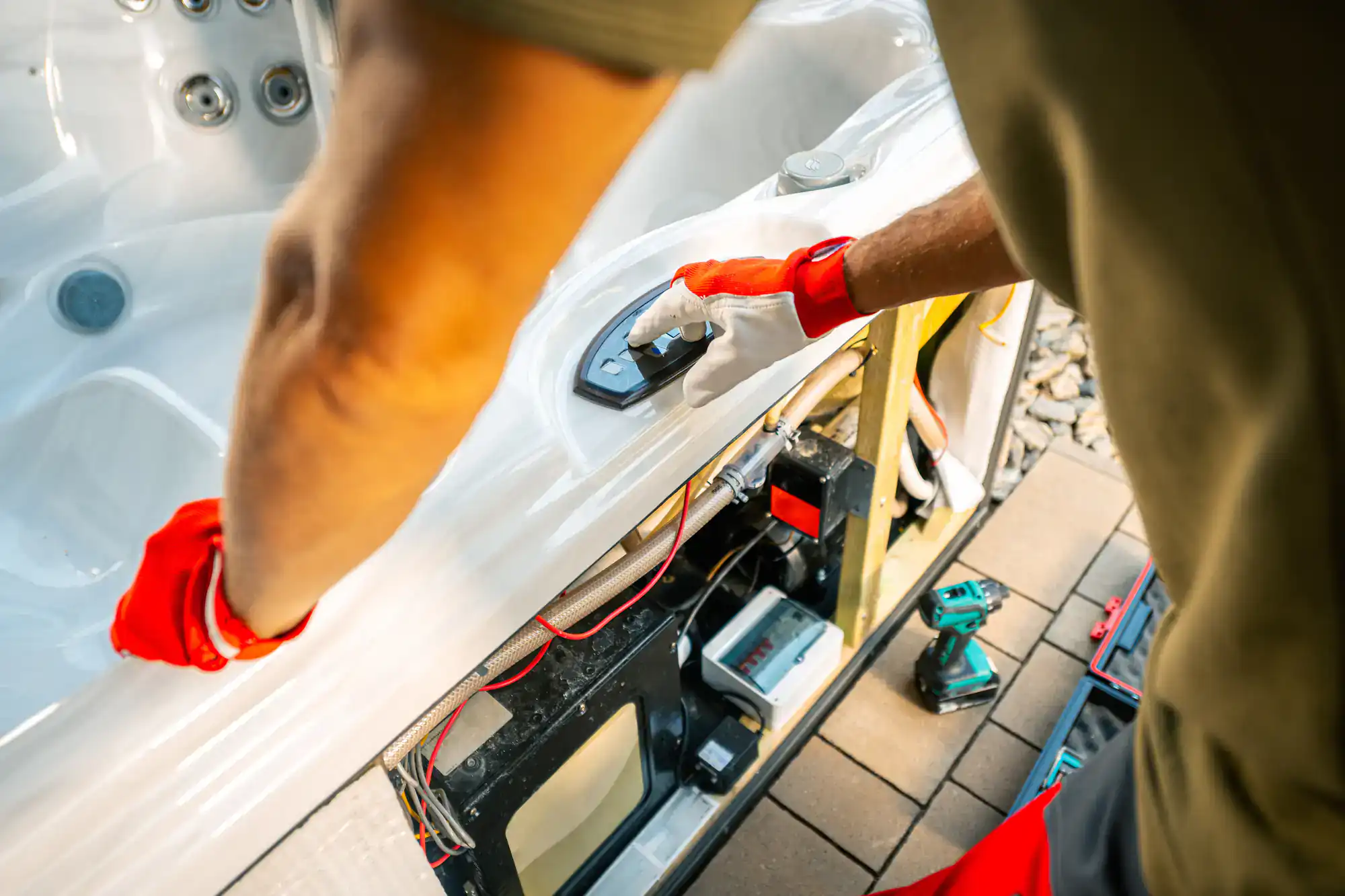
The installation covers the dedicated 240V circuit, the GFCI breaker, weatherproof conduit, and the disconnect box placed at the code-required distance from the tub. If trenching is needed to bury the conduit run — common in the larger backyards of South Hillsboro’s newer builds — we handle that as part of the job. After installation, the city inspection confirms everything meets the 2023 Oregon Electrical Specialty Code. Once it passes, you’re done. The tub is live, the paperwork is clean, and the 5-year labor warranty is in effect.

240V Hot Tub Wiring and GFCI Installation Hillsboro
Hot tub electrical installation in Hillsboro involves more moving parts than most buyers expect when they’re standing in the Oregon Hot Tub showroom on Evergreen Parkway picking out their model. The electrical side typically includes a dedicated 50-amp, 240V circuit, a GFCI breaker sized to the tub’s specifications, weatherproof conduit run from the panel to the tub location, and a code-compliant disconnect box installed within line of sight of the tub. Equipotential bonding of all metal components is also required under NEC Article 680 — this is the step that protects against shock hazards in a wet environment, and it’s one that unlicensed installers routinely skip.
If your home’s panel doesn’t have the capacity to support the new circuit — which is a real possibility in Reedville, Witch Hazel, and other established Hillsboro neighborhoods with older electrical infrastructure — the estimate will identify that upfront. A subpanel installation or a full service upgrade may be needed before the hot tub circuit can be added. We’re transparent about this from the start, not after the job is half done.
Every installation includes permit management with the City of Hillsboro, coordination of the final electrical inspection, and our 5-year labor warranty. We handle Jacuzzi wiring, spa panel installation, and hot tub wiring for both new construction and existing homes in Washington County. No named service tiers or packages — just a complete, properly permitted installation backed by a warranty no local competitor currently matches.
Does the City of Hillsboro require a permit for hot tub electrical installation?
Yes — and this isn’t a gray area. The City of Hillsboro explicitly lists adding a circuit for a hot tub as a scenario that requires an electrical permit. The city’s building department is known to be stricter than the standard code on electrical work, with fewer exemptions and more situations that require a permit and inspection than you might expect compared to other Oregon cities.
Skipping the permit doesn’t just risk a fine. It means the work was never inspected, which can void your homeowner’s insurance coverage if something goes wrong, and it creates a disclosure problem when you sell the home. A licensed electrician pulls the permit before the work starts and coordinates the inspection after. We handle both — you don’t have to log into the city portal or track down the inspector yourself.
What size breaker does a 240V hot tub need, and does it have to be a GFCI?
Most full-size 240V hot tubs require a dedicated 50-amp circuit with a GFCI breaker — though some models specify 60 amps, so the tub’s manual and our assessment both matter here. The GFCI breaker is not optional. NEC Article 680 requires GFCI protection on all outdoor spas and hot tubs, and Oregon follows this under the 2023 Oregon Electrical Specialty Code.
A standard breaker protects equipment from overloads. A GFCI breaker protects people — it detects ground faults and cuts power in milliseconds. In a wet environment, that distinction is the difference between a nuisance trip and a serious injury. The circuit also has to be dedicated, meaning nothing else runs on it. No sharing with outdoor lights, outlets, or other appliances. This is a code requirement, not a preference.
My Hillsboro home was built in the 1970s — can my panel handle a hot tub?
Maybe, but it needs to be checked before anyone quotes you a final number. Homes in Reedville, Witch Hazel, and the Cornelius Pass Road corridor that were built between the 1960s and early 1980s frequently have 100-amp service panels. A 50-amp hot tub circuit represents a significant portion of that total capacity, and if the panel is already loaded with a modern kitchen, HVAC system, and other appliances, there may not be enough headroom to add the circuit safely.
Some homes from this era also have FPE Stab-Lok or Zinsco panels, which have known reliability issues and are generally recommended for replacement regardless of load capacity. If your Hillsboro home falls into any of these categories, the estimate visit is where that gets identified — not after the job starts. A subpanel installation or a service upgrade may be needed first, and we’ll tell you that upfront so you can make an informed decision before committing to anything.
How far does the disconnect box need to be placed from the hot tub?
The disconnect box — sometimes called the spa panel or emergency shutoff — must be placed no closer than 5 feet from the hot tub and no further than 15 feet away, within line of sight of the tub and easily accessible. This is a requirement under NEC Article 680 and the 2023 Oregon Electrical Specialty Code. The box also has to be weatherproof and outdoor-rated.
Placement matters practically, not just for compliance. The disconnect needs to be reachable in an emergency without having to go back inside the house or around a corner where you can’t see the tub. Where the box ends up relative to the tub’s location in your backyard is something the estimate visit accounts for — the layout of your specific yard, the panel location, and the conduit run all factor into where the disconnect lands. For newer South Hillsboro homes with larger lot footprints, the run from panel to tub can be longer, which affects both conduit routing and the final disconnect placement.
Will improper hot tub wiring void my hot tub's manufacturer warranty?
Yes — most hot tub manufacturers require installation by a licensed electrician as a condition of the warranty. If the electrical work was done by an unlicensed installer, a handyman, or someone who skipped the permit and inspection, the manufacturer can deny a warranty claim on the tub itself — not just the electrical work. That’s a real financial risk on a product that often costs $6,000 to $15,000 or more.
It’s also worth knowing that improper wiring — specifically skipped steps like equipotential bonding — can create hazards that aren’t visible until something fails. Bonding all the metal components in and around the tub is required by code specifically because unbonded metal creates shock risk in the water. This is one of the most commonly skipped steps in unlicensed hot tub wiring jobs. A licensed electrician who pulls a permit and passes inspection has documented proof that every required step was completed — which protects both the tub warranty and your homeowner’s insurance coverage.
What's the best time of year to schedule hot tub electrical installation in Hillsboro?
Honestly, any time of year works in Hillsboro — the climate here doesn’t create a hard stop on electrical work the way it does in colder parts of the country. Hillsboro averages only about 2 inches of snow per year, and the ground rarely freezes hard enough to make trenching difficult. That means even a January installation is feasible if you need it done.
That said, the busiest window for scheduling runs from late spring through early fall — roughly April through September — because that’s when hot tub purchases spike and everyone wants to be in the water before the rainy season hits. If you’re buying from Oregon Hot Tub’s Tanasbourne showroom or another local dealer and you want the tub ready before October, scheduling the electrical sooner rather than later is the practical move. Hillsboro’s wet winters from October through April are actually peak hot tub season — so getting the wiring done in summer means you’re set up for the months when you’ll use it most. We serve Hillsboro and Washington County year-round, and the free estimate can usually be scheduled quickly.
Useful Links