
Hot Tub Electrical Installation in Happy Valley, OR
Happy Valley Homes Need More Than a Modern Panel

Hear from Our Customers
Hot Tub Wiring Happy Valley, OR
A properly wired hot tub means you step in without a second thought. No tripped breakers, no flickering lights inside the house, no wondering whether the person who did the job cut corners on the permit. You get a system that runs the way it’s supposed to — quietly, safely, and without surprises.
Happy Valley’s housing stock is mostly post-2000 construction, which sounds reassuring until you realize those 200-amp panels are often already carrying an electric range, a heat pump, and increasingly an EV charger. Adding a 240V hot tub to a panel that’s already stretched thin is where the problems start — and where a free upfront panel assessment makes the difference between a smooth installation and a mid-project setback.
The hillside lots throughout neighborhoods like Rock Creek, Lincoln Heights, and Eagle Landing also mean the run from your main panel to the backyard pad is rarely short or simple. Sloped terrain, retaining walls, and grade changes all affect how the conduit gets routed and buried. When that work is done correctly — properly trenched, weatherproofed, and inspected — it holds up through every wet Happy Valley winter without issue. When it’s rushed, you find out the hard way.

Ready to get started?

Licensed Hot Tub Electrician Happy Valley, OR
Young Electric LLC is a second-generation, family-owned electrical contractor serving Happy Valley and the broader Portland Metro area, including Clackamas County. Jeremy Young grew up in the trade — this isn’t a company built on marketing, it’s one built on decades of actual electrical work, with over 40 years of combined experience behind every job.
We hold both a CCB license and a BCD electrical license — Oregon’s two-part licensing requirement that every legitimate electrician working in Happy Valley must carry. Young Electric LLC has pulled more than 3,224 permits across Oregon, which puts us in the top 1% of all contractors in the state by BuildZoom’s score. That’s not a stat pulled from thin air — it’s a documented record of work that was inspected and passed.
With 4.8 stars from more than 1,400 verified Google reviews, the track record speaks for itself. Homeowners consistently mention on-time arrival, honest communication, and clear explanations — which matters a lot if you’ve never navigated a hot tub electrical installation before and you’re not sure what questions to even ask.
Hot Tub Electrical Wiring Process Happy Valley, OR
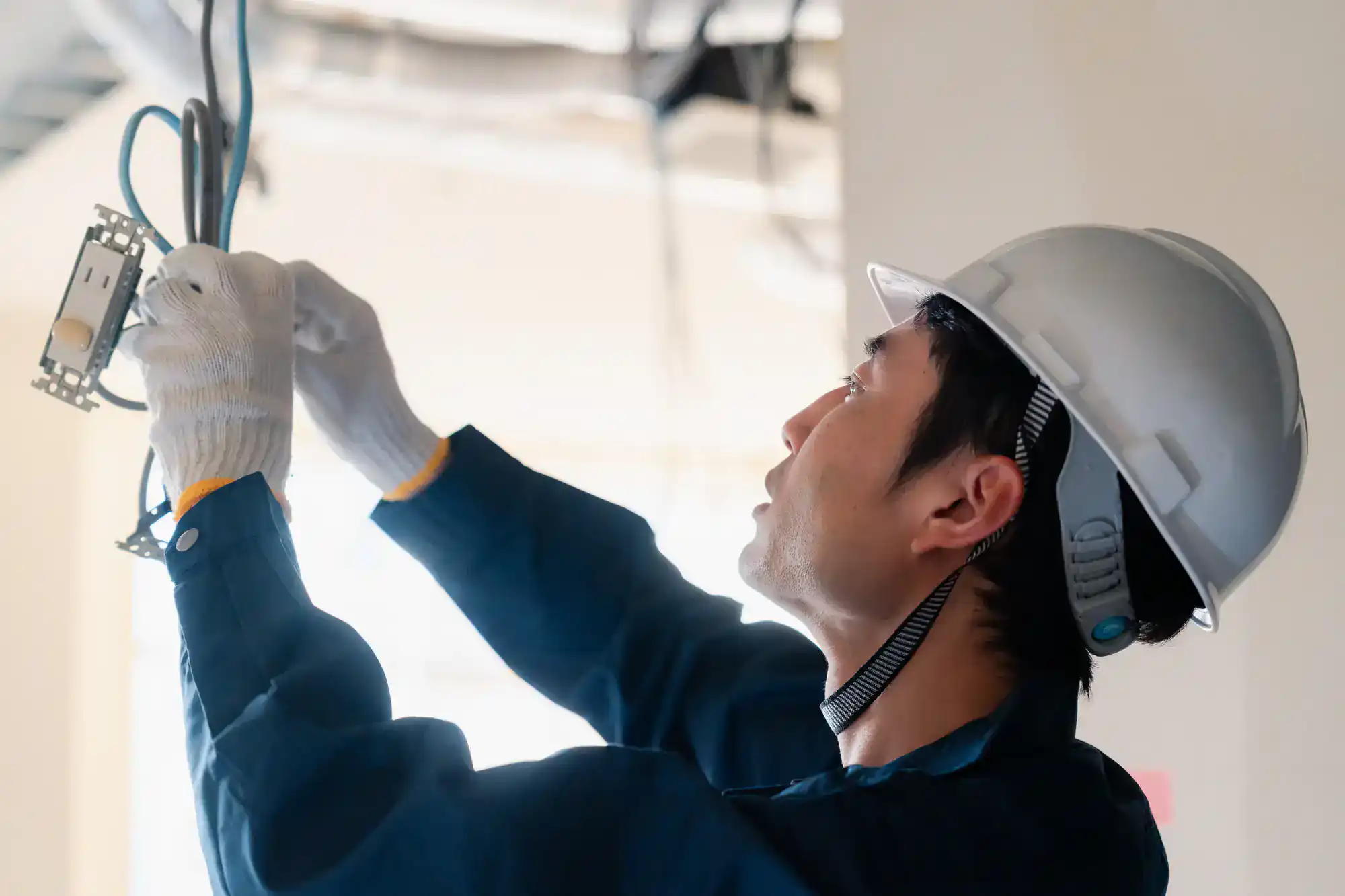
It starts with a free estimate, and that estimate includes more than just a price. Before anything else, the panel gets assessed. For a lot of Happy Valley homes — especially those built in the early 2000s through the 2010s in areas like Scouters Mountain or Pleasant Valley — the question isn’t whether the panel is modern, it’s whether it has the available capacity to add a 50-amp, 240V dedicated circuit on top of everything else already running. You get a straight answer at that stage, not a surprise after the trenching is done.
Once the scope is clear, the work involves running a dedicated circuit from your main panel — or a subpanel if that’s what’s needed — through weatherproof conduit to the hot tub location. For hillside lots, that means proper trenching through sloped terrain to the right depth, routed around any grade changes or landscaping. A weatherproof disconnect box gets installed within line of sight of the tub, at the code-required distance. The circuit is protected by a GFCI breaker, and all metal components near the water get bonded — a step that’s legally required and one that unlicensed installers routinely skip.
In Clackamas County, an electrical permit is required for this type of work, and it’s pulled through the state’s BCD system. We handle the permit, and the job doesn’t wrap up until it passes inspection. That final inspection is what makes the installation legal, insurable, and clean at resale — which matters in a market where Happy Valley homes are selling above $700,000.
240V Hot Tub Wiring Happy Valley, Oregon
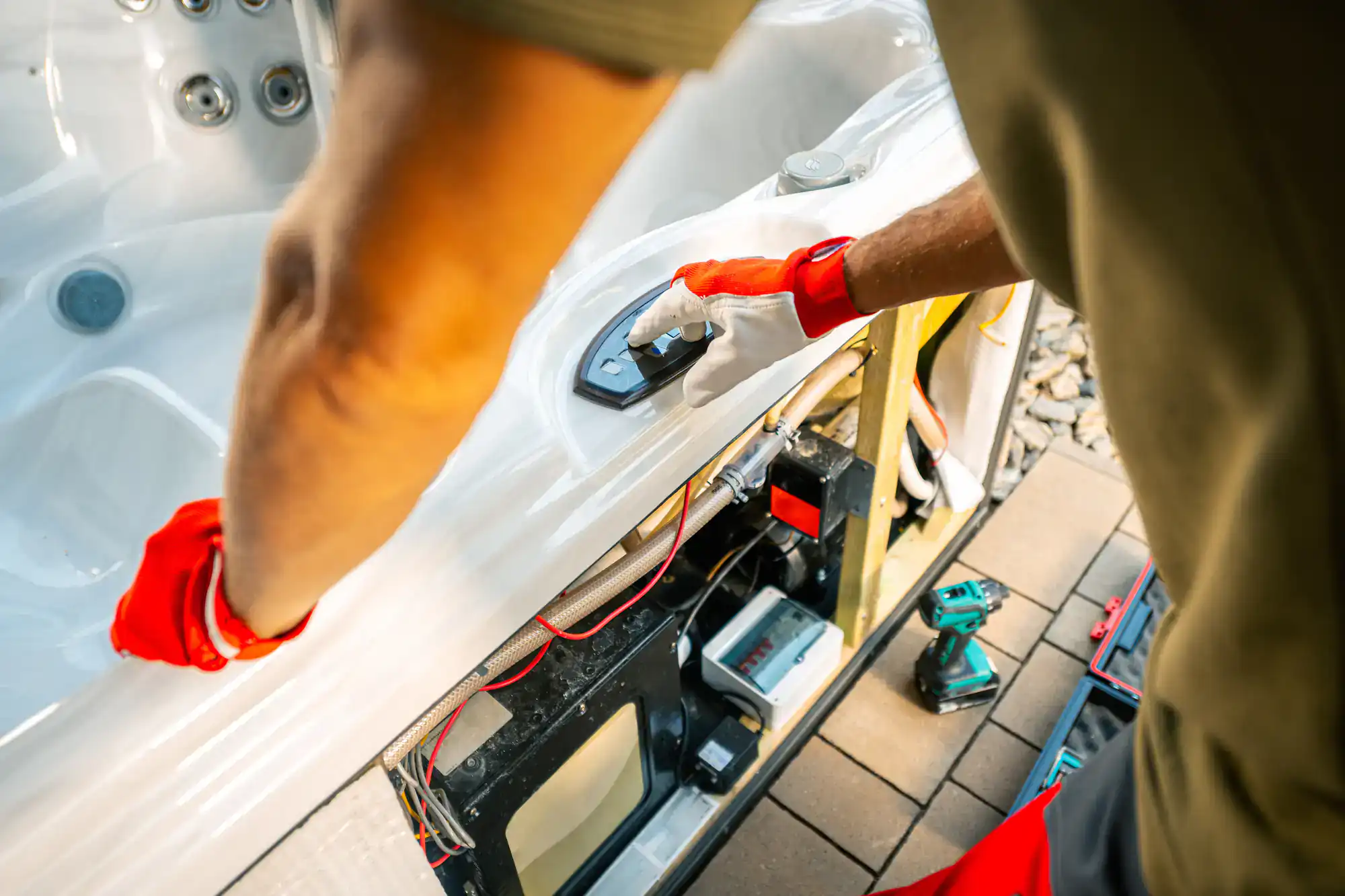
Hot tub electrical installation through Young Electric LLC covers the full scope — panel assessment, dedicated 240V circuit, properly sized GFCI breaker, weatherproof conduit, underground trenching where needed, code-compliant disconnect placement, and equipotential bonding of all metal components near the water. We pull the permit, schedule the inspection, and provide documentation that the work was done to the 2023 Oregon Electrical Specialty Code.
For Happy Valley homeowners who are also running or planning to run an EV charger off the same panel, that panel assessment at the start of the job is especially important. It’s a real and common scenario in this community — and one that sometimes points toward a subpanel installation rather than pulling directly from the main panel. That gets identified upfront, not after the job is already underway.
Every installation comes with a 5-year warranty on labor. No competitor actively serving Happy Valley — not DT Electric, not Bullseye Electric, not Sarkinen Electrical, not Portland Metro Electric — advertises that. It means if something goes wrong with the installation in the first five years, it gets corrected without a debate about responsibility. For a homeowner who’s invested heavily in both the property and the tub itself, that’s a meaningful commitment.
Do I need a permit for hot tub electrical installation in Happy Valley, OR?
Yes — and it’s not optional. In Happy Valley, electrical permits for hot tub installations are administered through Clackamas County’s building department, which operates through Oregon’s state BCD (Building Codes Division) system. The county explicitly lists spa and hot tub installations as project types that require both a building permit and an electrical permit. Skipping the permit doesn’t just mean skipping paperwork — it means skipping the inspection, which is the only independent verification that the work was done safely and to code.
The practical consequences of unpermitted electrical work are real. Most homeowner insurance policies won’t cover a claim tied to unpermitted work. And in Happy Valley’s competitive real estate market, where homes are selling well above $700,000, a buyer’s inspector or their lender will often flag unpermitted electrical work during the transaction. We pull the permit, handle the scheduling, and the job doesn’t close until the inspection passes. That’s how it should work.
Can my 200-amp panel handle a hot tub and an EV charger at the same time?
Sometimes yes, sometimes no — and the answer depends on what’s already on your panel, not just the panel’s rated capacity. This is one of the most common questions from Happy Valley homeowners, and it’s a legitimate one. A 200-amp panel sounds like plenty of capacity until you account for an electric range, a heat pump or central AC, an electric water heater, and an EV charger all running off the same service. Adding a 50-amp, 240V hot tub circuit on top of that can push the panel past what it can reliably handle.
The only way to know for certain is a proper load calculation, which is part of the free estimate we provide before any work begins. If the panel has room, the circuit gets added directly. If it doesn’t, a subpanel is the right solution — and that gets identified and quoted upfront, not discovered mid-project. This is exactly the kind of scenario that’s showing up more frequently in Happy Valley’s newer subdivisions as EV adoption increases alongside hot tub ownership.
What size breaker does a 240V hot tub need, and why does it have to be a GFCI breaker?
Most 240V hot tubs require a 50-amp dedicated circuit, though some models specify 60 amps — the right size depends on your specific unit’s electrical requirements, which are listed in the manufacturer’s documentation. Whatever the amperage, the breaker must be a GFCI breaker, not a standard one. That’s not a preference — it’s a requirement under NEC Article 680, which governs all hot tub and spa electrical installations nationally, and it’s enforced through Oregon’s 2023 Electrical Specialty Code.
A standard breaker protects equipment from overloads. A GFCI breaker protects people from electrocution by detecting ground faults — tiny imbalances in electrical current that happen when electricity finds an unintended path, like through water or a person. In a wet environment, a GFCI breaker can cut power in milliseconds. That response time is the difference between a shock and something much worse. It’s a non-negotiable part of every hot tub installation we do, and it’s one of the first things an inspector checks.
How far does the disconnect box need to be from my hot tub?
The disconnect box — sometimes called the spa panel or emergency shutoff — must be placed no closer than 5 feet from the edge of the hot tub and no further than 15 feet away, within line of sight of the tub and readily accessible. These are the requirements under NEC Article 680, which Oregon’s electrical code adopts. The placement has to be deliberate — it can’t be tucked behind a fence panel or blocked by landscaping, because the whole point is that someone needs to be able to reach it quickly in an emergency.
On Happy Valley’s hillside lots, this placement sometimes takes a bit more planning than it would on a flat suburban lot. If the tub is on a deck or elevated patio, the disconnect location has to work with the grade changes around it while still meeting the distance and line-of-sight requirements. That’s a detail that gets figured out during the estimate visit, not improvised on installation day. Getting it wrong means a failed inspection, which means the job isn’t done.
What is equipotential bonding, and why does my hot tub installation require it?
Equipotential bonding is the process of connecting all metal components near the hot tub — the shell, the pump housing, the water itself, any metal fittings, and nearby metal structures — to a common bonding grid. The goal is to eliminate voltage differences between those components. When metal objects near water have different electrical potentials, current can flow between them through the water or through a person who touches two of them at once. Bonding removes that risk by making everything electrically equal.
It’s required under NEC Article 680 and is one of the most commonly skipped steps by unlicensed installers or handymen who aren’t familiar with the code. It’s also one of the first things an electrical inspector looks for, because it’s a hidden safety issue — the tub can look perfectly installed and function normally while the bonding is absent or wrong. Every hot tub installation we complete includes proper equipotential bonding as a standard part of the job, not an add-on.
How does Happy Valley's wet climate affect outdoor hot tub electrical work long-term?
Happy Valley averages close to 50 inches of rain per year, with December alone bringing more than 18 rain days. That level of sustained moisture puts outdoor electrical components under real stress — conduit connections, junction boxes, and the disconnect enclosure all need to be properly rated for outdoor and wet-location use. If they’re not, water intrusion over time leads to corrosion, tripped breakers, and eventually failed components.
The underground runs common on Happy Valley’s hillside lots add another dimension to this. Conduit buried through sloped terrain needs to be installed at the right depth and with proper drainage considerations so that water doesn’t pool inside the conduit over time. These aren’t dramatic risks when the installation is done correctly — but they’re the kind of thing that separates a job that holds up for 10 years from one that starts causing problems in year three. The 5-year labor warranty we include on every installation reflects confidence that the work is done to last through exactly this kind of climate.
Useful Links