
Hot Tub Electrical Installation in Gresham
Gresham's Older Homes Deserve an Honest Panel Check First

Hear from Our Customers
Hot Tub Wiring in Gresham, OR
A lot of Gresham’s housing stock was built in the 1960s and 1970s, when 100-amp service panels were the standard. Those homes have had decades of electrical additions piled on top — dryers, dishwashers, HVAC upgrades — and by now, many of those panels are running close to their limit. When you add a 240V, 50-amp hot tub circuit into that picture, the panel question isn’t optional. It’s the first thing that needs an honest answer.
We assess your existing panel capacity as part of every free estimate. If your home in Kelly Creek, Powell Valley, or Centennial needs a subpanel or service upgrade before the hot tub circuit can be safely run, you’ll know that before a single dollar is committed — not mid-job when it’s harder to say no.
And once the work is done, it holds up. Gresham gets around 109 rainy days a year. From October through April, the weather doesn’t let up. A hot tub in this climate isn’t a summer accessory — it’s something you’ll actually use in November after a long commute home on I-84. That means the electrical installation behind it needs to be built for year-round use, with weatherproof components, properly rated GFCI protection, and work that’s been inspected and documented. That’s what you get here.

Ready to get started?
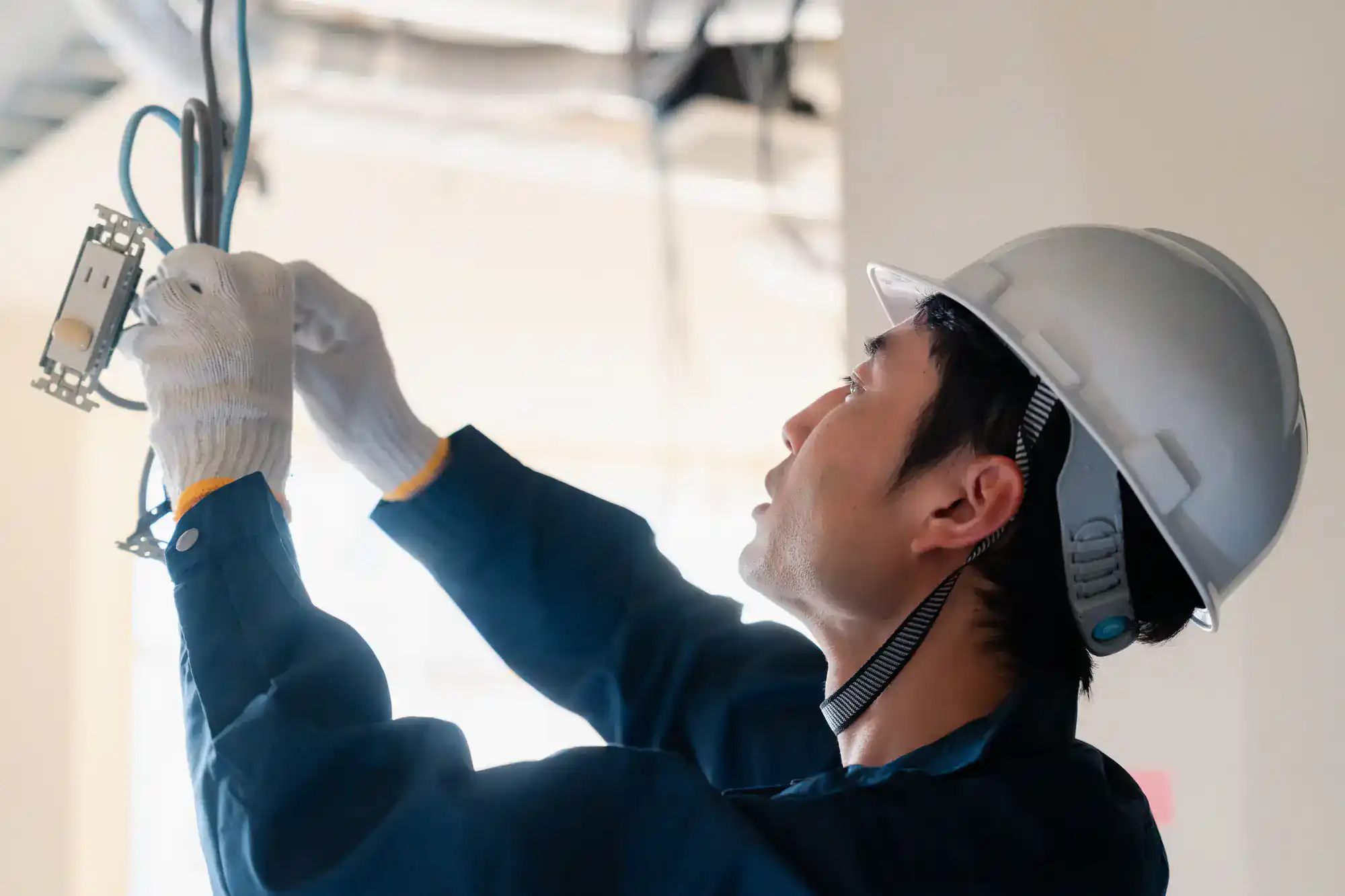
Hot Tub Electrician in Gresham, OR
Young Electric LLC is a family-owned, veteran-owned electrical company based in the Portland Metro area, serving Gresham and East Multnomah County. Jeremy Young is a second-generation electrician — he grew up in the trade — and that depth of experience shows in how we operate. You get a real person on the phone, a clear explanation of what the job involves, and no surprises after the estimate.
With over 40 years of combined experience and more than 1,400 verified Google reviews averaging 4.8 stars, our track record speaks for itself. We hold both a CCB license and a BCD electrical license — Oregon’s two-part licensing requirement — and have pulled over 3,200 building permits across the state. Every job we complete is done to code, inspected, and backed by a 5-year labor warranty that no competitor in the Gresham market comes close to matching.
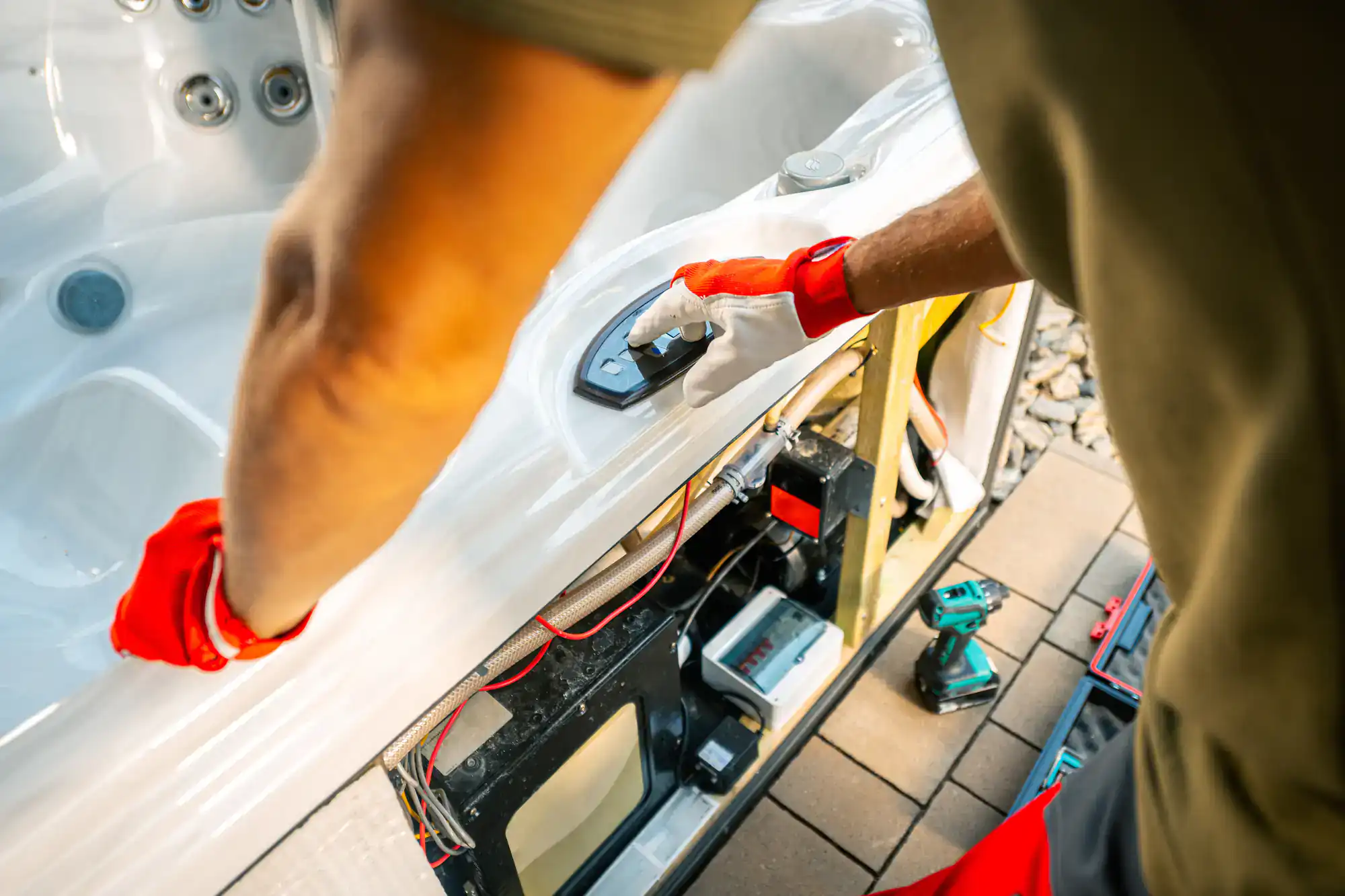
240V Hot Tub Wiring Process in Gresham
It starts with a free estimate. A licensed electrician comes out, looks at your existing electrical panel, and gives you a straight answer about what your home actually needs. For a lot of Gresham homes built in the 1960s and 1970s, that conversation includes panel capacity. If everything checks out, the job moves forward. If a subpanel or panel upgrade is needed, you’ll know the full scope before anything starts.
Once the plan is set, we begin the work. That means running a dedicated 240V circuit from your panel to the hot tub location, installing weatherproof conduit — often trenched underground for a clean, code-compliant run — and mounting an outdoor-rated disconnect box at the correct distance from the tub. Every hot tub installation we complete also includes a properly sized GFCI breaker and full equipotential bonding of all metal components, which is required under NEC Article 680 and is a step that unlicensed installers routinely skip.
Here in Gresham, the permit goes through the City of Gresham Building Division at 1333 NW Eastman Parkway. Under Oregon law, the licensed electrical contractor is responsible for pulling that permit — not the homeowner. We handle it. After the work is complete, a city inspector signs off, and you have a documented, inspected installation on record. That matters for your homeowner’s insurance and for resale down the road.

GFCI Breaker and Hot Tub Electrical Wiring Gresham
Every hot tub electrical installation we complete in Gresham covers the full scope — not just the wire run. That means a dedicated 240V circuit sized to your tub’s requirements, a Class A GFCI breaker installed at the panel, a weatherproof outdoor disconnect box placed within the code-required distance from the tub, and proper equipotential bonding of all metal fittings, pump housings, and water components. These aren’t add-ons — they’re required by the 2023 Oregon Electrical Specialty Code and NEC Article 680, and they’re what separates a safe installation from one that could fail inspection or create a hazard.
The panel assessment is also part of the process. Given that a large portion of Gresham’s established neighborhoods — Centennial, Powell Valley, Northwest Gresham — have homes built to older electrical standards, this step is genuinely important. If your panel can support the new circuit, great. If it can’t, you’ll know exactly what’s needed and why before the work starts.
For homeowners in newer construction areas like Pleasant Valley, where modern 200-amp panels are standard, the process is more straightforward — but the permit, inspection, and warranty apply the same way regardless of where in Gresham you live. Every completed installation is backed by our 5-year labor warranty.
Does my Gresham home's electrical panel need an upgrade for a hot tub?
It depends on your panel’s age, capacity, and what’s already running on it — and this is exactly the kind of question that deserves a real answer before any work starts. A lot of Gresham’s housing stock dates back to the 1960s and 1970s, when 100-amp service panels were standard. If your home is in an established neighborhood like Centennial, Kelly Creek, or Powell Valley and hasn’t had a panel upgrade in the last 20-30 years, there’s a real chance the panel is already running close to capacity.
A 240V hot tub circuit typically requires a dedicated 50-amp breaker. If your panel doesn’t have the available capacity or the physical space for that breaker, you’ll need either a subpanel added or a full service upgrade before the circuit can be safely installed. We evaluate all of this as part of the free estimate — so you get a clear picture of what your home actually needs before any commitment is made. No guesswork, no mid-job surprises.
Who is responsible for pulling the hot tub electrical permit in Gresham, OR?
In Gresham, the licensed electrical contractor is legally responsible for obtaining the electrical permit — not the homeowner. This is spelled out in Oregon law and confirmed by the City of Gresham’s own building permit FAQ. Electrical permits in Gresham are processed through the City of Gresham Building Division at 1333 NW Eastman Parkway, and the permit is non-transferable. If a contractor asks you to pull your own permit, that’s a red flag — it’s not how it’s supposed to work here.
We handle the permit as a standard part of every hot tub installation in Gresham. That includes submitting the application, scheduling the required inspection with the city, and ensuring the completed work is documented on record. That documentation matters more than most homeowners realize — it protects you if you ever file a homeowner’s insurance claim related to the electrical system, and it comes up during the sale of your home. An unpermitted installation creates real problems at resale.
What size breaker does a 240V hot tub require for proper installation?
Most full-size residential hot tubs run on a dedicated 240V circuit and require a 50-amp GFCI breaker, though some models call for 40 or 60 amps depending on the manufacturer’s specifications. The key word there is dedicated — the hot tub circuit cannot share a breaker with anything else in your home. That’s not a preference, it’s a code requirement under NEC Article 680, which governs all outdoor spa and hot tub electrical installations.
The GFCI breaker is also non-negotiable. A standard breaker protects equipment from overloads. A GFCI breaker protects people — it detects ground faults and cuts power within milliseconds. In a wet environment like a hot tub, that difference is the difference between a shock and something much worse. When we install your hot tub circuit in Gresham, the correct GFCI breaker size is matched to your specific tub’s requirements, not just a generic assumption.
How long does hot tub electrical installation typically take in Gresham?
For a straightforward installation where the panel has available capacity and the run from the panel to the hot tub location is reasonable, most jobs take somewhere in the range of four to eight hours. That’s the wiring, conduit, disconnect box, GFCI breaker, and bonding — all in one visit. If the work is being done during Gresham’s drier summer months, outdoor trenching for underground conduit goes faster and cleaner than it would in the middle of a wet November.
Where the timeline can extend is when a subpanel or panel upgrade is needed first — that adds scope and may require a separate visit or a longer day. The permit and inspection process through the City of Gresham Building Division also adds a step after the installation is complete, though we coordinate the inspection scheduling directly. Most homeowners in Gresham are back to normal within a day or two of the initial installation, with the inspection typically following shortly after.
Does improper hot tub wiring actually void the manufacturer's warranty?
Yes — most hot tub manufacturers require that the electrical installation be performed by a licensed professional, and they spell this out in the warranty documentation. If the wiring is done by an unlicensed contractor, a handyman, or a homeowner without the proper permits, the manufacturer’s warranty on the tub itself can be voided. That’s a significant exposure when you’ve spent several thousand dollars on the equipment.
Beyond the warranty, there’s the insurance angle. Homeowner’s insurance policies typically require that electrical work be permitted and inspected. If an unpermitted hot tub installation is tied to a claim — a fire, a flood, an injury — the insurer has grounds to deny coverage. In Gresham, where the city’s building division requires permits for this type of work and the inspection creates a documented record, skipping that step isn’t just a code violation — it’s a financial risk. A properly installed, permitted, and inspected hot tub circuit protects the equipment investment and the home.
Why does Young Electric LLC offer a 5-year labor warranty when others don't?
The 5-year labor warranty is a direct reflection of how we do the work. When every installation is permitted, inspected, and built to the 2023 Oregon Electrical Specialty Code — with the right wire gauge, the right GFCI protection, proper bonding, and weatherproof components rated for outdoor use — standing behind it for five years isn’t a stretch. It’s what happens when the job is done correctly the first time.
For Gresham homeowners, this warranty carries real weight. You’re investing in an amenity you’ll use heavily — not just in July, but through the grey, wet months from October through April when Gresham’s climate makes a hot tub genuinely practical. The last thing you want is an electrical issue two years in with no recourse. No other electrician serving the Gresham market advertises a labor warranty of this length. It’s not a promotional add-on — it’s the standard we hold ourselves to on every job, in every neighborhood, regardless of the size of the project.
Useful Links