
Hot Tub Electrical Installation in Damascus, OR
Acreage Properties, Aging Panels, and the Right Electrician for the Job
Hear from Our Customers
Hot Tub Wiring Damascus, OR
Damascus gets between 52 and 61 inches of rain a year, with temperatures dropping below 50 degrees for more than 200 days. That’s not a climate where a hot tub sits idle for half the year—it’s exactly the kind of place where a well-installed tub earns its keep every single month. Getting the electrical done right, and done before fall, means you’re actually using what you paid for.
The bigger challenge for Damascus homeowners is what happens between the panel and the tub. On a half-acre lot or a 3-acre property, that distance can be significant. A long conduit run on a large Damascus property requires careful wire sizing to prevent voltage drop and avoid fire risk down the road—this isn’t the same job as wiring a tub on a 6,000 square foot suburban lot. The electrician you hire needs to understand rural property installs, not just standard tract home work.
Once the job is done correctly—permitted, inspected, and backed by a 5-year labor warranty—you’re not thinking about the wiring anymore. You’re just using the tub.

Ready to get started?

Hot Tub Electrician in Damascus, Oregon
Young Electric LLC is a second-generation, family-owned electrical company based in Portland and serving the greater Portland Metro area, including Damascus and the broader Clackamas County region. Owner Jeremy Young is a military veteran who grew up in the trade—this isn’t a company that started last year and figured it out along the way. The knowledge behind every installation goes back decades.
With over 40 years of combined experience and more than 3,200 building permits pulled across Oregon, the track record is concrete and verifiable. We hold both an active CCB license and a BCD electrical license—Oregon’s two-part licensing requirement—and every job is permitted and inspected. For Damascus homeowners dealing with Clackamas County’s Building Codes division and the Development Direct permit portal, that familiarity with the county process matters.
Our 4.8-star rating across more than 1,400 Google reviews didn’t come from a handful of easy jobs. It came from doing the work right, explaining it clearly, and answering the phone when people call.

240V Hot Tub Wiring Process Damascus
It starts with a free estimate—and for Damascus properties, that estimate does more than just quote a price. We evaluate your existing electrical panel to confirm it can support a 240V, 50-amp hot tub circuit before anything else happens. On older Damascus homes—particularly the 1960s and 1970s ranch-style properties along the OR-212 corridor that were built with 100-amp service—this panel assessment is the step that prevents a bad surprise after the tub is already sitting on your patio. If an upgrade is needed, you’ll know upfront.
Once the panel is confirmed, the work involves running a dedicated 240V circuit with properly sized wire through weatherproof conduit—buried underground on most Damascus properties given the lot sizes involved. A Class A GFCI breaker is installed at the panel, and a weatherproof disconnect box is mounted between 5 and 15 feet from the tub, within line of sight. All metal components connected to the water system are bonded together as required by NEC Article 680—a step that protects people from shock in a wet environment and one that unlicensed contractors routinely skip.
Because Damascus is unincorporated Clackamas County, the electrical permit comes from the county’s Building Codes division—not a city building department. We handle the permit application through Clackamas County’s Development Direct system and schedule the inspection. You don’t have to navigate county government on top of everything else. When the inspector signs off, the job is done.
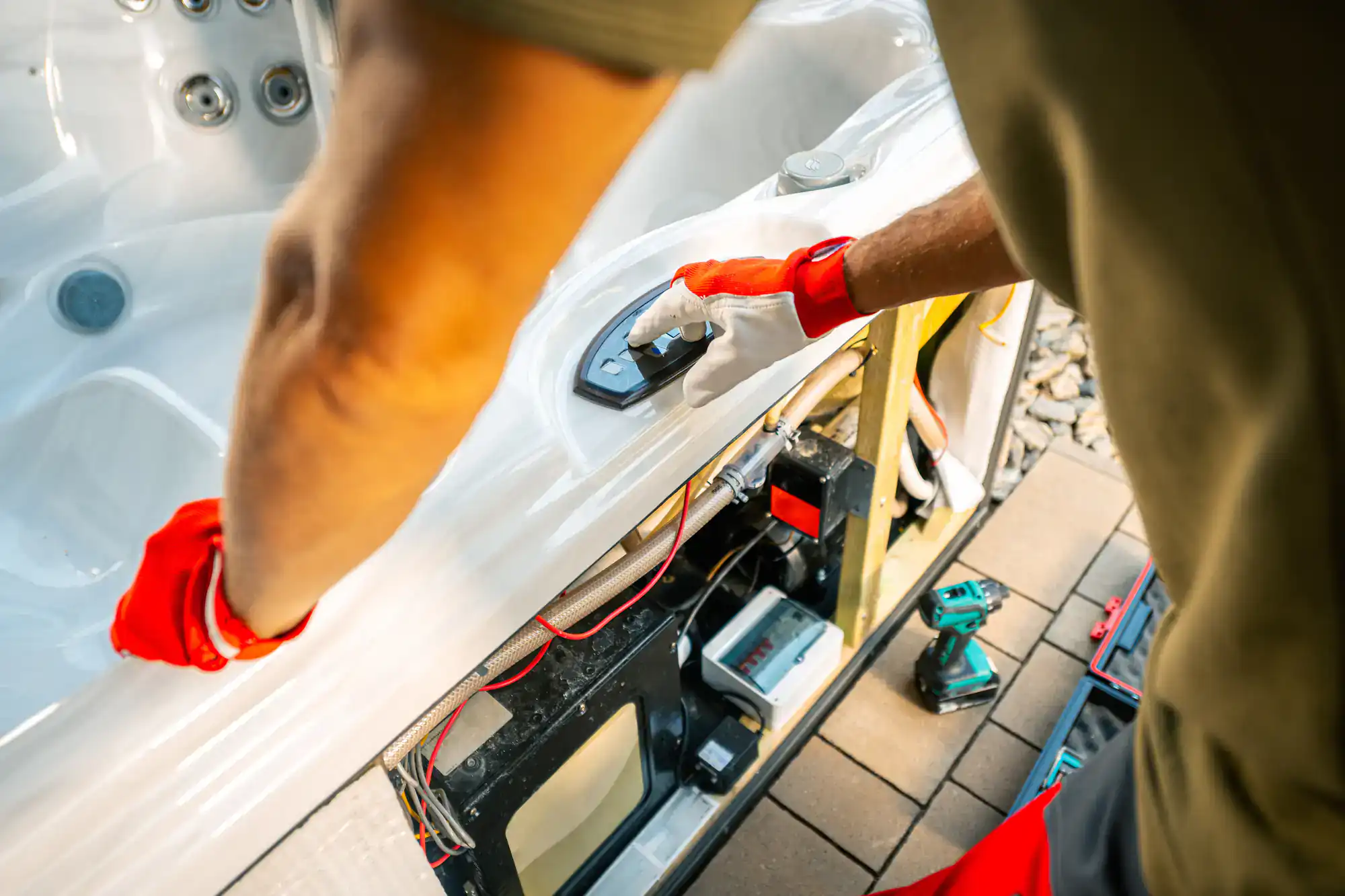
GFCI Breaker and Hot Tub Electrical Wiring Damascus
Hot tub electrical installation in Damascus covers the full scope—dedicated 240V circuit, properly sized wire for the run distance on your property, weatherproof buried conduit, Class A GFCI breaker, outdoor-rated disconnect box, and equipotential bonding of all metal components. Every installation is done to Oregon Electrical Specialty Code standards, which were updated in October 2023, and every job is permitted and inspected through Clackamas County.
For Damascus homeowners on well and septic—which describes a meaningful portion of properties here—the panel assessment is especially important. A well pump draws significant amperage, and a panel that’s already managing a well, outbuildings, and modern appliances may not have the headroom for a 50-amp hot tub circuit without an upgrade. That gets evaluated during the free estimate so you have a clear picture before committing.
We back every hot tub installation with a 5-year labor warranty. If something goes wrong with the wiring work in the first five years, it’s covered. On a Damascus property where the conduit is buried under landscaping and the disconnect is mounted on an outbuilding wall, that warranty isn’t a formality—it’s a real commitment.
Who issues electrical permits for hot tub wiring in Damascus, Oregon?
Because Damascus is an unincorporated community in Clackamas County—not an incorporated city—there’s no local city building department. All electrical permits for work in Damascus are issued through Clackamas County’s Building Codes division, located in Oregon City. As of April 2026, all licensed contractor permit applications must be submitted online through the county’s Development Direct portal—paper applications are no longer accepted.
This is one of the places where working with an electrician who knows the county process makes a real difference. We handle the permit application and inspection scheduling for you. The county requires both an active CCB license and a BCD electrical license to be on file before a permit is issued—and both are verified at the time of application. When the inspection is scheduled and passed, you have documented proof that the work was done to code, which matters for your homeowner’s insurance and down the road if you ever sell the property.
What size breaker does a 240V hot tub need, and do I need a dedicated circuit?
Most full-feature 240V hot tubs require a 50-amp dedicated circuit with a Class A GFCI breaker. The dedicated circuit part is not optional—nothing else can share that breaker. Your refrigerator, your outdoor lighting, your garage outlets—none of it can be on the same circuit as the tub. This is a requirement under NEC Article 680, which governs all hot tub electrical installations in the US.
The GFCI breaker specifically is what protects people, not just equipment. A standard breaker trips when there’s an overload to protect the wiring. A Class A GFCI breaker detects ground faults—small amounts of current leaking where they shouldn’t—and cuts power within milliseconds. In a wet environment like a hot tub, that response time is the difference between a shock and something far worse. Oregon’s electrical code requires it, and we install it on every hot tub job as a matter of course, not as an add-on.
My Damascus home was built in the 1970s—can my panel handle a hot tub?
This is one of the most common questions from Damascus homeowners, and it’s the right one to ask before you schedule delivery. A lot of Damascus homes—particularly along the OR-212 corridor and in the older Damascus Heights sections—were built with 100-amp service panels. That was standard at the time, but it wasn’t designed with a 240V, 50-amp hot tub in mind. If your panel is already managing a well pump, a heating system, modern appliances, and any outbuildings, it may not have the available capacity without an upgrade.
The only way to know for sure is to have a licensed electrician assess the panel before the job starts. We include this evaluation as part of the free estimate. If your panel has room, the hot tub circuit gets added without any additional work. If it doesn’t, you’ll get a clear explanation of what an upgrade involves and what it costs—before you’ve committed to anything. No surprises after the tub is already on your patio.
Does improper hot tub wiring affect my homeowner's insurance or warranty?
Yes, and this is something most homeowners don’t find out until it’s too late. Most hot tub manufacturers void the product warranty if the electrical installation wasn’t performed by a licensed professional. If something fails with the tub and the manufacturer finds out the wiring wasn’t done by a licensed electrician—or wasn’t permitted and inspected—the warranty claim gets denied.
On the insurance side, an unpermitted electrical installation can create serious problems if you ever file a claim related to that work. Homeowner’s insurance policies typically require that work be done to code and properly permitted. If a fire or electrical incident is traced back to unpermitted hot tub wiring, the insurer has grounds to deny the claim. When you eventually sell your Damascus property, unpermitted work can surface during the buyer’s inspection and complicate or kill the transaction. Getting the permit and inspection done through Clackamas County isn’t just a legal formality—it’s what keeps your coverage intact and your property’s value protected.
How far does the disconnect box need to be from the hot tub?
NEC Article 680 requires the disconnect box—sometimes called a spa panel or emergency shutoff—to be placed no closer than 5 feet and no further than 15 feet from the hot tub, within line of sight and readily accessible. It must be outdoor-rated and weatherproof. In Oregon’s climate, and particularly in Damascus where annual rainfall runs 52 to 61 inches, the weatherproof rating on that box matters year-round, not just in winter.
The placement also has to be practical. On a larger Damascus property where the tub is on a back deck or patio away from the house, the disconnect location needs to be planned as part of the overall conduit run—not figured out on the day of installation. We map this out during the estimate so the disconnect ends up in a location that meets code, makes sense for how you use the space, and doesn’t require you to walk across a wet yard to reach it in an emergency.
Can a handyman or the hot tub dealer's electrician do the wiring in Damascus?
Oregon law requires a licensed electrician—holding both a CCB license and a BCD electrical license—to perform 240V hot tub wiring. A handyman who doesn’t hold both credentials cannot legally do this work, and the permit will not be issued for work performed by an unlicensed contractor. This applies in Damascus the same as anywhere else in Oregon, and Clackamas County verifies licensing at the time of permit application.
The hot tub dealer’s electrician scenario is worth thinking through carefully. Dealers sometimes refer buyers to low-cost installers who may quote a price that skips the permit or cuts corners on bonding and grounding—the steps that protect people from shock in a wet environment. If that work fails a Clackamas County inspection, or if something goes wrong and the manufacturer finds out the installation wasn’t code-compliant, the costs add up fast. The upfront savings disappear quickly when you’re paying to have work torn out and redone correctly. Hiring a licensed electrician who pulls the permit and passes inspection the first time is the straightforward path—and the one that keeps your warranty, your insurance, and your family’s safety intact.
Useful Links