
Electrical Inspection in Wood Village, OR
Wood Village Homes Built in the 1950s70s Need a Real Electrical Inspection

Hear from Our Customers
Home Electrical Inspection in Wood Village
Wood Village was built as a company town in the 1950s and 1960s, and the bulk of its housing stock went up in a concentrated window — the 1950s through the 1970s. That era of construction came with 60-amp and 100-amp panels, wiring that was never designed for modern electrical loads, and in many cases, aluminum branch circuit wiring installed during the copper shortage of the late 1960s and early 1970s.
Aluminum wiring is a known fire risk when connections loosen over decades of expansion and contraction. Most owners living in these homes have no idea what’s running through their walls.
A residential electrical inspection in Wood Village gives you a clear, documented picture of what your system actually looks like today — not what it looked like when the home was built, and not what a general home inspector noted on a surface-level walkthrough. You find out what’s working, what’s aging, and what needs attention before it becomes a real problem.
Wood Village also sits at the entrance to the Columbia River Gorge, directly in the path of the atmospheric rivers and ice storms that move through that corridor every winter. Fifty Oregon winters take a toll on weatherhead connections, outdoor outlets, and the cloth-wrapped wiring that runs through crawl spaces in older homes. An electrical inspection catches that kind of wear before it becomes a fire hazard.

Ready to get started?

Electrical Inspection Services in Wood Village, OR
We’ve been doing electrical work in the Portland Metro area since 1974. That means we’ve been working on homes from exactly the era that makes up most of Wood Village’s housing stock — the 1950s, 1960s, and 1970s builds that were put up quickly, wired for a simpler time, and have been carrying more electrical load every decade since.
When our technician opens your panel or checks your crawl space in Wood Village, they know what they’re looking at because they’ve seen it hundreds of times before in homes just like yours across Multnomah County.
Jeremy Young is a second-generation electrician and military veteran who built this company on straightforward values — do the work right, be honest about what you find, and don’t pressure people into repairs they don’t need. That’s reflected in more than 1,400 Google reviews averaging 4.8 stars from homeowners across the Portland Metro.
We hold certification from the International Association of Electrical Inspectors — the professional organization specifically focused on electrical inspection standards — along with IEC certification and Tesla Certified Electrical Contractor status. These aren’t decorative credentials. They directly affect the quality and depth of what you get from an inspection.

Residential Electrical Inspection Process in Wood Village
It starts with a free estimate. You describe your home — its age, any symptoms you’ve noticed, what’s changed recently — and we give you a clear picture of what the inspection involves and what it costs before anyone shows up at your door. For a Wood Village home built in the 1970s, that conversation often includes questions about the panel size, whether any wiring has been updated, and whether you’ve recently added high-draw equipment like an EV charger or hot tub.
On inspection day, we work through your home systematically — the electrical panel, all circuits, outlets, switches, and breakers, plus the areas most homeowners never think about: the attic, the crawl space, and exterior connections. In older Wood Village homes, those crawl spaces and attics are often where the real story is. Aging insulation on older wire, unprotected junction boxes, and outdated wiring configurations are common findings in homes from this era, and they’re rarely visible from the living space.
At the end of the inspection, you receive a full written report. It covers everything found, any deficiencies, and clear recommendations on what needs attention and what can wait. That report is yours to keep — useful for an insurance renewal, a renovation plan, or a real estate transaction.
Oregon law requires that all electrical work be performed by a licensed contractor who pulls the appropriate permits, and we handle that process completely. If the inspection turns up issues that need repair, the same team that found them can fix them — no starting over with a new contractor, no re-explaining the problem.
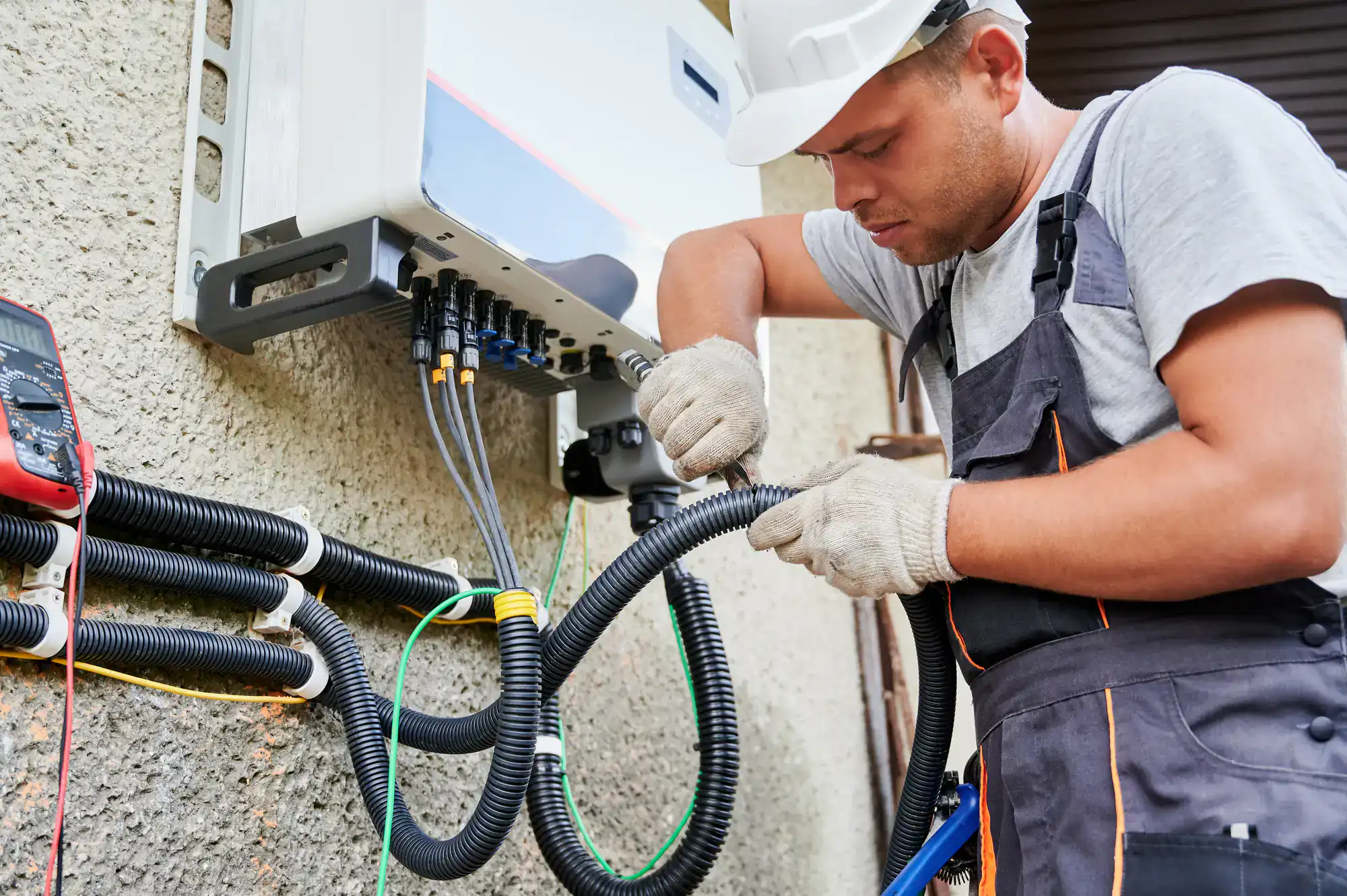
Electrical Wiring Inspection in Wood Village, OR
The electrical system inspection covers every part of your home’s electrical system that can be accessed and tested — not just the visible stuff. That means the panel, all breakers, every circuit, outlets and switches throughout the home, GFCI and AFCI protection, grounding, surge protection, smoke and carbon monoxide detector integration, and the meter connection.
It also means the attic and crawl space, which in a Wood Village home built in the 1960s or 1970s can contain decades-old wiring running without conduit, original cloth-wrapped insulation that has become brittle, or connections that were never brought up to code during subsequent renovations.
The electrical code inspection component matters here specifically because Wood Village follows Oregon’s 2023 Electrical Specialty Code, based on the National Electrical Code 2023. Homes built 40 to 70 years ago were permitted under entirely different standards. An inspection identifies where your home stands against current code — not to generate a repair bill, but to give you an accurate picture of what’s a genuine safety concern versus what’s simply older construction that’s still functioning safely.
After the inspection, you get a written report with every finding documented. If you’re a Wood Village homeowner who bought an older home and never had a licensed electrician walk through it, or if you’ve recently added an EV charger or other high-draw equipment to a home with an original panel, this is the service that tells you what you actually have. We offer free electrical estimates, so the first conversation costs you nothing.
How do I know if my older Wood Village home needs an electrical inspection?
If your home was built before 1980 — which describes the majority of Wood Village’s housing stock — it’s worth scheduling an inspection regardless of whether anything seems wrong. Homes from the 1950s through the 1970s were wired for a fraction of the electrical load that modern households put on a system. The panels installed in that era were typically 60-amp or 100-amp service, and many of those homes have never had a licensed electrician assess whether the system can safely handle what’s plugged into it today.
Beyond age, there are specific warning signs that mean you shouldn’t wait: breakers that trip frequently, outlets that feel warm to the touch, flickering lights, a burning or plastic smell you can’t locate, or buzzing sounds from the panel or outlets. Any of these symptoms in a 1970s Wood Village home should be treated as a signal that something needs a closer look. A licensed electrical inspection is how you find out whether it’s a minor issue or something that needs immediate attention — and the written report you receive afterward gives you a documented record of what was found.
What's the difference between a home inspector's electrical check and a licensed electrician's inspection?
A general home inspector performs a visual, surface-level review of accessible electrical components. They’re trained to flag obvious concerns — exposed wiring, missing outlet covers, a panel that looks outdated — but they don’t test circuits, verify code compliance, assess GFCI and AFCI protection, or go deep into crawl spaces and attics the way a licensed electrician does. Their report tells you something might be worth looking at. A licensed electrician’s inspection tells you exactly what’s happening and why.
For Wood Village homeowners, this distinction matters a lot. Many of the real electrical risks in older homes are not visible from the living space. Wiring conditions in the crawl space, the condition of insulation on older wire, the actual capacity of your panel relative to your current load — none of that shows up in a home inspector’s walkthrough. Our inspection includes the attic, crawl space, and all living spaces, along with a full written report at the end. If a home inspector flagged something electrical in your report and told you to have it looked at by a licensed electrician, this is that next step.
Does the wet Oregon climate affect my home's electrical system over time?
Yes, and it’s one of the more overlooked factors in older Portland Metro homes. Wood Village sits at the entrance to the Columbia River Gorge, which channels the atmospheric rivers and ice storms that move through the region every winter. Over decades, that moisture works into places homeowners rarely see — weatherhead connections where the utility line meets the house, outdoor outlets and junction boxes, and crawl spaces where older wiring runs without the protection of conduit.
In homes built in the 1960s and 1970s, the wiring insulation is often cloth-wrapped or rubber-insulated — materials that degrade when exposed to moisture over time. Once that insulation breaks down, the risk of a short or a fire increases significantly. An electrical safety inspection checks all of these areas specifically. If your home has gone through 40 or 50 Oregon winters without a licensed electrician looking at the crawl space wiring, the weatherhead connection, or the outdoor electrical components, that’s exactly what the inspection is designed to catch.
What happens after the inspection if problems are found in my home?
You get the written report first — a full document covering every finding, any deficiencies, and clear recommendations on what needs to be addressed and what can wait. Nothing is communicated as vague concern. The report tells you specifically what was found, where it is, and what the recommended next step is. You’re not pressured into anything on the spot.
If you decide to move forward with repairs, we can handle the follow-up work directly. Under Oregon law, all electrical work requires a licensed contractor who obtains the appropriate permits — and we manage that process from start to finish. The advantage of using the same company for both the inspection and the repair is straightforward: we already know your home, we’ve documented the issue, and there’s no gap in accountability between who found the problem and who fixed it. For Wood Village homeowners dealing with older wiring or an undersized panel, having one licensed team handle the full scope of work makes the process significantly simpler.
I just added an EV charger to my Wood Village home — do I need an electrical inspection?
Adding an EV charger to an older home is one of the most common triggers for an electrical system inspection, and for good reason. A Level 2 EV charger draws 30 to 50 amps continuously — a load that many original panels in Wood Village homes were never designed to handle. If your home has a 100-amp panel that’s already running a full modern household, adding an EV charger without assessing the panel’s actual capacity is a real risk.
An electrical inspection in this scenario does two things. First, it tells you whether your current panel can safely support the new load. Second, it documents the condition of the rest of your electrical system — so if the panel needs to be upgraded to accommodate the charger, you know exactly what you’re working with before the upgrade begins. We’re a Tesla Certified Electrical Contractor, which means EV charger installations are a regular part of what we do. If your inspection reveals that a panel upgrade is needed before the charger can operate safely, we can handle that work under the same licensing and permitting process.
Does Young Electric LLC serve Wood Village, and how far out do you travel?
Yes, Wood Village falls squarely within our Portland Metro service area. We’re headquartered in Beaverton and serve the broader Portland Metro region, which includes Wood Village, Fairview, Troutdale, and the surrounding East Multnomah County communities. Distance is not a barrier to scheduling — we regularly work throughout the metro area and are familiar with the housing stock and local conditions specific to this part of Multnomah County.
Wood Village is a compact city — just under one square mile — and its housing is concentrated along NE Halsey Street, 238th Drive, and Arata Road. We can reach any part of the city quickly, and scheduling is straightforward. You can call or email to set up a free estimate, describe your home and what you’re looking for, and get a clear answer on timing and cost before committing to anything. We’ve been serving the Portland Metro since 1974, and East Multnomah County communities like Wood Village are a regular part of that territory — not an outlier or an exception.
Useful Links