
Electrical Inspection in Sunriver, OR
When Your Sunriver Property Has Been Carrying Guests for Decades, the Wiring Deserves a Hard Look

Hear from Our Customers
Home Electrical Inspection in Sunriver
Most Sunriver properties were built between the late 1960s and the 1990s. That means the wiring in a lot of these homes is 40 to 55 years old—designed for a fraction of the electrical load that a modern vacation rental puts through it every summer. Hot tubs, EV chargers, air conditioning, multiple entertainment systems running at once. That’s not what the original panel was built for.
A residential electrical inspection gives you a clear, documented picture of whether your Sunriver system is keeping up or quietly falling behind. For owners managing their property from Portland or elsewhere in the Willamette Valley, that picture matters more than most people realize. You’re not there between guest stays. You can’t see the tripped breaker that reset itself, or the outlet that’s been running warm.
A thorough electrical safety inspection—covering the panel, the attic, the crawl space, and every living space—catches what you can’t see from a distance and gives you something concrete to act on. And if you’re buying a property in Sunriver, whether it’s a cabin near the Deschutes or a condo closer to the golf courses, an electrical wiring inspection is one of the most useful things you can do before you close. Sunriver’s housing stock has history. Knowing what’s inside the walls before you own them is just smart due diligence.

Ready to get started?

Electrical Inspection Services in Sunriver, OR
We’ve been doing electrical work since 1974. That’s not a marketing number—it means our team has worked on homes from every era of Sunriver’s development, from the earliest builds on the old Camp Abbot grounds through the construction that filled in the community over the following decades. That kind of history in Central Oregon homes gives us a different level of familiarity with what’s actually inside these walls.
We have a local Sunriver address and an active service history throughout this community—including dedicated work in neighborhoods like Caldera Springs and the broader Three Rivers South area. This isn’t a Portland contractor making a long drive to pick up a job. We’re already here, already familiar with the housing stock, and already working in properties like yours.
We’re veteran-owned, family-run, licensed and bonded under Oregon’s Building Codes Division, and hold certification from the International Association of Electrical Inspectors—the organization specifically focused on electrical inspection standards. That credential isn’t common among local electricians, and it’s directly relevant when you’re trusting someone to assess your home’s system.
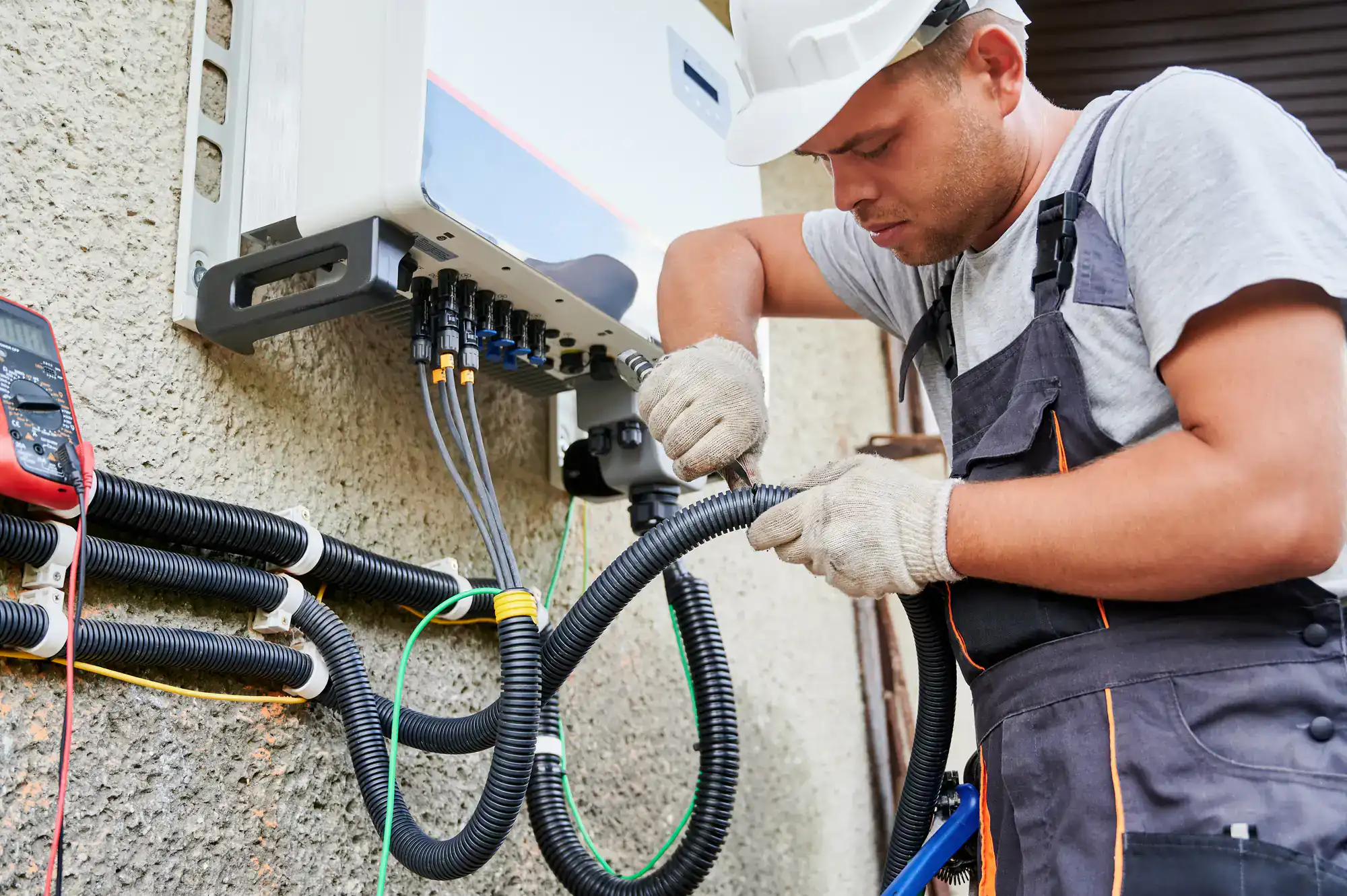
Residential Electrical Inspection Process in Sunriver
It starts with a free estimate. You describe the property—its age, whether it’s a primary residence or a vacation rental, whether you’ve had any recent work done or noticed anything unusual—and we give you a straight answer on what the inspection will involve and what to expect.
On inspection day, one of our licensed electricians goes through the full property. That means the electrical panel, every circuit, the outlets and switches throughout the living spaces, and—critically—the attic and crawl space. In Sunriver homes, those spaces are where original wiring from the 1970s often runs without ever having been professionally evaluated.
At 4,170 feet elevation, with winters that regularly push temperatures into the single digits and annual snowfall averaging close to 50 inches, the freeze-thaw cycling that happens every year puts real mechanical stress on wiring, conduit, and connections over time. The inspection checks for the kind of wear that doesn’t show up on the surface.
Because Sunriver is unincorporated Deschutes County, all electrical work falls under Oregon state codes and requires permits pulled through the county—not a city building department. We handle that process directly. At the end of the inspection, you receive a full written report covering everything found, any deficiencies identified, and clear recommendations. That report is yours to keep—for your insurance records, your property manager’s files, or your own reference if repairs are needed down the line.

Electrical System Inspection in Sunriver, OR
A residential electrical inspection from Young Electric LLC is a technical assessment, not a quick walkthrough. The panel gets checked for capacity, condition, and code compliance under Oregon’s 2023 Electrical Specialty Code—which matters in a community where a lot of panels were sized for 1970s electrical loads and have been running vacation rental demand ever since.
Breakers, grounding, GFCI and AFCI protection, and circuit integrity are all part of the evaluation. Outlets, switches, and wiring throughout the living spaces are tested and inspected. The attic and crawl space are included—not skipped. For older Sunriver properties, those spaces sometimes contain original wiring from the home’s first decade that has never been touched since installation.
The inspection also covers outdoor electrical components, which in Sunriver’s climate take more wear than most homeowners account for. If you own a property with a hot tub—a common feature in this community’s vacation rental market—the electrical connections and GFCI protection for that circuit are part of the assessment. Same goes for any EV charging equipment already installed on the property.
The goal is a complete electrical code inspection that accounts for how your specific Sunriver property is actually being used, not a generic checklist that misses what matters most in a resort community like this one. If the inspection turns up anything that needs attention, we can handle the repair work directly—same team, same accountability, no starting over with someone new.
Do I need an electrical inspection for my Sunriver vacation rental property?
There’s no Oregon law that mandates a periodic electrical inspection specifically for vacation rentals, but there are good practical reasons to have one. Deschutes County requires short-term rental registration and compliance with county regulations, and insurance companies are increasingly asking for documentation on older properties—especially those used as rentals.
If your Sunriver home was built in the 1970s or 1980s and has been running heavy guest use for years, your insurer may want evidence that the electrical system has been evaluated. Beyond the compliance angle, the liability exposure is real. A fire or electrical injury in a rental property creates a very different situation than one in a primary residence.
A professional electrical inspection gives you a written record showing that you took the system seriously, had it evaluated by a licensed electrician, and addressed anything that needed attention. That documentation is worth having before you ever need it.
How often should a home electrical inspection be done on an older property?
The general industry recommendation is every three to five years for most homes. For homes that are 40 years old or more, more frequent inspections make sense—and a lot of Sunriver’s housing stock falls into that category. If your property was built in the 1970s and hasn’t had a formal electrical inspection in years, that’s already a gap worth closing.
Vacation rental use accelerates the wear on electrical systems. A home that cycles through dozens of guest parties in a single summer season is putting far more load on its wiring and panel than a comparable home with a single family living in it. That kind of use warrants more regular evaluation, not less.
If you’ve also added anything to the property in recent years—a hot tub, an EV charger, a new HVAC system—those additions are additional reasons to have the whole system looked at by a licensed electrician.
What does a home electrical inspection actually include—what will the electrician check?
A thorough residential electrical inspection covers the electrical panel first—its capacity, the condition of the breakers, whether it’s properly grounded, and whether it’s operating within the requirements of Oregon’s current electrical code. From there, the inspection moves through the living spaces, testing outlets and switches, checking GFCI protection in kitchens, bathrooms, and outdoor areas, and verifying AFCI protection on bedroom circuits.
What separates a real electrical inspection from a surface-level walkthrough is what happens in the spaces most people never look at. The attic and crawl space are included in a complete inspection—and in Sunriver homes, those are often the places where original wiring from the 1960s or 1970s runs without ever having been professionally evaluated.
The inspection also covers outdoor electrical components, which in Sunriver’s high-desert climate take meaningful wear from temperature swings and freeze-thaw cycling over the years. At the end, you receive a full written report with findings and recommendations—not just a verbal summary.
What's the difference between a home inspector's electrical check and a licensed electrician's inspection?
A general home inspector performs a visual, surface-level review of the electrical system as part of a broader property evaluation. They’re looking for obvious red flags—a panel that’s clearly outdated, outlets that are visibly damaged, missing covers. They are not licensed to test circuits, evaluate code compliance in technical detail, or provide a comprehensive assessment of the system’s capacity and condition.
A licensed electrician performing a dedicated electrical inspection goes significantly deeper. Circuit testing, load assessment, GFCI and AFCI verification, panel capacity evaluation, and a full check of the attic and crawl space wiring are all part of what a real electrical inspection covers.
In Sunriver, where many homes are 40 to 55 years old and have been under heavy vacation rental use, that deeper level of evaluation is exactly what you need. A home inspector can tell you something looks off. A licensed electrician can tell you what it is, why it matters, and what it takes to fix it.
Can the same company do the inspection and handle any repairs that come up in Sunriver?
Yes, and that’s one of the more practical advantages of working with Young Electric LLC for your electrical inspection in Sunriver. If the inspection turns up issues—an undersized panel, a failed GFCI, wiring in the crawl space that needs remediation—you don’t have to start the contractor search over again.
The same team that did the inspection handles the repair work, which means no re-explaining the situation to someone new and no gap between what was found and what gets fixed. For property owners managing a Sunriver home from Portland or elsewhere, this matters even more. Coordinating multiple contractors from a distance is a headache.
Having one licensed, accountable team that can assess the system and address what they find—with a written report documenting both—simplifies the process considerably. We also back our installation work with a five-year labor warranty, so if something is repaired or installed as part of a follow-up job, you have documented coverage on that work.
Does Sunriver's elevation and winter climate affect how electrical systems age in these homes?
It does, and it’s something that doesn’t get talked about enough. Sunriver sits at 4,170 feet in the high desert of Central Oregon, with winter temperatures that regularly drop into the single digits and annual snowfall that averages close to 50 inches. The temperature range from a cold January night to a hot July afternoon can span more than 70 degrees.
Over decades, that kind of thermal cycling puts real mechanical stress on wiring, conduit, panel enclosures, and outdoor electrical components. Connections loosen slightly with repeated expansion and contraction, insulation becomes more brittle over time, and outdoor components that were installed in the 1970s or 1980s have been through 40 or 50 Sunriver winters without necessarily being inspected.
None of this is visible from the outside. It doesn’t announce itself until something fails. A licensed electrical inspection that includes the attic, crawl space, and outdoor components is the only reliable way to assess what that kind of long-term climate exposure has actually done to the system inside your home.
Useful Links