
Hot Tub Electrical Installation in Forest Grove, OR
Forest Grove Homes Deserve Wiring That Holds Up for Years
Hear from Our Customers
Hot Tub Wiring Forest Grove, OR
Forest Grove gets around 44 inches of rain a year. That’s not a reason to skip the hot tub — it’s the reason a hot tub makes so much sense here. When it’s cold, wet, and dark from November through March, a properly wired hot tub in your backyard is one of the better decisions you’ll make as a homeowner. But “properly wired” is doing a lot of work in that sentence.
The homes closest to Pacific University and downtown Forest Grove are some of the oldest in Washington County. A lot of them are still running on 100-amp panels — or less. A 240V hot tub circuit is one of the highest loads you can add to a residential panel, and if yours isn’t up to it, you’ll find out at the worst possible time. Getting an honest panel assessment before anything else starts is how you avoid that situation.
When the electrical work is done right — permitted, inspected, and backed by a 5-year labor warranty — your hot tub runs reliably whether you’re firing it up on a rainy Tuesday in January or a mild evening in September. That’s the outcome that matters: a tub that works when you want it, without surprises.

Ready to get started?

Hot Tub Electrician Forest Grove, OR
We’re a second-generation, family-owned electrical company serving Forest Grove, the Portland Metro area, and Washington County communities along the OR 8 corridor. Jeremy Young grew up in the trade, and we’ve been building our reputation on straightforward work and honest communication for over 40 years.
This isn’t a national franchise running a geo-targeted page. We answer the phone directly, show up on time, and give you a clear picture of what the job involves before any work starts. With a 4.8-star rating from more than 1,400 Google reviews and a BuildZoom score that places us in the top 1% of all Oregon contractors, the track record is easy to verify.
We hold both an Oregon CCB license and a BCD electrical license — the two credentials the state requires. Every hot tub installation we complete is permitted, inspected, and backed by a 5-year labor warranty. That’s not standard in this industry. We do it because it’s the right way to work.
240V Hot Tub Wiring Forest Grove Process
It starts with a free estimate. Before any pricing is discussed, a licensed electrician from our team comes out to assess your panel, evaluate the installation location, and measure the run from your panel to where the tub is going. In Forest Grove, this step is especially important for homes in the older neighborhoods near downtown — a lot of those panels weren’t built with a 240V hot tub circuit in mind, and knowing that upfront changes the scope and the quote.
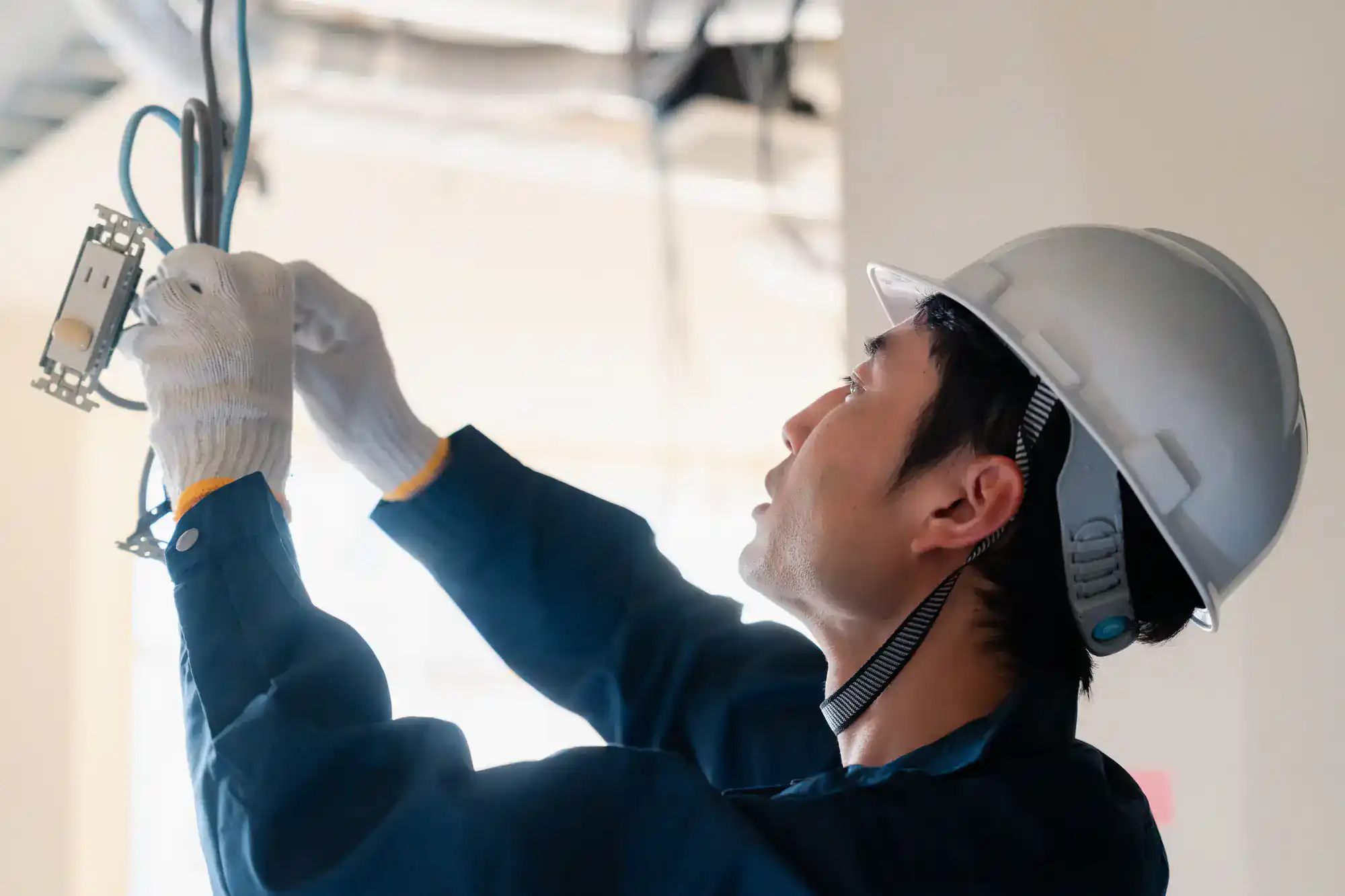
From there, the work follows a clear sequence. We run a dedicated 240V circuit from your panel to the hot tub location — typically using 6 AWG copper wire through weatherproof conduit, buried underground where needed to keep the installation clean and code-compliant. A properly sized GFCI breaker is installed at the panel, and a weatherproof disconnect box is placed at the correct distance from the tub — close enough to reach in an emergency, far enough to meet NEC Article 680 requirements.
Because Forest Grove is served by its own municipal utility — Forest Grove Light and Power, not PGE — any coordination with the utility for a new high-load circuit is handled as part of the process. We pull an electrical permit through Oregon’s Building Codes Division, complete the work, and schedule a final inspection. You get documentation that the installation is legal, inspected, and covered. That’s what a complete job looks like.

Electrician for Hot Tub Installation Forest Grove
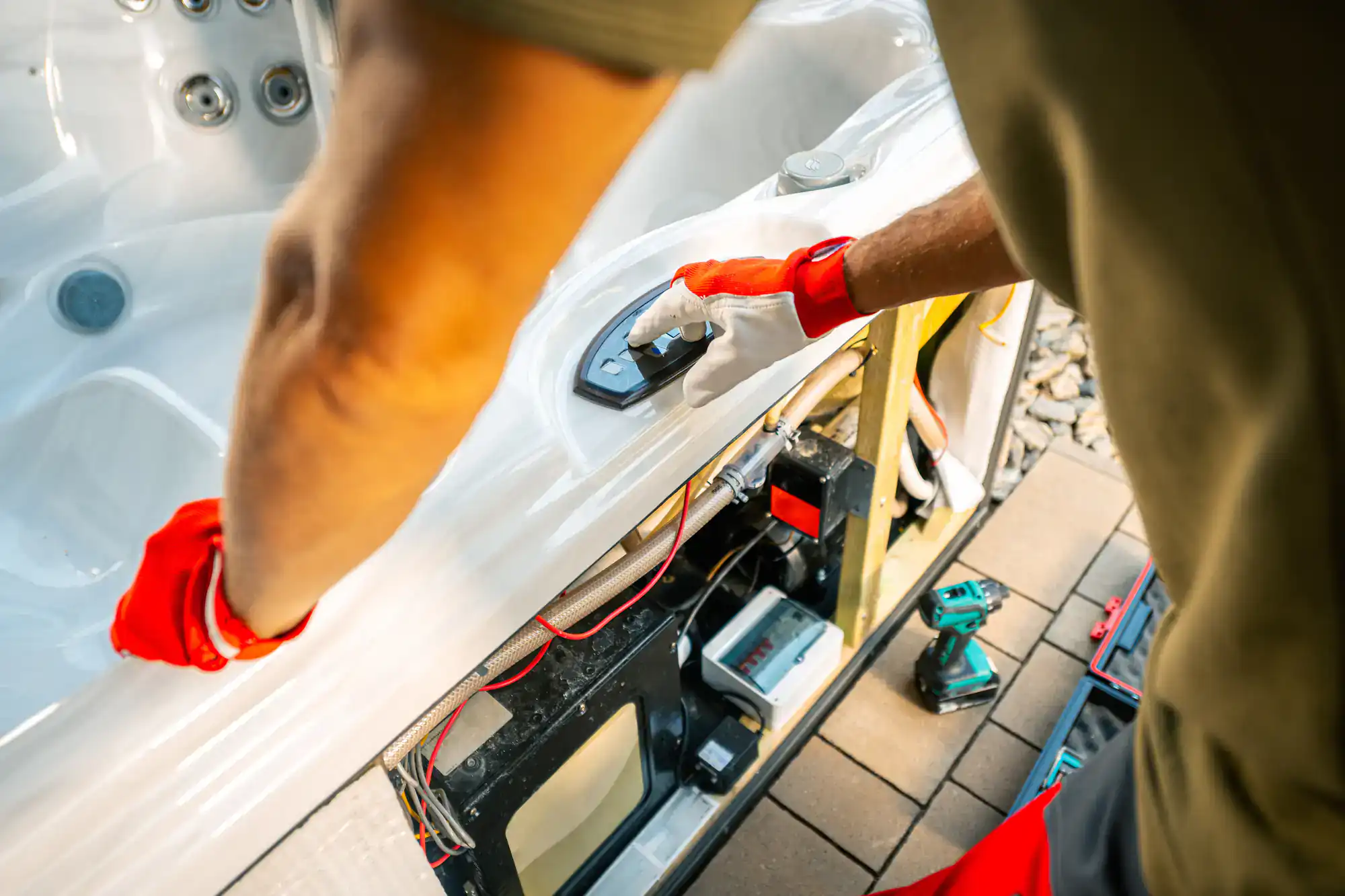
Hot tub electrical installation covers more ground than most people expect when they first start calling around. The circuit itself is just one part. We handle the full scope — panel assessment, dedicated circuit installation, GFCI breaker, weatherproof disconnect box, equipotential bonding of all metal components, conduit runs, trenching where needed, permit application, and final inspection coordination.
The bonding step is worth calling out specifically. NEC Article 680 requires that all metal components near a hot tub — the water, the pump housing, the fittings — be bonded together to eliminate voltage differences that can cause shock. It’s one of the most commonly skipped steps by unlicensed or rushed installers, and it’s one of the most important. Every installation we complete includes it, every time.
For Forest Grove homeowners in older homes — particularly in the David Hill area, the Fern Hill neighborhoods, or anywhere close to the historic downtown core — the panel assessment may reveal that a subpanel or service upgrade is needed before the hot tub circuit can be added. That conversation happens during the free estimate, not after the job starts. No named service packages, no upsells — just a clear quote that covers what the job actually requires, backed by a 5-year warranty on labor.
Can my older Forest Grove home's electrical panel handle a hot tub?
This is one of the most common questions that comes up for homeowners in Forest Grove’s historic core — and it’s the right question to ask before you commit to anything. Many homes near Pacific University and the downtown corridor were built with 60-amp or 100-amp service panels that are decades old. A standard 240V hot tub requires a dedicated 50-amp circuit, which is a significant load. If your panel is already close to capacity or undersized, it can’t safely support that addition without an upgrade.
The only way to know for sure is to have a licensed electrician assess the panel in person — which is exactly what we do as part of every free estimate. If an upgrade is needed, you’ll know the scope and cost before any work begins. In some cases, a subpanel is the right solution rather than a full service upgrade, which can bring the cost down considerably. Either way, you won’t be surprised by it after the fact.
Do I need a permit for hot tub electrical wiring in Forest Grove, Oregon?
Yes — and skipping it creates real problems down the road. In Oregon, hot tub electrical work requires a permit through the state’s Building Codes Division. That permit triggers a final inspection by a licensed electrical inspector, which confirms the work meets the 2023 Oregon Electrical Specialty Code. Without that inspection, there’s no official record that the installation is safe or code-compliant.
Why does that matter practically? Two reasons. First, most homeowner insurance policies won’t cover damage or injury tied to unpermitted electrical work. If something goes wrong with an unpermitted hot tub installation, your insurer has grounds to deny the claim. Second, unpermitted work shows up — or fails to show up — when you sell the home. It can delay or derail a sale, or require corrective work at your expense before closing.
We pull the permit as part of every installation and coordinate the inspection. It’s included in the job, not an add-on. Forest Grove’s Building Division actively enforces permit requirements for electrical work, and the city’s own municipal utility — Forest Grove Light and Power — has its own coordination requirements for high-load additions. Having an electrician who knows this process saves time and headaches.
What size breaker does a 240V hot tub require, and why does it matter?
Most 240V hot tubs require a 50-amp dedicated circuit with a two-pole GFCI breaker — though some models call for 60 amps, so the manufacturer’s spec sheet is always the starting point. The size matters because undersizing the breaker causes it to trip repeatedly under normal load, which is frustrating and hard on the equipment. Oversizing it is a different problem — it removes the protection the breaker is supposed to provide.
The GFCI part is not optional. A standard breaker protects equipment from overloads. A GFCI breaker protects people by detecting ground faults — tiny current leaks that can cause electrocution in a wet environment — and cutting power within milliseconds. NEC Article 680 requires Class A GFCI protection on all outdoor spas and hot tubs. This is federal electrical code, not a suggestion, and it applies in Forest Grove the same as everywhere else in Oregon.
Getting the breaker size right requires knowing the hot tub’s actual amperage draw, which varies by brand and model. That’s part of what we review during the estimate — matching the circuit to the equipment so the installation is correct from day one.
How far does the disconnect box need to be from the hot tub?
The NEC requires the disconnect box — sometimes called the spa panel or emergency shutoff — to be placed no closer than 5 feet from the hot tub and within line of sight of it. The maximum distance is typically 50 feet, though the “within line of sight” requirement is the more important practical constraint. The idea is that someone at the tub can see the shutoff and reach it quickly if needed.
The disconnect must also be weatherproof and rated for outdoor use. In Forest Grove’s climate, where rain is the norm for much of the year, that outdoor rating matters. A disconnect box that isn’t properly sealed or rated will corrode over time, which creates both a safety issue and a code violation.
Placement is something we evaluate during the site visit. The right location depends on where the tub is going, how the yard is laid out, and where the conduit run makes sense. Getting it wrong — either too close, out of sight, or in a location that’s difficult to access — fails inspection and has to be corrected. Getting it right the first time is part of what the estimate process is designed to ensure.
What's the difference between a plug-and-play hot tub and one that needs hardwiring?
Plug-and-play hot tubs run on 120V and connect to a standard household outlet. They’re simpler to set up, but they come with real limitations — slower heating, weaker jets, and less overall performance. Most full-feature hot tubs — the kind with strong jet systems, LED lighting, and built-in audio — are 240V models that require a dedicated hardwired circuit installed by a licensed electrician.
Even if you have a 120V plug-and-play model, that doesn’t automatically mean you can plug it into any outdoor outlet. The outlet needs to be on a dedicated circuit, properly rated, and ideally within 10 feet of the tub. If it’s not, you’re looking at a tripping breaker and potential safety issues. A quick check by a licensed electrician can tell you whether your current outlet setup is adequate or whether a dedicated circuit makes more sense.
For Forest Grove homeowners upgrading from a plug-and-play to a full 240V model — which is a common path — the existing outlet wiring can’t be reused. A new dedicated circuit is required. We can assess both scenarios and give you a clear picture of what your specific situation calls for.
Will improper hot tub wiring void my hot tub manufacturer's warranty?
Yes — most hot tub manufacturers explicitly require installation by a licensed electrician as a condition of the warranty. If the electrical work is done by an unlicensed installer, a handyman, or someone who skips the permit and inspection process, the manufacturer has grounds to void the warranty entirely. That means any mechanical or equipment failure that might otherwise be covered becomes your expense.
This comes up most often when a hot tub dealer recommends “their electrician” at a lower price. The issue isn’t always the person — it’s whether the work is permitted, inspected, and done to code. An installation that skips those steps may look fine initially but creates problems when something goes wrong and you try to make a warranty claim.
Our installations are fully permitted and inspected through Oregon’s Building Codes Division, which creates a documented record that the work was done correctly. That documentation is exactly what a manufacturer needs to see if a warranty question ever comes up. Combined with our own 5-year labor warranty on every installation, you have two layers of protection — from the manufacturer and from the company that did the work.
Useful Links